

Since August 1, 2026, UIL Eligibility Rules have carried new weight for Texas high school athletic programs, especially in communities where one roster decision can affect varsity depth, sub-varsity development, and trust among families. The 2026-2027 updates did not replace the core eligibility framework, but they changed key operating details for foreign-exchange students, heat safety, basketball tournament play, middle school team planning, and non-school participation. For local teams, the message was clear: compliance is not just paperwork. It is part of fair competition and responsible care for student-athletes.
UIL Eligibility Rules Since August 1
The UIL stated that its 2026-2027 rule changes took effect on August 1, 2026, unless a specific item said otherwise, and those changes included several provisions with direct athletic impact UIL rule changes. The most visible eligibility-related shift was the removal of the waiver process that had allowed foreign-exchange students to compete in varsity athletics. Since that date, foreign-exchange students have been limited to sub-varsity athletic participation, though they may still participate in non-athletic UIL activities.
That change mattered most for programs that had counted on a foreign-exchange student to fill a varsity role in sports with smaller roster pools. The rule did not say those students could not be part of campus life or athletic development. It did, however, draw a sharper line between varsity competition and sub-varsity participation. Coaches had to adjust depth charts, identify younger players ready for larger roles, and communicate clearly with families so expectations did not get set around an option that no longer existed.
UIL Eligibility Rules And Varsity Rosters
For local athletic directors, UIL Eligibility Rules now required more careful preseason roster review before scrimmages, tournaments, and district play. A student who can practice or play at a sub-varsity level may not be eligible for the same role on Friday night, in a varsity tournament, or during a postseason path. That distinction can be hard for families to hear, especially when a student is talented, committed, and respected by teammates.
The ethical responsibility falls on adults to explain the rule before conflict appears. A coach who avoids that conversation may win a short-term roster benefit but risk a bigger harm later: a student losing an opportunity, a team facing questions, or a school community feeling misled. The healthier approach is direct communication, written roster checks, and coordination among coaches, registrars, counselors, and campus administrators.
Heat Safety Became A Required Standard
The UIL also moved its Heat Stress and Athletic Participation Guidelines from recommendations to mandatory standards during periods of high heat. That change applied to athletic practices and marching band rehearsals, which made it a campus-wide operations issue rather than a football-only concern. In Texas communities where August and September practices often happen under demanding conditions, this rule affected practice design, staff assignments, recovery time, and parent communication.
Coaches could no longer treat heat guidance as a best-practice checklist that varied by program. The required status meant schools needed consistent procedures for high-heat periods, including how practice intensity, breaks, and safety planning would be handled. The rule supported athlete welfare, but it also created practical pressure for schools with limited staffing, shared facilities, or long bus routes. A rural team with one athletic trainer covering several sports may face a different daily schedule than a large suburban campus, yet both are responsible for meeting the same standard.
Practice Planning And Community Trust
Heat safety is also an ethics issue because parents trust schools to balance competition with student well-being. When a practice is shortened, moved, or modified, the decision should not be framed as a loss of toughness. It should be framed as responsible preparation under the rules now in place. Teams can still train with purpose while respecting conditions that place athletes at risk.
Local programs benefit when they explain changes before families see them at the field. A parent who knows why a practice window shifted is less likely to view the adjustment as disorganization. A player who understands the rule is more likely to buy into the plan. That kind of shared understanding protects the team culture and keeps the focus on development.
Transfers, Residency, And Academic Standing
The longstanding eligibility standards remained central after the August 1 changes. Students still had to meet requirements tied to residence, attendance zone, age, semesters of participation, academic credits, and amateur standing. The UIL constitution says students generally must reside in the school district and attendance zone, and a change of schools for athletic purposes remains a basis for ineligibility UIL eligibility rules.
Under the UIL Eligibility Rules, transfer review remains one of the most sensitive issues for local teams. A family move may be fully legitimate, but schools still need records that support eligibility. District Executive Committees are tasked with weighing these cases, and their decisions can affect athletes, opponents, district standings, and community perception. That is why transfer cases should be handled with care, not rumor.
The UIL also maintained the age standard requiring students to be under 19 years old on September 1 before the contest, unless a disability delayed their education by at least one year. The four-year rule remained in place as well, meaning students cannot stretch high school athletic eligibility beyond the allowed window after initially enrolling in ninth grade.
Academic eligibility stayed tied to credit progress. For the first six-week grading period, second-year high school students needed five accumulated credits toward graduation, third-year students needed 10 credits or at least five credits in the previous 12 months, and fourth-year students needed 15 credits or a qualifying recent-credit path. Non-enrolled students, including home-schooled students seeking eligibility in that first six-week period, had to show proficiency through nationally normed testing.
Why Documentation Matters Before A Hearing
If a student’s eligibility is questioned, the student must prove eligibility by a preponderance of evidence. If an allegation of a violation is made, the school or district has the burden to disprove it in a hearing. That proof structure makes UIL Eligibility Rules a records issue as much as an athletics issue.
Good recordkeeping protects students who are eligible and helps schools avoid preventable disputes. A transfer form, proof of residence, academic record, or testing documentation can become central if a question is raised. For families, the best path is to provide complete information early. For schools, the best path is to review that information consistently, without favoring a star player over a reserve or one sport over another.
Basketball, Middle School Teams, And Camps
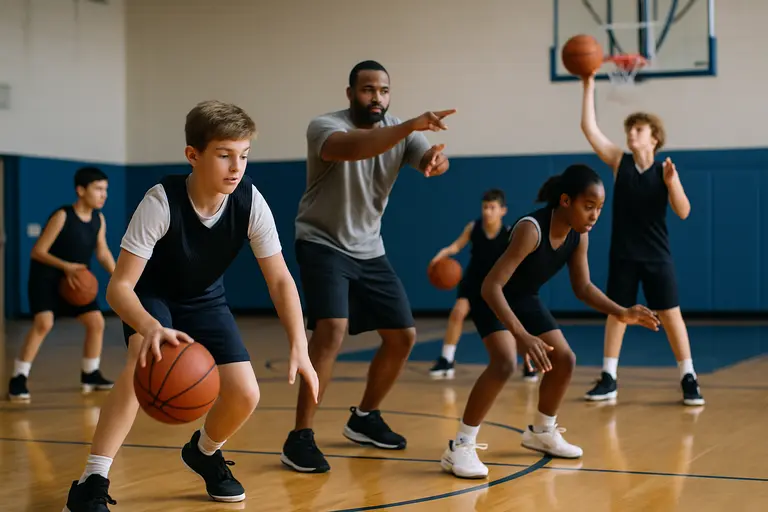
The 2026-2027 changes also reached beyond traditional eligibility questions. For varsity basketball tournaments and showcases during the 2026-2027 school year only, UIL introduced an optional 35-second shot clock pilot. It required mutual coach agreement, which meant teams had to decide together whether to use it in those settings. This did not force every varsity game into a shot-clock format, but it gave tournament organizers and coaches a new strategic choice.
Smaller programs may have faced a steeper adjustment. Shot-clock play can influence substitution patterns, guard development, late-possession offense, and practice priorities. If one team had trained with a shot clock more often than another, the agreement process mattered. Coaches had to weigh competitive preparation against fairness, player readiness, and the purpose of the event.
For younger athletes, the UIL made permanent a prior pilot concept for Conferences 1A and 2A, allowing up to two teams in sports when sixth-grade participation is essential. That mattered in smaller communities where middle school roster numbers can shift sharply from year to year. It gave schools a steadier planning tool for participation, especially where keeping a sport active depends on including enough students to field teams.
Non-school participation also received clarification. Coaches could continue coaching up to two students in UIL-approved state all-star games. Students in their second through fourth high school years could voluntarily work up to two camps per team sport without that work counting against the student’s skill-time limit. Those details may sound narrow, but they affect summer calendars, coach communication, and how families understand the line between school athletics and outside opportunities. For a related local planning angle, Texas programs have also been tracking coach prep for UIL changes as they adjust routines.
Ethical Communication For Local Programs
The rules are only as strong as the way schools apply them. A local team can meet the letter of a rule and still damage trust if it communicates late, selectively, or defensively. Ethical sports communication asks schools to share what is known, avoid guessing about private student records, and explain process without turning individual athletes into public examples.
That approach is especially needed in transfer and eligibility disputes. Community members may want quick answers, but student privacy and due process matter. Coaches and administrators should avoid public comments that imply guilt or special treatment. Families deserve clear next steps, opponents deserve fair competition, and athletes deserve not to be defined by an eligibility question before the process is complete.
- Before tryouts: review residency, age, credits, transfer status, and foreign-exchange participation limits.
- Before heat-heavy practices: confirm required safety procedures and communicate practice changes early.
- Before tournaments: clarify whether the basketball shot clock pilot applies and whether both coaches agreed.
- Before camps or all-star events: check the limits on coach involvement and student work.
These steps are not about creating fear around participation. They are about protecting the season for every athlete on the roster. The more consistent the process, the less likely a team is to face confusion after games have already been played.
What 2026-27 UIL Eligibility Rules Mean Locally
The practical meaning of the UIL Eligibility Rules after August 1, 2026, was that local teams had to treat eligibility, safety, and participation planning as shared responsibilities. Coaches still coached, athletes still competed, and communities still showed pride in their schools. What changed was the need for tighter alignment among athletic departments, campus offices, families, and district decision-makers.
For varsity teams, the foreign-exchange rule required honest roster planning. For all outdoor programs, mandatory heat standards required safer practice operations. For basketball, the shot clock pilot created a limited but meaningful strategy decision in tournaments and showcases. For smaller schools, the middle school participation change gave 1A and 2A programs a steadier way to support early athlete development. For transfer and academic eligibility, the older standards remained just as serious as before.
Local teams that handled these changes well likely had one trait in common: they did not wait for a dispute to learn the rules. They built review habits before the first contest, explained decisions in plain language, and kept student welfare at the center. That is how compliance supports competition rather than distracting from it.