
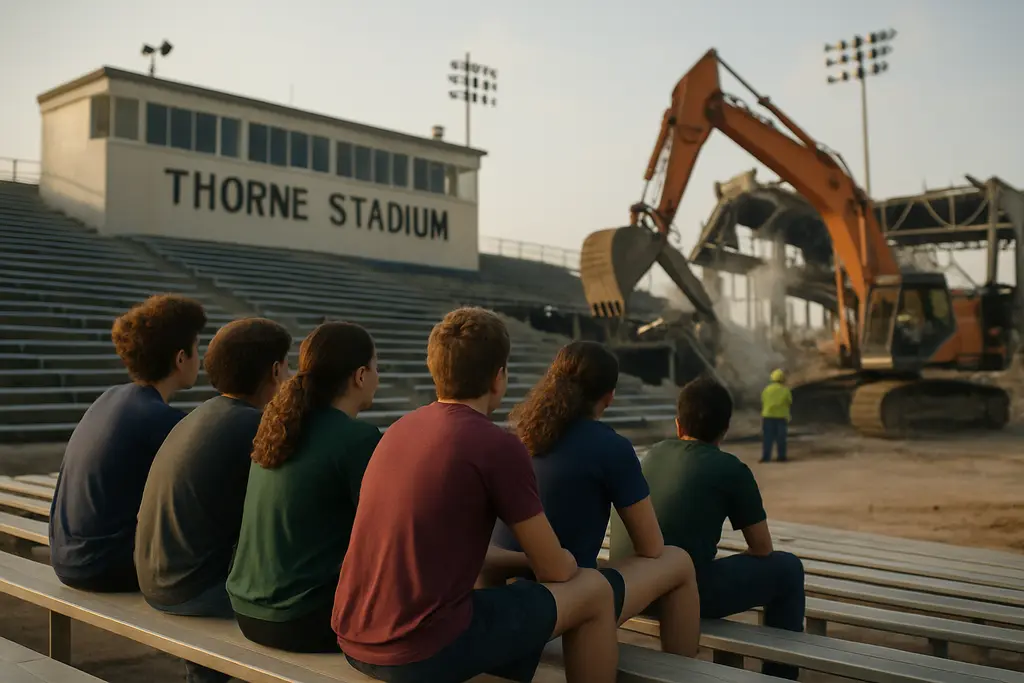
The Thorne Stadium replacement in Aldine ISD gives local sports communities a clear case study in how technical skills support safer, more accessible, and more useful school venues. For athletes, coaches, families, and event staff, a stadium project is not only about new seats or brighter lights. It is about whether the venue can handle Friday football, soccer matches, student media crews, concessions, restrooms, security checks, and community gatherings without leaving people behind.
Aldine ISD celebrated construction of the replacement stadium after groundbreaking activity in January 2023, with the district stating that the ceremony was held on January 20, 2023 Aldine ISD announcement. Public project records also listed the work at 158,113 square feet with an estimated cost of $60,000,000 TDLR project details. Those two figures point to the scale of coordination required: civil work, structural design, field systems, press operations, accessibility, safety, and day-of-event movement all had to connect.
What The Thorne Stadium replacement Shows About School Venues
High school stadiums carry a different responsibility than many private sports facilities. They serve students first, but they also function as civic gathering spaces. In Aldine ISD, the replacement project was tied to a campus sports environment where football, soccer, bands, spirit groups, media students, families, and visiting teams all depend on predictable access and safe movement.
Thorne Stadium replacement As A Skills Case Study
The strongest lesson from the Thorne Stadium replacement is that stadium work asks for many types of expertise at the same time. Scheduling and site preparation came first, especially because large-venue construction requires grading, demolition planning, surveying, and coordination around heavy equipment. If those early steps are rushed or poorly sequenced, later work on seating, drainage, utilities, and access routes can be affected.
For a school district, those decisions touch sports operations directly. A football or soccer venue has to support team arrivals, officials, emergency access, marching band movement, concession deliveries, and family parking patterns. The technical side is not separate from the game-day experience; it shapes it.
Why Accessibility Changed The Design Conversation
The research notes show that planning for the replacement included work tied to ADA-compliant routes, sightlines, seating capacity, and changes to an existing berm. That type of design requires more than checking a compliance box. Designers and engineers have to think about how a grandparent reaches a seat, how a student using a wheelchair moves from parking to the concourse, and how emergency personnel can move through the site when crowds are present.
Accessibility design also affects the feel of a venue. A better route is not only a ramp or walkway; it is a practical path that lets more people share the same school sports moment. For a district stadium, that matters because the crowd often includes young siblings, older relatives, alumni, students, and visiting supporters.
Technical Skills Behind The Thorne Stadium replacement
The Thorne Stadium replacement shows how stadium upgrades draw on trades and design disciplines that students may not always see from the stands. A finished venue can look simple on game night, but behind that experience are engineers, construction managers, electricians, plumbers, architects, safety specialists, turf teams, and technology crews.
Site, Structure, And Water Management
Large stadium projects depend on civil and structural work before fans ever see a scoreboard. The site must drain properly, foundations must support seating and press areas, and plazas must handle repeated foot traffic. In Southeast Texas, where heavy rain can affect outdoor sports planning, drainage and stormwater design are especially meaningful for school facilities.
The project research points to a stadium bowl, press box, community center, site infrastructure, and open plazas within the broader square footage. Each piece calls for a different technical skill set. Concrete work, steel connections, retaining conditions, underground utilities, and surface grades all have to meet the same event schedule in the end.
MEP Systems, Press Operations, And Student Media
Mechanical, electrical, and plumbing design has a direct link to game-day service. Restrooms, concessions, lighting, sound, scoreboard operations, and press box functions all depend on dependable MEP planning. The research notes also mention programmable LED lighting and advanced video technology connected to student operation through district Career and Technical Education programs.
That detail matters for a sports-first audience because it connects infrastructure to student opportunity. A modern press box is not only a place for announcers and coaches. It can also become a learning space where students practice camera work, production timing, audio control, and live-event communication. Those skills can support future roles in athletics, media, construction technology, and event production.
- Structural and civil skills: grading, foundations, seating support, drainage, site circulation, and concrete or steel coordination.
- Operations skills: crowd flow, food service routes, restroom access, security screening, staffing plans, and traffic movement.
- Technology skills: lighting controls, scoreboard systems, audio, video production, press box wiring, and student operator training.
- Safety skills: fire alarms, emergency access, public assembly planning, defibrillator placement, and code coordination.
How Stadium Planning Supports Local Sports Identity
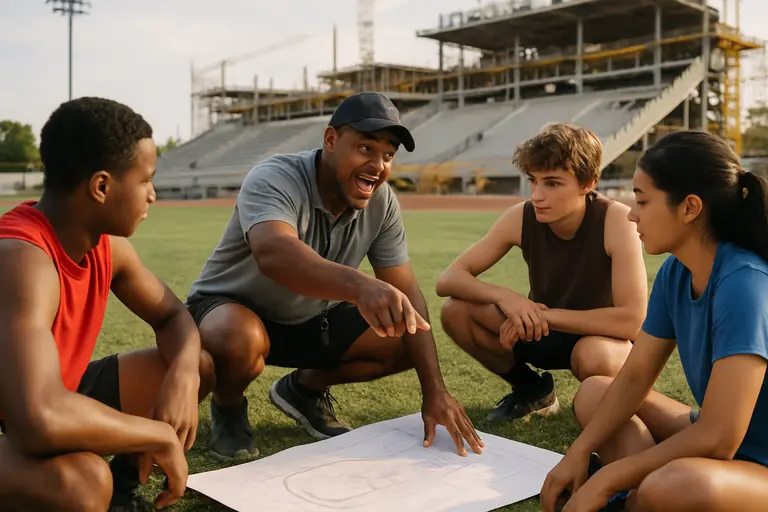
Sports venues help shape how a district presents itself to students and families. A stadium that is easier to enter, easier to use, and better prepared for events can strengthen the bond between schools and neighborhoods. That does not mean every project should be judged by size alone. The better measure is whether the facility serves its athletes and community with care.
Game-Day Logistics Are A Technical Skill
The research notes show that operational needs were part of planning, including food service flow, transportation, security, staffing, concessions, restrooms, and event logistics. Those details can decide whether a night feels organized or stressful. A smooth arrival pattern helps visiting teams. Clear concession and restroom placement helps families. Good staffing zones help administrators and police focus on safety rather than confusion.
For local school districts, venue upgrades also need honest public communication. Communities deserve to know what is being built, how it will be used, and why certain choices were made. That same issue appears in other school stadium conversations across Texas, including how new stadiums can build community when access plans and public benefits are explained clearly.
Design Speed Still Requires Quality Control
The research notes state that construction documentation and design were completed in six months, helped by alignment among stakeholders over budget, program, and design intent. Fast work at that scale calls for disciplined document control, clear decision-making, and strong coordination between architects, engineers, district leaders, and construction teams.
Speed alone is not the goal. The risk in any fast-track public project is that missed details can show up later as change orders, access problems, or operational gaps. The lesson for school sports construction is that quick planning must still protect quality, safety, and usability. Coaches and families may not read plan sets, but they feel the results every time a bus unloads, a concession line forms, or a weather delay forces people onto the concourse.
Why The Thorne Stadium replacement Matters For Aldine Sports
The Thorne Stadium replacement matters because it shows how technical skills shape the daily experience of school athletics. A stadium is not just a shell around a field. It is a working system that supports athletes, coaches, officials, performers, media students, families, and community events.
For Aldine ISD, the project described in the public records and district announcement reflected a large public investment in sports infrastructure. The supported facts show a January 20, 2023 construction milestone, a 158,113-square-foot project listing, and a $60,000,000 estimated cost. The technical takeaways are just as significant: accessibility planning, drainage, structural design, MEP systems, crowd flow, security, concessions, lighting, and press technology all had to be planned as connected parts.
That is the ethical way to discuss major school venue work. The story is not hype about a new building. It is about whether the people behind the project used the right skills to serve students and the wider community. In that sense, the Thorne Stadium replacement is a useful model for how Texas districts can think about stadium upgrades with athletes, families, and public trust in mind.