
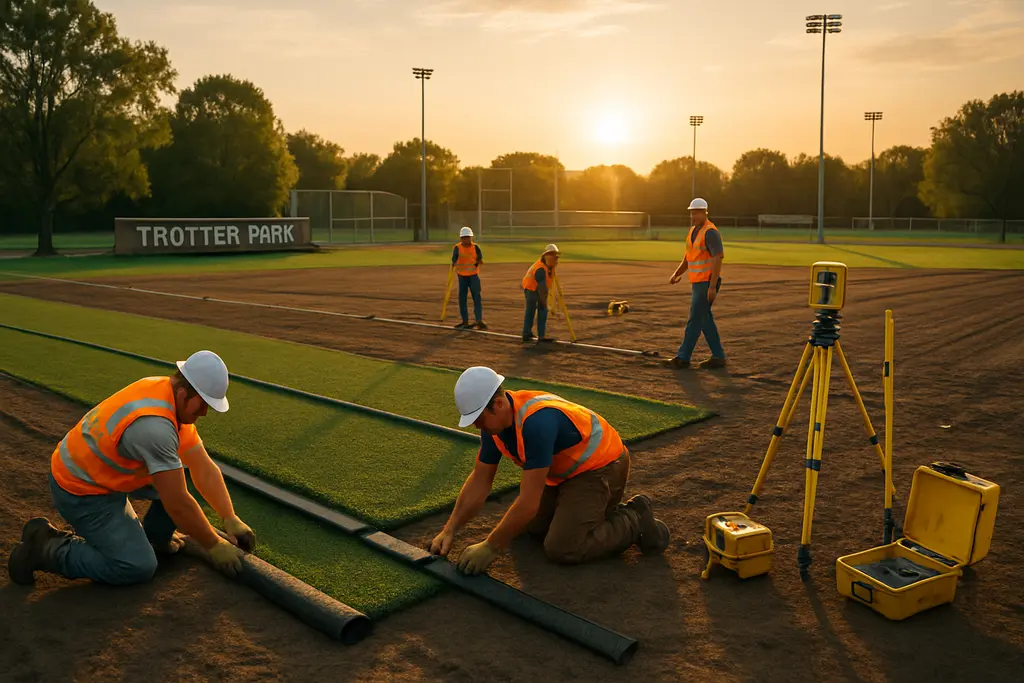
Trotter Park Expansion is no longer just a future idea for Flower Mound families. As of October 6, 2026, the listed construction start date of September 7, 2026 has passed, and the state filing lists a target completion date of January 7, 2028, with an estimated project cost of $10.25 million at 4551 Cross Timbers Road state project filing. For parents, coaches, and young athletes, the key question is simple: will the new space make it easier to play, practice, and stay involved?
The answer depends on more than the number of courts. Youth sports engagement grows when families can get to a facility, siblings can stay active while one child practices, coaches can find workable time slots, and beginners feel welcome. Based on the project details available now, this park could become a meaningful access point for court sports, casual play, fitness, and family recreation in central Flower Mound.
Project Timeline And Public Investment
What The Official Filing Shows
The official project listing gives families a clear planning window, even while some operating details have not been finalized publicly. The filing identifies the project location, cost estimate, construction start date, and target completion date. For youth sports groups, that timeline matters because league leaders often plan seasons, coach recruitment, and facility requests many months in advance.
A January 7, 2028 target completion date also means families should treat the project as a medium-term gain, not an immediate fix for fall 2026 or spring 2027 scheduling pressure. If a team is already short on practice space, coaches will still need backup locations during the build period. The more useful planning question is how clubs, recreation leaders, and families prepare now so the new park is active quickly once it opens.
Why The 2022 Study Still Matters
Flower Mound had already studied a larger tennis-centered concept before the current project moved through its later planning path. An April 2022 feasibility study recommended a tennis center at Trotter Park with 16 tennis courts, 12 pickleball courts, a clubhouse, a playground, and a trail Flower Mound feasibility study. That earlier recommendation does not appear to be the same as the current project scope, so families should avoid treating it as a promise of the final build.
Still, the study is useful because it shows that court demand was not a sudden topic. The public discussion around tennis and pickleball access had been building before the present construction window. For young athletes, that history matters because public facilities often shape who gets early exposure to sports. A child who can try tennis or basketball in a local park without a major travel burden has a different starting point than a child who needs a private club, long drive, or hard-to-get reservation.
How Trotter Park Expansion Changes Access
Trotter Park Expansion And Youth Entry Points
The current project scope in the research includes 12 pickleball courts, two tennis courts, one basketball court, a playground, restrooms, an entry plaza, an open lawn, native area improvements, a half-mile looped trail, and a detention pond. That mix is important because youth sports engagement rarely starts with formal league play. Many children begin by tagging along with a sibling, shooting baskets for ten minutes, walking a trail with a parent, or trying a paddle sport because a friend brought extra equipment.
That is where Trotter Park Expansion could help Flower Mound families. A park with multiple activity zones can serve different ages at the same time. A middle school athlete may use a court while a younger sibling plays nearby. A parent may walk the looped trail while waiting for practice to end. Those small conveniences can decide whether a family says yes to another season, another clinic, or another weeknight practice.
Court Space, Practice Windows, And Family Schedules
More court inventory does not automatically solve every scheduling issue, but it can reduce pressure points. Tennis, pickleball, and basketball all rely on usable surfaces at set times. If demand is high and courts are limited, young players often lose out to peak-hour conflicts, adult play, or travel time to other facilities. A larger local facility gives recreation staff and volunteer leaders more room to separate beginner sessions, youth clinics, open play, and competitive practice.
For coaches, added space can support better teaching. Beginners need room for repetition. Younger players benefit from smaller groups, clear instruction, and a practice pace that does not feel rushed. If court access improves, coaches may be able to run shorter skill stations, create age-based sessions, or offer introductory events for athletes who are not ready for a full league. That type of on-ramp is especially helpful for families who are still deciding which sport fits their child.
Flower Mound families have seen how facility access can shape participation across North Texas. A similar access question appears in our coverage of how youth sports accessibility starts with grants, especially for communities trying to lower barriers without relying only on private options.
What Families And Coaches Should Track

Program Details Still Matter
New courts create opportunity, but programming will decide much of the youth impact. Families should watch for future information on reservation rules, youth clinic schedules, open play hours, court lighting, maintenance plans, restroom access, and parking flow. Those details can either widen access or make participation harder for working parents and volunteer coaches.
There is also a staffing side. More places to play can lead to more demand for coaches, officials, site supervisors, and volunteers. A park can be built with public dollars, but youth sports still depend heavily on people who organize practices, greet new families, explain rules, and keep activities safe. If participation rises after the park opens, local groups may need to recruit and train more helpers well before registration deadlines.
A Practical Checklist For Youth Sports Leaders
Coaches and parent volunteers do not need to wait until the ribbon is cut to prepare. The best use of the construction period is to think through how the park could serve beginners as well as experienced players. That means asking practical questions now, then adjusting once the Town releases more operating information.
- Map age groups to spaces: decide which courts or open areas could work for clinics, drills, warmups, and free-play periods.
- Plan beginner sessions: create low-pressure options for children who have not joined a league before.
- Coordinate volunteers: identify parents, older players, and local coaches who can help with instruction or check-in duties.
- Track access needs: pay attention to parking, restrooms, shade, evening availability, and family travel time.
This kind of preparation helps keep the focus on athletes instead of only on the facility. A new court may draw attention, but a welcoming first practice is what brings many families back.
Why Trotter Park Expansion Matters For Youth Sports
Community Impact Beyond The Scoreboard
The sports value of this project is not limited to wins, rankings, or tournament brackets. A public park can support the early stages of player development, especially for children who need a low-cost place to try something new. Tennis and basketball have long been entry sports for self-directed practice, while pickleball has become a common multigenerational activity. A shared site can connect children, parents, grandparents, coaches, and neighbors through regular movement rather than one-off events.
If Trotter Park Expansion reaches completion on the listed January 7, 2028 target date, its strongest youth sports impact may come from daily use. After-school play, weekend clinics, parent-child practice, and informal pickup activity can all build confidence before a young athlete ever joins a formal roster. For Flower Mound, the project gives local sports leaders a chance to turn new public space into steady participation, better access, and a stronger connection between parks and youth development.