
Youth Sports Safety works best when the whole team community hears the same message before the whistle, not after an athlete gets hurt. In local youth sports, that means coaches, parents, athletes, trainers, league staff, and volunteers all need clear channels for sharing safety reminders, reporting concerns, and setting practice habits. As a sports photographer, I see the value of those channels from the sideline: the most useful images often capture dynamic moments that show effort, spacing, technique, and coach-athlete interaction in real time.
Safety communication should feel like part of the team routine. A pre-practice huddle, a parent text thread, a league email, and a coach follow-up after a hard collision can all serve the same goal: helping families know what happened, what to watch for, and who to contact. The stronger the community connection, the easier it is for an athlete to speak up, for a parent to ask a fair question, and for a coach to adjust practice without making safety feel separate from performance.
Building Youth Sports Safety Through Shared Channels
Youth Sports Safety Messages Before Practice
The best team safety messages are short, repeated, and tied to the sport being played. A soccer coach may remind athletes about landing mechanics during warmups. A football staff may limit contact periods and explain why. A basketball coach may point out hydration, floor spacing, and safe closeouts before drills start. None of those messages need to slow the practice down. They work because they are built into the session.
A strong Youth Sports Safety plan should name the channel and the messenger. Coaches are often the first voice athletes hear. Parents are often the first to notice a change after a game. Healthcare providers remain a trusted source for many families, based on the research notes showing high trust in doctors and other healthcare resources for sport-related concussion information. Local news and league-wide updates can help with broad awareness, but team-level channels keep the message close to the athlete.
Why Coaches And Parents Need The Same Page
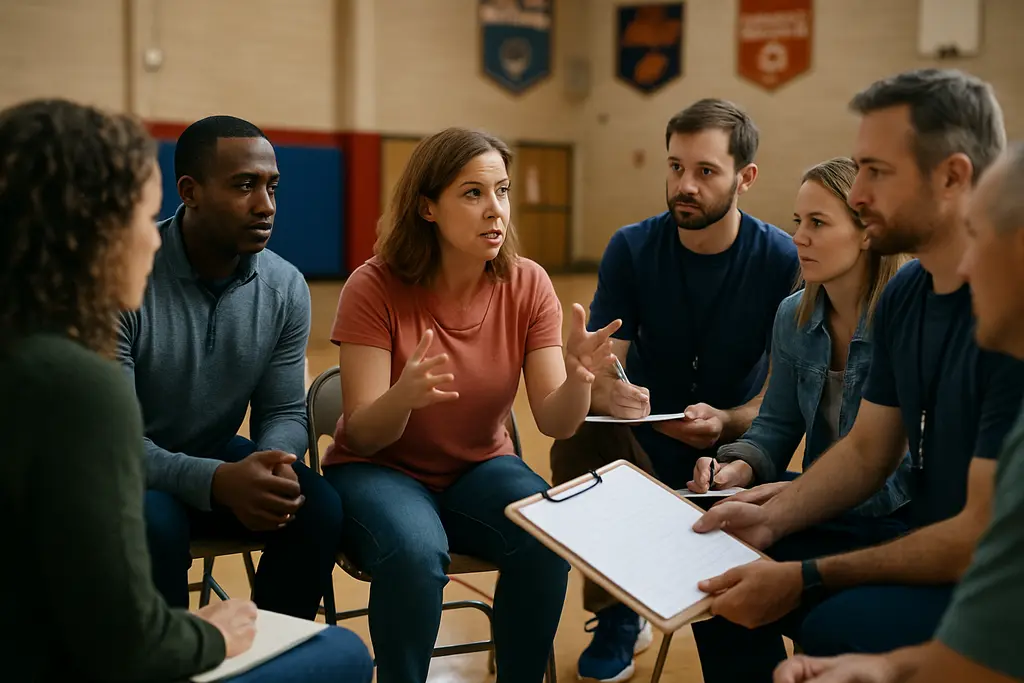
Parents and coaches do not need to communicate every detail the same way, but they do need shared expectations. If a league uses email for formal policy, group messaging for schedule changes, and in-person meetings for safety reminders, families should know that from the start. That prevents the common problem where a coach assumes a parent saw a message and a parent assumes a coach will repeat it later.
For local clubs, the parent meeting before the first practice is still one of the strongest safety tools. It gives coaches a chance to explain reporting steps, describe how athletes should speak up, and invite parents to raise concerns without turning every issue into sideline tension. For a related team-level approach, our guide to coach parent communication explains how clear schedules and feedback habits support families across a season.
What Research Says About Communication That Works
Digital Platforms With Real Season Timing
Digital tools help when they are easy to use and arrive at the right moment in the season. A 2022 Swedish cluster randomized trial with athletes ages 12 to 15 gave coaches and parents access to a digital health platform with age-adjusted safety information over 16 weeks. The intervention group went 16 weeks before the first injury, compared with 8 weeks in the control group, with a reported hazard ratio of 0.62 and p = 0.049, according to the digital health platform trial.
That result matters for community programs because it shows communication is not just a handout at registration. It can be a season-long rhythm. Larger clubs in the same study saw stronger effects than smaller clubs, which suggests that organization and reach may affect how well safety information moves through a team structure. Local leagues can take a practical lesson from that: the tool does not have to be flashy, but it does need steady use by coaches and parents.
Handouts, Healthcare Voices, And Follow-Up Talks
Youth Sports Safety should not depend on one meeting or one posted document. Parent-child concussion communication research published around 2022 to 2023 found that CDC HEADS UP handouts were linked with a 33% increase in the proportion of parents who talked with their child about concussion, compared with control, in a parent-child concussion communication trial.
The takeaway is not that paper alone solves the issue. The value comes when a formal resource gives parents language they can use at home. A coach may say, “Tell us if you feel off.” A handout can help a parent turn that into a direct talk: “If you have a headache, dizziness, confusion, or feel different after contact, tell me and your coach.” A healthcare provider can then add trusted guidance within their role. That mix of coach voice, parent voice, and health voice creates a stronger safety net.
Game-Day Channels Local Clubs Can Use
Sideline Photos As Safety Reminders
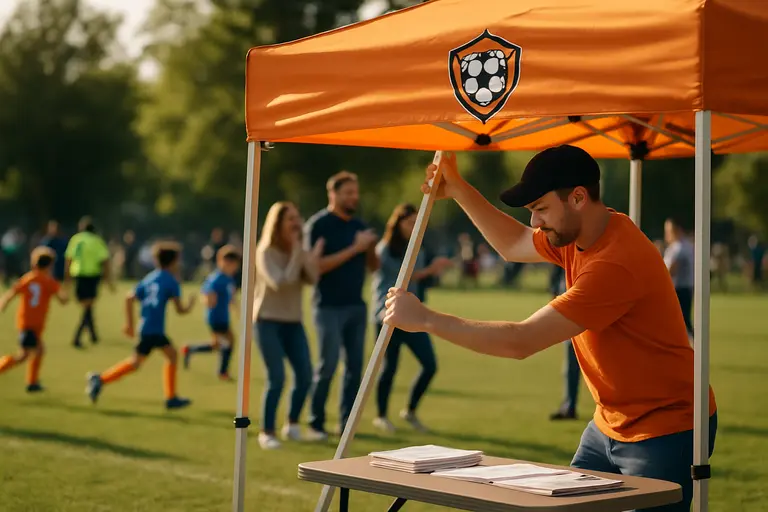
Photography can support communication without replacing medical judgment. A sharp game image can show a great cut, a clean tackle, a safe slide, or a crowded sideline that needs more space. For youth teams, those images can help coaches teach body position and awareness. They can also help parents see the pace and physical demands of a sport in a way a schedule email cannot.
As a technical sports photography specialist, I focus on the moment just before action peaks: a plant foot before a sprint, hands before a catch, eyes tracking the ball, or teammates spacing during transition. Those frames tell coaches something about how athletes move under pressure. Used responsibly, photos can become part of a team’s education channel: not to shame a child, not to diagnose an injury, but to support better teaching and safer habits.
Clear Routes For Injury Reporting
Every team needs a simple reporting path that families can remember during a busy game day. A parent should know whether to tell the head coach, an assistant, an athletic trainer if one is present, or a league safety contact. Athletes should know they can step out of a drill and speak up without being treated as weak. Coaches should know how to document concerns and how to communicate next steps to parents.
- Before practice: Send one short reminder about weather, equipment, contact level, or the day’s main safety focus.
- During practice: Use quick verbal cues that connect safety with skill, such as landing, spacing, tackling form, or hydration breaks.
- After an incident: Contact the parent or guardian through the agreed channel and record the concern according to league policy.
- After games: Share neutral coaching notes that reinforce safe technique and team expectations.
Those steps sound basic, but basic is often what works during a packed Saturday of youth games. Local sports communities are made of volunteers, working parents, part-time coaches, and athletes trying to grow. The channel has to fit real life, or it will not be used when pressure rises.
Community Playbook For Youth Sports Safety
Keeping The Message Close To The Team
For Youth Sports Safety to stick, leagues need a communication plan that is visible, repeated, and shared by trusted people. Digital platforms can carry reminders across a season. Handouts can help families start hard conversations at home. In-person meetings can build trust before problems appear. Healthcare voices can give families a reliable point of reference. Photos and video clips, used with care, can help coaches show athletes what safe movement looks like in the flow of play.
The strongest local sports communities treat safety as part of player development. A young athlete learns how to warm up, how to compete, how to rest, how to report symptoms, and how to listen to the adults around them. Coaches set the tone, but they should not carry the work alone. Parents, league leaders, and community partners all help build the environment where athletes can play hard and be heard.
That is the real communication goal: not more noise, but better signals. A clear pre-practice note, a direct sideline conversation, a trusted health resource, and a well-timed image from the game can all point in the same direction. When the community uses those channels together, young athletes get a safer space to develop, compete, and enjoy the sports that bring families together.