
The sidelines are filled with marketing noise, saying you need the latest gear to win. I’m here to give you a different view. Think of me as your skeptical financial advisor for youth sports.
Our first lesson is to be strict about what you really need. It’s like when a young adult decides to save for retirement before buying a jet ski. Your team’s basic kit is just as important.
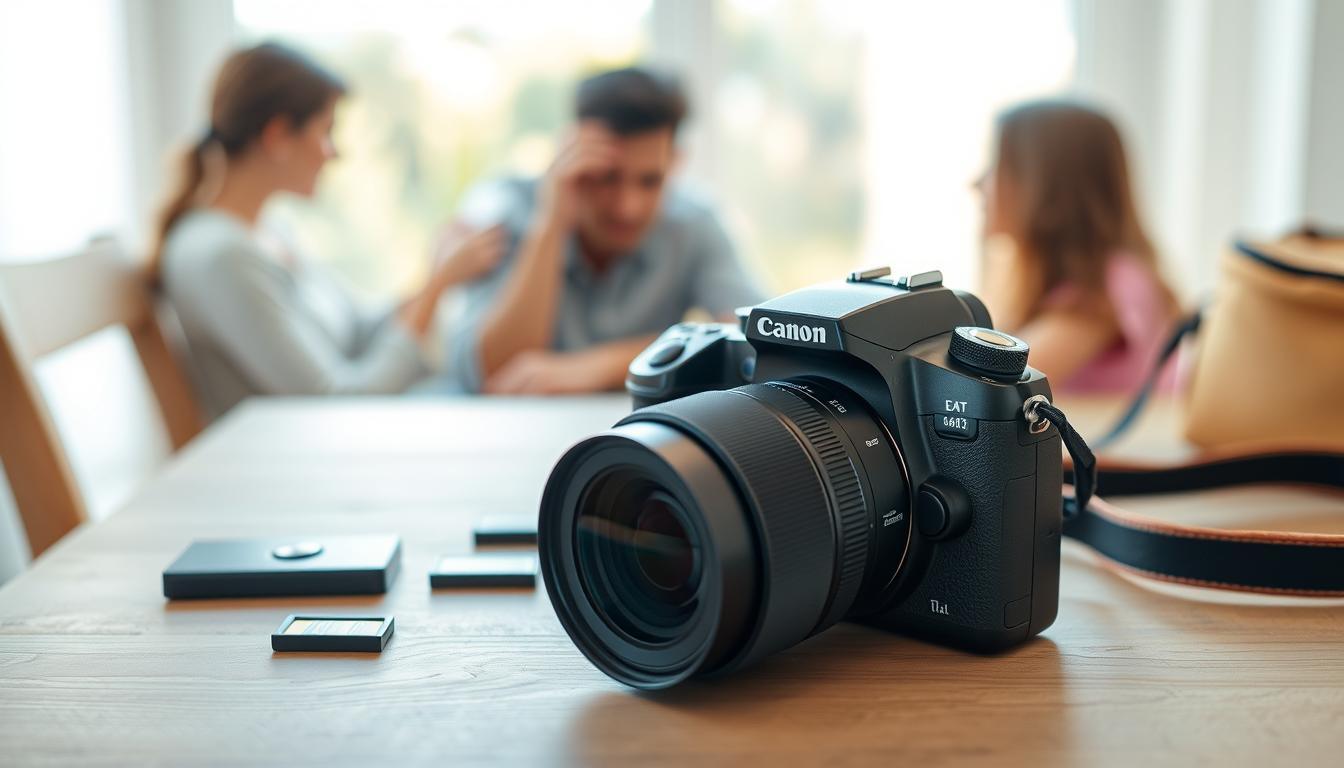
For recording the season, you need a simple, reliable entry-level camera. It’s your key investment. This isn’t about buying stuff; it’s about smartly using your limited resources.
We’re focusing on what’s essential, not just brand names. Our aim is to capture the game without spending too much before the first game.
Smart Used/Rental Options
Moving from essentials to a full kit can blow your budget. We often overestimate what we can afford. A surprise car repair or forgotten fee can make us realize our mistake.
It’s time to switch from wishful thinking to smart spending. New gear is like retail therapy. But, used gear is a smart choice. Think about a used tripod or an older action cam.

Research shows why budgets fail. We don’t account for unexpected costs. We also overestimate our self-control. The “hot-cold gap” makes us buy impulsively.
To avoid this, plan ahead. Look for deals online with discipline. Set up alerts for used gear. Renting high-end items is also wise. It lets you use quality without long-term costs.
This section is your guide to smart used and rental gear. It helps you make smart choices in a chaotic world.
Three Budget Tiers with Sample Carts
Let’s move from abstract piggy banks to concrete price tags, shall we? Theory is cheap; a line item is brutally honest.
This is where your sideline logistics get a real financial education. Inspired by the classic clear jar method, we’re making every dollar as visible as a neon soccer cone. Below is your master spreadsheet, broken into three distinct philosophies.
Think of them as playbooks: the Shoestring Scrum, the Midfield Maestro, and the Capital Cup. Each has a sample cart attached—no fictional items, just real-world gear you can find today.
| Tier Name | Budget Range | Core Philosophy | Sample Cart Items | “24-Hr Wait” Rule For |
|---|---|---|---|---|
| Shoestring Scrum | $150 – $300 | Pure essentials. Function over everything. This is defensive budgeting. | Basic digital camera, 2 extra batteries, memory card, durable team bag. | Any single item over $50 |
| Midfield Maestro | $600 – $1,200 | Value engineering. The smart commission. This tier’s MVP is a sharp, versatile budget lens. | Mid-range DSLR/mirrorless body, 55-250mm budget lens, tripod, basic lighting kit. | Any single item over $150 |
| Capital Cup | $2,000+ | Professional-grade output. Investing in assets that hold value and enable creativity. | Professional camera body, 70-200mm f/2.8 lens, drone, advanced editing software license. | The entire cart before checkout |
See the difference? The Midfield Maestro isn’t just spending more. It’s spending smarter. That budget lens is the photographic equivalent of a player who can both defend and attack—versatile, reliable, and a massive force multiplier for your dollar.
This is where we apply the “commission for work” principle. Your budget earns that lens by avoiding impulse buys elsewhere. Which brings us to the killer app: the waiting period.
Notice the last column in the table? For any item crossing that tier’s cost threshold, you wait at least a day. Saw a fancy gimbal while browsing? Sleep on it. That 24-hour cool-down period murders buyer’s remorse before it’s born.
This tiered approach isn’t about judgment. It’s about transparency for your PTA or team parents. It shows exactly where the money goes, turning abstract numbers into a tangible game plan. It’s the clear jar, but for your entire sideline operation.
The Midfield Maestro’s focus on a core, high-value item like a budget lens is a lesson in focused investment. It’s the same principle behind a smart budget reality check in any hobby—spend where it counts, not everywhere at once.
So, you’ve got your tier. You’ve filled your cart. What do you upgrade first to get the biggest bang for your buck? That’s where the real strategy begins.
What to Upgrade Next for Best ROI
Your starter kit is ready. The season is in full swing. Now, the big question is where to put your next investment for the best results?
Think of gear upgrades like compound interest. A small, smart investment can grow a lot in value. Spending on a new camera body is like gambling. Upgrading your budget lens is like investing in a valuable stock.
Superior optics offer clear returns. A sharp Sigma 17-50mm f/2.8 or a classic Canon 50mm f/1.8 STM can change every photo. You get sharper images and better low-light shots.
This is the gear that keeps getting better. It makes your entire Budget Kits system more valuable. Your first budget lens has done its job. Now, it can help pay for its own upgrade.
Put your next investment in the glass. It’s the smartest way to get more for your money. Teach your budget to grow your visual portfolio, not just save.