
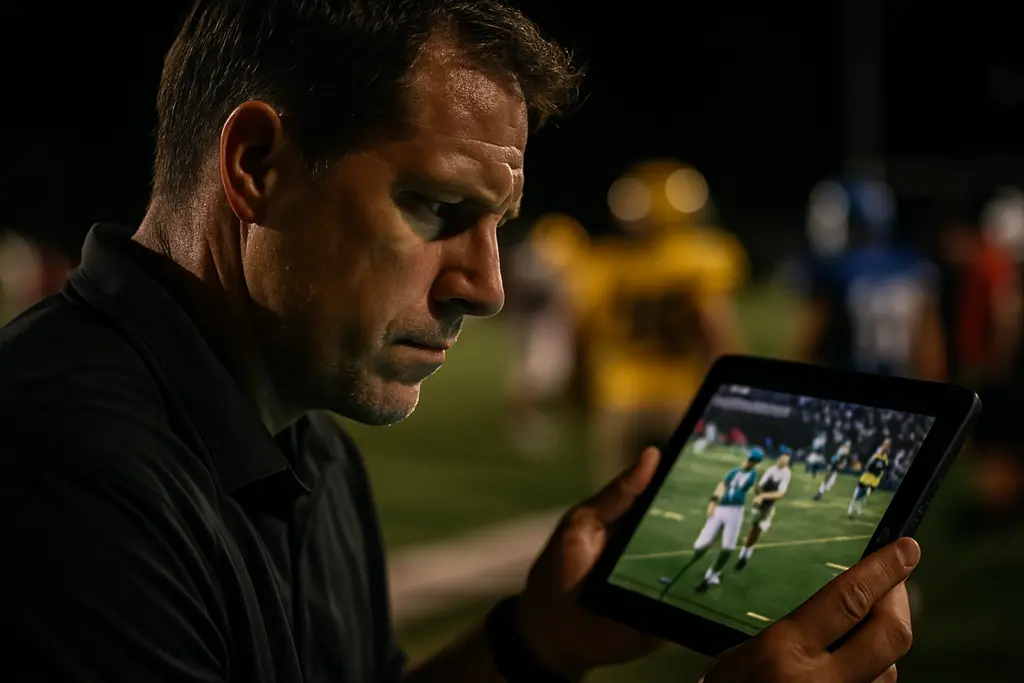
District Rivalry Coaching in Southeast Texas is never just about the play sheet. It shows up in the first clean read by a quarterback, the angle a safety takes after motion, the way a ball carrier covers the football in traffic, and the sideline response after a sudden momentum swing. From my view as a sports photography technical specialist, the best frames from these rivalry games often reveal the coaching details before the box score does: eye discipline, spacing, tempo, leverage at the line, and how young athletes respond under pressure.
Recent Southeast Texas football recaps and previews give coaches, families, and younger players useful examples. La Porte’s 51-27 win over Port Arthur Memorial on October 9, 2026, snapped Memorial’s undefeated start and moved La Porte to 4-2, according to the MaxPreps recap of the game La Porte football recap. The result was not simply a scoreboard note. It showed how a staff can attack a vulnerable secondary, sustain scoring pressure, and carry a four-game winning streak into a district rivalry setting.
What District Rivalry Coaching Shows On Film
District games in Southeast Texas often compress the decision-making window. Opponents know each other’s personnel, families know the rivalry stakes, and players hear about these matchups long before kickoff. That makes technical preparation easier to see. A wide receiver’s split can reveal whether a team wants room for a quick screen. A linebacker’s first step can show whether he trusts the key in front of him. A quarterback’s posture before the snap can tell a photographer, and often a defensive coordinator, whether tempo is becoming a real stress point.
District Rivalry Coaching In The First Quarter
District Rivalry Coaching often starts with the opening script. In La Porte’s win over Port Arthur Memorial, the offense mattered because La Porte outpaced Memorial in total yardage and found space against the Titans’ secondary. That type of start can change how a defense calls the rest of the night. If defensive backs begin protecting against deep throws, intermediate routes open. If linebackers widen too early, the run game can find creases. Coaches do not need a dozen new plays; they need the right first answers to force the opponent into uncomfortable choices.
What A Camera Can Catch For Coaches
Still images help slow down a fast rivalry game. One frame can show whether a receiver stacked the defensive back before the ball arrived. Another can show whether the quarterback kept his shoulders square while escaping pressure. A sequence of photos can show whether a defensive pursuit angle flattened too soon. For youth and sub-varsity coaches, these images become teaching tools because they freeze details that video sometimes rushes past. The point is not to embarrass a player. The point is to show a repeatable movement and connect it to the next practice rep.
Quarterbacks, Turnovers, And Tempo
The Beaumont Bowl preview published on October 14, 2026, framed another classic technical contrast: West Brook’s offense averaged 416 yards per game, while United’s defense allowed 225 yards per game, according to the Beaumont Enterprise Beaumont Bowl preview. The same report noted that West Brook quarterback Tam Anderson had thrown for 959 yards and rushed for 522 yards by Week 7 of the 2026 season, while United’s defense had produced eight interceptions and seven fumble recoveries through six games. No final score for that renewal is included in the research used here, so this analysis stays with the documented pregame matchup.
Dual-Threat Quarterbacks Change The Math
A quarterback who can run and throw changes every pursuit rule. Edge defenders cannot simply fly upfield. Safeties must respect scramble lanes. Linebackers have to close space without giving up a throwing window behind them. West Brook’s documented production through Week 7 of 2026 shows why coaches build answers around a dual-threat signal caller. From the camera well, those answers are easy to spot: designed keepers, moving pockets, quick throws that punish soft coverage, and receivers adjusting routes when the quarterback extends the play.
Takeaways Are A Technical Skill
United’s takeaway numbers in that preview point to coached habits, not random luck. Interceptions and fumble recoveries usually start with footwork, pursuit, communication, and ball awareness. Defensive backs need clean transitions out of breaks. Second and third defenders need to arrive under control. Tacklers need to attack the ball without losing the tackle. On the other sideline, West Brook’s minus-3 turnover margin through six games gave coaches a clear teaching target: ball carriage, read timing, exchange security, and decision discipline. Those are practice-field skills with rivalry-game consequences.
Technical Skills Coaches Can Teach From These Games
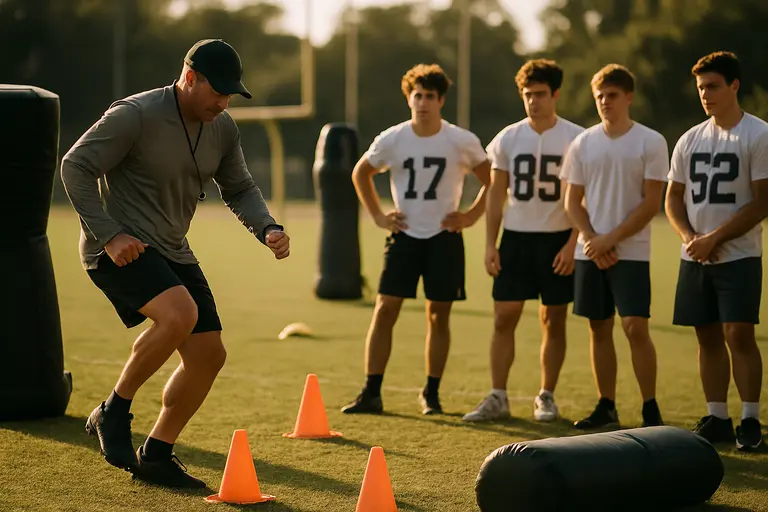
The lessons from these Southeast Texas matchups reach well beyond varsity football. Youth coaches can use them to teach players why fundamentals hold up under pressure. A young quarterback can learn that a smart throwaway is sometimes better than forcing the ball late. A running back can learn that two hands through contact are not optional in a close district game. A safety can learn that a poor angle turns a short gain into a long one. For staffs building practice plans, the connection between recap and drill work matters.
That same teaching mindset connects with broader fall preparation. Coaches working with new players can pair rivalry film with short practice segments, communication checks, and role clarity, much like the ideas covered in Texas fall camp technical skills. The best district staffs do not wait for a mistake on Friday to teach the fix. They build the habit on Tuesday, test it on Wednesday, and ask players to trust it when the crowd noise rises.
Practice Points For Youth Coaches
- Ball security: Use contact finish drills that teach runners to cover the ball before traffic arrives.
- Quarterback reads: Keep progression drills short and game-like, especially against moving defenders.
- Defensive pursuit: Teach angle control with cones, then replace cones with live decision points.
- Receiver spacing: Show how splits and stems create room before the catch, not only after it.
- Sideline reset: Practice the response after turnovers so players learn the next-snap mindset.
Why Home Field Still Shows Up In Technique
La Porte’s recent home form, including seven wins in its last nine home games noted in the MaxPreps recap, fits a common Southeast Texas pattern. Familiar surroundings can help an offense play faster, but speed only helps if the operation is clean. Snaps, motions, route depth, and protection calls still have to hold. A home crowd can add energy, yet the technical gain comes from players using that energy without rushing their eyes or skipping assignments.
Why District Rivalry Coaching Matters In Southeast Texas
District Rivalry Coaching matters because these games shape more than standings. They influence how younger athletes see the sport, how families talk about preparation, and how communities measure growth from week to week. The La Porte result on October 9, 2026, showed how offensive execution can punish a weakness once a staff identifies it. The Beaumont Bowl preview on October 14, 2026, showed how a dual-threat quarterback and a takeaway-minded defense can define the technical conversation before the opening snap.
For photographers, coaches, and parents, the shared lesson is clear: dynamic moments are built from small coached details. The touchdown frame may get the loudest reaction, but the real teaching image might be the quarterback’s eyes moving to the second read, the defender securing outside contain, or the running back protecting the ball as contact arrives. In Southeast Texas, where district rivalries carry school pride and local identity, those details give young players a better model for how to compete with purpose.