
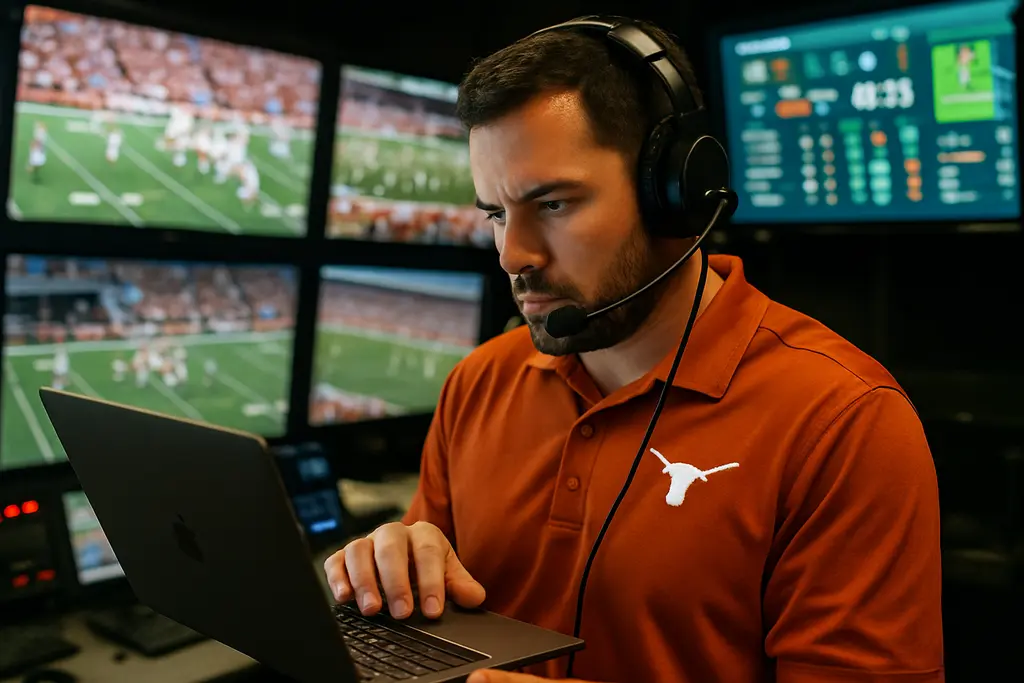
Game-Day Operations at Texas football have become a coordinated mix of fan service, stadium infrastructure, live media, food service, facilities response, and team preparation. At Darrell K Royal-Texas Memorial Stadium, the technology story is not just about bigger screens or faster checkout lanes. It is about whether families can find water, whether staff can respond to a facilities issue, whether media and replay systems stay connected, and whether the building can support a crowd without losing sight of safety, access, and fairness.
Texas Athletics made several technology moves before and during the 2026 football calendar that show how stadium operations are shifting from static signs and radio calls toward shared digital tools. For local leagues and school-based programs, the lesson is practical: the best technology serves people first. It reduces confusion, supports staff judgment, and gives fans clearer information without replacing the human presence that keeps a sports venue accountable.
Why Game-Day Operations Changed At DKR
Stadium Scale Meets Fan Expectations
On September 4, 2026, Texas Athletics launched a new interactive 3D map powered by Mappedin for Texas football game days. The tool was made available through the Longhorns app and the Texas Athletics website, with mapped locations for seating, concessions, restrooms, water, first aid, gates, Fan Services, and other stadium points. Step-by-step wayfinding was described as a planned feature for later in the season, so it should not be treated as a completed function as of September 5, 2026.
That distinction matters. A digital map is helpful only if fans understand what it can and cannot do on a given date. From a sports ethics and compliance view, clear communication is part of responsible venue management. If a parent is looking for first aid, a visiting fan is searching for an entrance, or a senior fan needs the nearest restroom, a map that separates current features from planned ones helps avoid false confidence.
Game-Day Operations And Fan Movement
The fan-facing side of the stadium also included concession updates announced on August 21, 2026. Sodexo Live! expanded Mashgin self-checkout use at DKR by adding 16 units, bringing the stadium total to 105 self-checkout units. Texas Athletics described that as the most at any collegiate stadium in the United States. The same announcement said an interactive digital map would help fans locate food and beverage options and receive directions inside the stadium before the 2026 opener.
For Texas, Game-Day Operations now include the small moments that shape a family’s Saturday: finding a gate, locating water, choosing a shorter concession line, or identifying Fan Services without walking the wrong concourse. These are not side issues. They influence how long fans spend away from seats, how congested walkways become, and how quickly staff can direct people during weather, crowding, or service interruptions.
Technology can help, but it should not push every duty onto the fan. Stadium staff, ushers, volunteers, concession workers, and public safety personnel still need shared information and plain instructions. The right test is not whether a tool looks impressive in a demo. The better question is whether it helps a first-time visitor solve a real problem under stadium noise, heat, and time pressure.
How Technology Supports Staff Behind The Scenes
Facilities Response And The Ops Box
The public usually notices a stadium problem only after something stops working. Behind the scenes, Texas Facilities Services described an “Ops Box” that handles about 5 to 10 service calls per game in good conditions, with tougher game days rising to 60 to 70 calls involving electricians, plumbers, carpenters, and other support teams. Those calls are digitally logged through work management systems, according to the university’s stadium support report.
That work matters because football venues are public gathering spaces, not just sports stages. If a restroom issue, water concern, electrical problem, door malfunction, or seating-area repair needs attention, the response process has to be documented and assigned. Digital logging gives staff a record of what happened, who responded, and where repeat issues may be forming. For youth leagues and local sports organizations, that same principle scales down well: document issues, assign responsibility, and review the pattern after the event.
There is also an accountability benefit. A work order trail helps leaders avoid relying on memory after a busy event. It can support maintenance planning, vendor review, and safer event preparation. That does not make technology a substitute for trained staff. It gives trained staff a clearer record to act on.
Connectivity For Teams, Media, Vendors, And Safety Systems
The University’s Enterprise Technology group has described work that includes maintaining and tuning wireless coverage across the stadium, supporting vendor and media connectivity, supporting replay video and coach-sideline communications, and monitoring security camera systems during each game. The group works in real time to keep systems reliable, as described in its game-day technology account.
This is where stadium technology becomes a competitive and operational support system at the same time. Coaches need communications that work. Replay support must be reliable. Vendors need connections to process service. Media crews need stable access to cover the event. Security systems need monitoring. If one of those areas fails, the issue can affect more than convenience.
As a legal and ethics matter, this also raises the need for clear internal rules. Staff should know who can access systems, how incidents are reported, and how data from cameras, devices, or service platforms is handled. The research provided does not include technical performance numbers such as latency, throughput, outage rates, or device-level security controls, so those details should not be assumed. What is supported is the broader operational point: Texas uses real-time technology support as part of its football game-day staffing model.
Broadcast, Displays, And Team Preparation
Production Tools Inside The Stadium
On August 13, 2024, Texas Athletics opened Texas Studios Powered by Dell Technologies inside DKR. The production center includes four production control rooms, a central server room, multiple audio control rooms, and engineering control rooms. The same project included the “Game Insights Powered by Dell Technologies” branding for real-time advanced storytelling and statistics shown to fans inside the venue.
Those tools change how a crowd follows a game from inside the stadium. Fans are not only watching the field. They are also reading statistics, seeing replays, hearing stadium audio, and responding to video-board prompts. Done well, those elements can help explain the flow of a game, especially for younger fans or visitors who may not know every roster note or situational detail.
There is a balance to keep. A stadium should add context without overwhelming the sport. Statistics and visual storytelling are at their best when they help fans understand down, distance, momentum, player usage, or a key sequence. They should not turn the building into a distraction from the athletes. For local sports groups, the lesson is simple: screens and data should serve the match, not compete with it.
Displays Across Fan And Athlete Spaces
The technology upgrades described in the research also reach other parts of the stadium. UT has installed more than 300 big-screen TVs, interactive displays, and tablets throughout the stadium through its Ricoh partnership. The Howard L. Terry-Bobby Moses, Jr. Longhorn Locker Room includes 43-inch televisions in every locker, internally lit doors, and digital displays in the game-day corridor. The stated goal of that locker-room setting is to improve the player preparation environment.
Those details show that stadium operations are not only about fans in seats. They include athletes preparing for kickoff, staff communicating expectations, and coaches managing a high-pressure day. A display in a locker room has a different ethical weight than a display on a concourse. Team-facing tools should protect focus, privacy, and competitive preparation. Fan-facing tools should prioritize access, accuracy, and clarity.
For readers who follow local venue planning, our related look at fan experience technology connects many of the same questions to entry, tickets, sound, boards, and family planning at sports venues.
What Game-Day Operations Mean For Texas Fans
Game-Day Operations at Texas football now depend on many connected systems: the interactive stadium map launched on September 4, 2026, the 105 self-checkout units in place for the 2026 season, facilities service logging, wireless support, replay systems, media connectivity, digital displays, and production rooms. Each tool has a purpose, but the standard should stay people-centered.
For fans, that means clearer directions, shorter service friction when systems work as intended, and better access to stadium information. For staff, it means faster issue tracking and more shared awareness. For players and coaches, it means a preparation and communications environment built around timing, reliability, and focus.
The best lesson for Texas communities is not that every youth field or local stadium needs the same equipment as DKR. Most do not. The lesson is that sports operations improve when leaders identify the real pressure points first: entry, restrooms, water, medical access, concessions, communication, and maintenance response. Technology should be chosen because it helps those areas work better on a busy Saturday, not because it is new.