
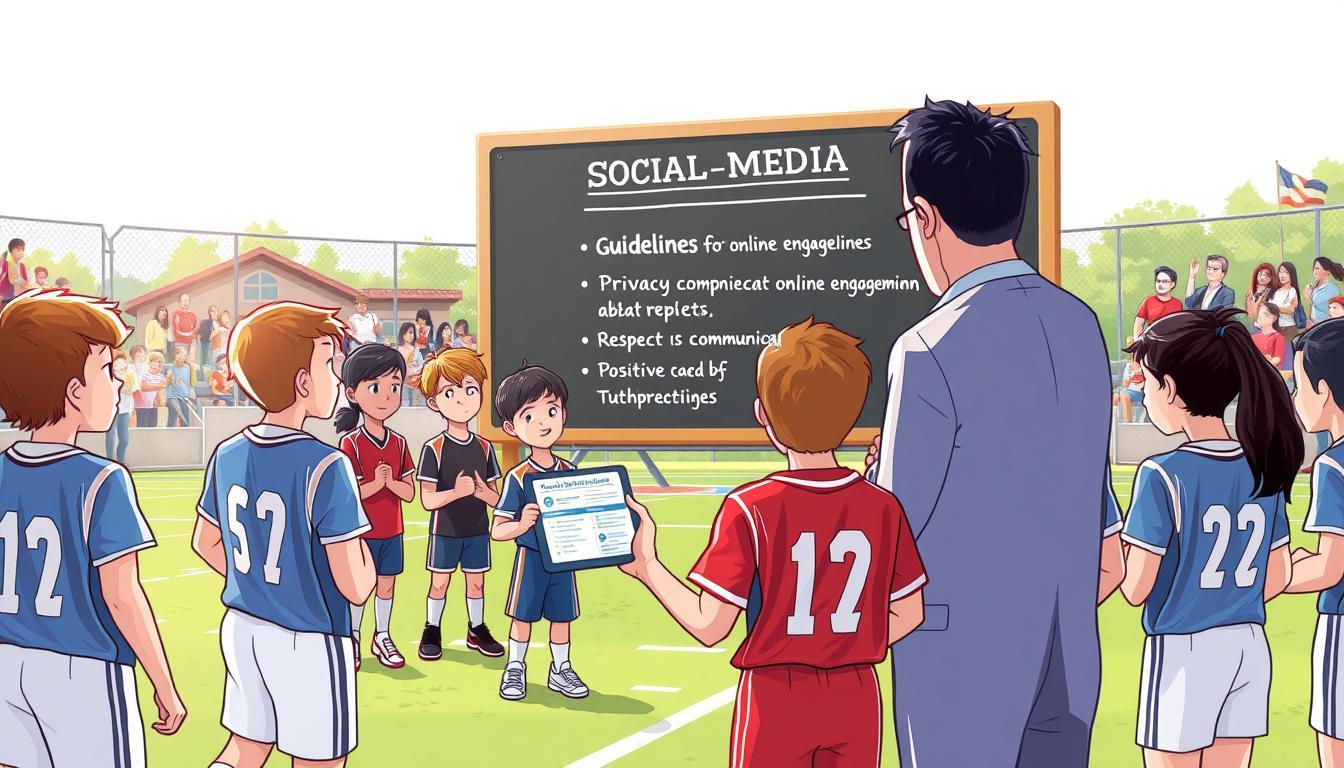
Today, young athletes are used to being online. A huge 95% of American teens are active on social media. They use these platforms to communicate, share, and make friends.
Parents are also getting into the digital game. They use the internet to find out about league news, game schedules, and local sports updates. This makes having a strong online presence very important for youth leagues.
Just having a profile isn’t enough. To really benefit, leagues need a solid plan. Managing these channels well helps build a strong team culture. It also keeps parents informed and supports growth.
The secret to success is having good social media policies. These guidelines protect players and make sure everyone has a positive experience. This article will show you how to create a safe and effective strategy for your league.
Building a Digital Community
The idea of a “village” for young athletes now lives online. For a youth sports league, success on social media means more than just followers. It’s about creating a genuine digital community where everyone can share the season’s journey.
This change turns social pages into a lively online space. It’s where people share experiences that strengthen team spirit. This lasts long after the games are over.
Instagram is great for this mission. A league’s Instagram should tell stories. Share moments from practice, celebrate achievements, and show good sportsmanship. This makes followers feel part of the team.
A branded hashtag is a powerful tool for community building. Create a unique hashtag, like #RiverdaleRockets2024. Use it everywhere—on uniforms, in emails, and at the field.
Encourage people to use it when they post photos and videos. This collects content in one place. It turns individual posts into a shared story.
This approach does more than gather photos. It gets your biggest supporters involved. When parents see their posts on the league’s Instagram, they feel valued. This strengthens everyone’s connection to the league.
| Community-Building Content | Basic Announcement | Primary Goal |
|---|---|---|
| Player spotlight interview | Game time change notice | Celebrate individuality |
| Behind-the-scenes practice video | Registration deadline post | Create insider access |
| Photo collage using your branded hashtag | Standings table update | Showcase community spirit |
| “Play of the Week” fan vote | Concession stand menu | Drive active participation |
Curating your league Instagram with this mix is key. The table above shows how community-focused content aims for connection. Necessary announcements are purely informational. A great digital community provides both.
Remember to engage with posts that use your hashtag. Like and comment on them. This makes people feel heard and encourages more sharing. Over time, your branded hashtag becomes the digital campfire where your league’s stories are told.
This approach builds a positive environment that extends the in-person experience. It gives parents a place to connect and share pride. It gives players a digital scrapbook of their season. A strong digital community becomes a core part of your league’s value, keeping everyone engaged from start to finish.
Choosing the Right Platforms
Your league’s goals and the age of your players’ parents should guide your platform choices. Trying to maintain an active presence on every social network spreads your resources thin and leads to poor results. A focused strategy on one or two key channels is far more effective.
Start by asking two questions. Who is your primary audience? What is your main goal? For most youth leagues, the core audience is parents and guardians. Your goal is often communication and community building.
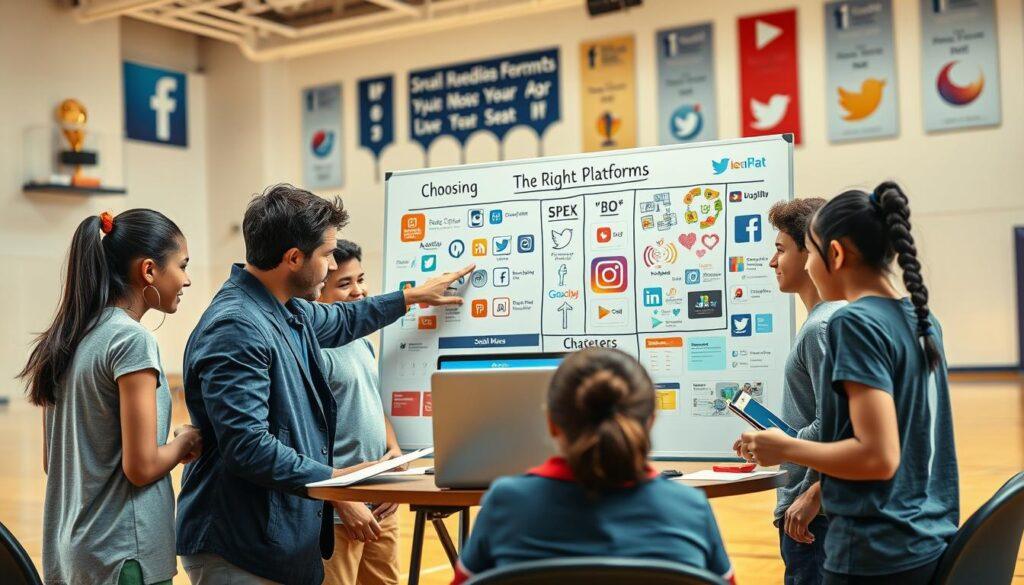
A sports team Facebook page is typically the essential hub. Facebook has broad adoption among adults, making it perfect for reaching parents. Its Group feature allows for private discussions, event planning, and photo sharing. This makes it the go-to platform for official announcements and logistical updates.
Other platforms serve different purposes. Instagram is great for showing action shots and short video highlights. It engages both parents and older players. TikTok appeals directly to younger athletes with its fun, fast-paced creative trends.
YouTube serves as your league’s video archive. It is ideal for posting full game recordings, skill tutorials, and season recaps. Families can easily rewatch memorable moments.
| Platform | Primary Audience | Best Content For | League Goal |
|---|---|---|---|
| Parents & Guardians | Announcements, Event Photos, Group Discussions | Communication & Community | |
| Parents & Teen Players | Action Photos, Short Reels, Stories | Engagement & Branding | |
| TikTok | Players (Teens & Pre-teens) | Fun Challenges, Game Highlights, Behind-the-Scenes | Player Engagement & Fun |
| YouTube | Families & Scouts | Full Games, Tutorials, Season Recaps | Archiving & Development |
Align your platform choice with specific objectives. Use Facebook to retain and inform current families. Use Instagram and TikTok to attract new players by showing your league’s vibrant culture. Clear social media guidelines are key. They help manage phone use during team events.
This focused approach ensures your content reaches the right people. For deeper insights into crafting a winning online presence, explore this resource on social media strategies for sports. Investing time in the right platforms builds a stronger, more connected league community.
Posting Schedules and Content Mix
Your league’s social media is like a weekly TV show. Fans expect new content at the same time every week. This is what you need to do with a good posting schedule and content mix.
Planning is key. At the start of the season, league leaders should agree on a social media plan. This includes how often to post and what to share. This plan is a key part of your social media policies.
A content calendar is your best tool. It helps you plan the season, big games, and regular posts. Being consistent is important. Posting three times a week is better than posting a lot one week and then nothing for a while.

What should you put in your calendar? A mix of content keeps followers interested. It should include different types to celebrate your athletes and provide value.
Having a clear schedule and mix in your social media policies helps everyone know what to do. It sets clear expectations and keeps your league’s brand voice consistent. Here’s a good mix to consider:
| Content Type | Example | Posting Frequency |
|---|---|---|
| Game Highlights & Results | Action photos, final scores, short video clips of great plays. | 1-2 times per game week |
| Player/Team Spotlights | “Athlete of the Week” feature, team introductions, birthday shoutouts. | 1 time per week |
| Skill & Drill Tips | Short coaching videos on fundamental skills, nutrition reminders for athletes. | 1 time every other week |
| Sportsmanship & Education | Posts about respect for officials, positive parenting on the sidelines, safety tips. | 1 time per month |
| Community & Sponsor News | Thanking local business sponsors, announcing community service events. | 1-2 times per month |
Having visual assets ready is important. Knowing you need a player spotlight every Thursday means you can schedule photo sessions ahead of time. This is why clear photography and social media policies are so important.
Don’t forget to adjust your schedule and mix based on what works. If “Skill Drill Friday” is popular, do more of it. This flexible, yet planned, approach is key to your league’s social media policies. It builds trust and keeps your digital community growing all season.
The Importance of High-Resolution Images
Creating a lively league Instagram feed starts with one key thing: great pictures. In a world full of images, bad quality photos get ignored fast. High-quality, well-made pictures are your best tool to grab attention.
Studies show that good pictures can change how people feel and act. They connect with us on a deep level. For any group, getting good photos and videos is the first step to making engaging content.
Why is high-quality important? First, it shows you’re professional. Clear images mean your league is well-organized. Second, they capture real emotions, like the thrill of a goal or a player’s determination.
To get amazing shots, you need to be ready. Focus on the most exciting part of the action. Use the “rule of thirds” to make your photos more interesting. Don’t just shoot the ball; capture the reactions too.
You don’t need a fancy camera to take great photos. Smartphones can do a lot. Make sure your camera lens is clean and focus on your subject. Burst mode is great for fast action.
Basic editing can make a good photo even better. Use your phone’s tools or a free app. Brighten dark areas and make colors stand out. Crop your photos to improve them, but don’t overdo it.
Each social platform has its own best image size. Posting the right size ensures your photos look great everywhere. Here’s a quick guide for the most important platforms for youth leagues.
| Platform | Recommended Format | Optimal Dimensions | Aspect Ratio |
|---|---|---|---|
| Instagram Feed | JPEG or PNG | 1080 x 1080 px (Square) | 1:1 |
| Instagram Stories | JPEG or MP4 (video) | 1080 x 1920 px | 9:16 |
| JPEG | 1200 x 630 px | 1.91:1 | |
| Twitter / X | JPEG | 1200 x 675 px | 16:9 |
When your league Instagram is always top-notch, you build a strong brand. Parents love sharing your photos. Players feel like stars. This makes your league very attractive to businesses looking for sponsors.
Spending time on great photos is worth it for your league’s online image. It’s key to telling your story online. For more, check out how to build a standout sports photography to attract more clients and boost your league’s image.
Engaging Parents and Local Businesses
Parents are very important to your team. Start by setting clear rules for online behavior. A signed social media code of conduct helps everyone stay positive online.
Make parents your team’s biggest supporters. Show off their volunteer work or use their professional skills. Ask a parent with marketing know-how to help manage your Facebook page.
Local businesses are great for sponsorships and support. Use your social channels to connect with them. Your Facebook page is perfect for highlighting sponsors.
Write supportive comments on local schools or rival teams’ pages. This builds goodwill and strengthens your local network.
Effective engagement creates a cycle of support. Share behind-the-scenes content and athlete stories that families will love. Provide real-time game updates.
Respond to comments from parents and business owners. For more ideas, check out these social media ideas for youth sports. A focused strategy turns your online presence into a community hub.