

In Tarrant County, youth sports safety moved from a sideline concern to a field-level planning issue for Mid-Cities Pee Wee Football & Cheerleading Association. On September 22, 2026, the association adopted a formal Cardiac Emergency Response Plan, expanded access to automated external defibrillators at six league sites, and added CPR education and drills for coaches and athletes. As of October 5, 2026, that step is best understood as a recent local example of how youth football programs can treat emergency readiness as part of normal game-day operations.
For families in the Mid-Cities area, the point is not fear. It is preparation. Pee wee football depends on trust among parents, coaches, board members, volunteers, and young athletes. Safety policies help that trust become visible: where the AED is, who calls for help, who starts CPR, who removes an athlete after a suspected concussion, and who documents what happened. From an ethics and legal standpoint, those details matter because children rely on adults to set clear standards before pressure builds on game day.
Why Youth Sports Safety Changed In Mid-Cities
What The September 22 Plan Did
The Mid-Cities action on September 22, 2026, combined three practical pieces: a written cardiac emergency response plan, AED access at six league sites, and CPR education with drills. A written plan gives coaches and volunteers a shared order of action. AED access addresses the reality that sudden cardiac emergencies require fast response. Practice through drills helps reduce hesitation when a real emergency happens in front of families, teammates, and officials.
This version of youth sports safety also respects the volunteer nature of local leagues. Many youth football organizations rely on parents and community members who give time before and after work. A plan cannot assume every adult has medical training. It should assign roles in plain language: call 911, retrieve the AED, meet emergency responders, move athletes away from the scene, and record the incident for league review. Those assignments support faster action while reducing confusion.
Why Emergency Readiness Fits Football
Football has long focused on helmets, tackling form, hydration, and heat. Cardiac planning adds another layer without taking away from those basics. In youth sports, emergency planning should fit the rhythm of practices and games. A coach who checks the AED location during field setup can do that at the same time they check water access, weather conditions, and roster attendance. A league board that schedules CPR refreshers can pair them with preseason coach meetings rather than treating them as separate events.
The ethical benefit is direct: children should not have to depend on luck if a medical emergency occurs. The legal benefit is tied to reasonable care. A league that writes a plan, trains adults, and practices the plan is better positioned to show that safety was not an afterthought. That does not eliminate risk, and it is not a guarantee against injury, but it can show a serious effort to protect athletes.
What Head-Impact Research Says
Tackle And Flag Data Points
Cardiac planning is only one part of youth football risk reduction. Head impacts remain a central issue for parents and coaches who are deciding how children should enter the sport. CDC data comparing youth tackle and flag football reported that tackle football players ages 6 to 14 sustained a median of 378 head impacts per season, compared with 8 for flag football players; the same CDC page reported tackle players had 15 times more head impacts overall and 23 times more high-magnitude head impacts than flag players CDC youth football head impacts.
Those numbers do not say every child must play one format or the other. They do give local families useful context. Flag football can be a developmental entry point for younger athletes who want passing, catching, spacing, pursuit angles, and team structure with far fewer head impacts. Tackle football can still be taught with safer practice design, careful contact limits, and firm removal rules when concussion symptoms appear.
Game-Day Contact And Practice Culture
The CDC comparison also reported that, in youth tackle football, the rate of high-magnitude head impacts was two times higher in games than in practices. That finding should shape how leagues think about both preparation and competition. Coaches cannot control every collision in a game, but they can control how athletes are taught to block, tackle, avoid leading with the head, and speak up after symptoms.
That is where youth sports safety becomes part of player development. A child who learns safer contact technique at age 9 carries those habits into middle school and high school. A coach who rewards heads-up tackling, rather than only the loudest hit, sends a message about what the team values. In a community league, that message often spreads beyond one roster because families talk, assistant coaches move between age groups, and younger siblings watch older players.
Coach Communication And Legal Duty
Youth Sports Safety Duties For Coaches
Youth sports safety duties start before kickoff. Coaches should know the league’s emergency plan, where medical equipment is located, who is responsible for parent contact, and how suspected concussions are handled. They should also understand that a child may hide symptoms to stay in the game. That is why adult communication has to be repeated, calm, and specific.
A 2023 cluster-randomized trial published in Injury Prevention found that Pre-Game Safety Huddles, brief meetings before each game for coaches from both teams to affirm concussion safety and encourage symptom reporting, significantly increased athletes’ expected likelihood of reporting concussion symptoms among ages 9 to 14 Pre-Game Safety Huddles trial. For local leagues, the value is practical: a two-minute conversation can reset the tone before competition gets emotional.
Parent Trust And Reporting Habits
Parents judge safety by what they can see. They see whether coaches explain rules, whether officials stop dangerous play, whether a child is pressured to return after a hard hit, and whether board members answer questions clearly. Good reporting habits build confidence because they show that the league is willing to learn from incidents rather than minimize them.
From a legal ethics view, documentation should not be treated as paperwork for its own sake. It protects the athlete first. A written injury report can help parents share accurate details with a clinician. A practice log can show whether contact rules were followed. A board review can identify whether an AED was easy to find, whether radios or phones worked, and whether coaches need more training. Local organizations building these habits may also benefit from related safety planning ideas in youth sports oversight steps for concussion removal, coach training, and return-to-play routines.
Practical Steps For Local Leagues
Field-Level Checks
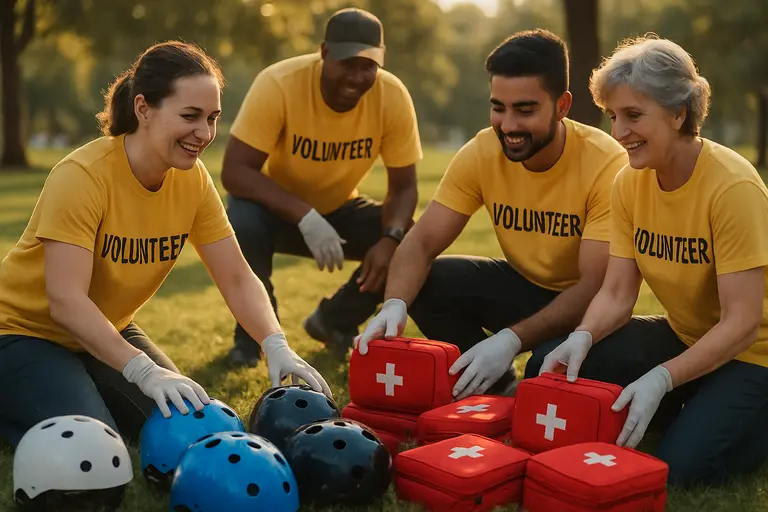
Mid-Cities Pee Wee Football offers a useful case because its September 22, 2026 measures were concrete. Other leagues do not need to copy every detail in the same order, but they should be able to answer the same basic questions. If a parent asked where the AED is, who has CPR training, and what happens after a suspected concussion, the answer should be quick and consistent.
- Confirm AED access: Identify the device location at each field and make sure coaches know it before practices and games.
- Assign emergency roles: Decide who calls 911, who retrieves equipment, who guides responders, and who manages the team area.
- Use short safety huddles: Remind coaches and athletes before games that symptoms should be reported and unsafe contact should not be praised.
- Track incidents: Record injuries, removals, emergency responses, and follow-up steps in a secure league process.
- Train volunteers repeatedly: Offer preseason and midseason refreshers so safety knowledge does not fade after registration.
Board-Level Accountability
Boards have a duty to make safety workable, not just written. A policy that sits in a folder will not help a child on a hot practice evening or during a crowded Saturday schedule. Board members should budget for training, inspect field readiness, set coach expectations, and ask whether safety rules are being followed across all age groups, not only the most visible teams.
Equity also belongs in the discussion. If one field has better equipment access than another, families will notice. If newer coaches receive less training than veteran coaches, athletes may face uneven protection. A fair program makes sure every team has the same core safety expectations, whether the roster is made up of first-year players or older athletes preparing for school football.
Mid-Cities Pee Wee Football And Youth Sports Safety
The Mid-Cities example shows how local football can keep its community identity while raising expectations for emergency response and injury awareness. The association’s September 22, 2026 plan did not change the purpose of pee wee football. Children still need instruction, friendships, discipline, and the fun of team competition. What changed was the visible commitment to preparation.
The practical value of youth sports safety is that it gives adults a shared playbook for moments that cannot be left to chance. AED access, CPR education, concussion communication, and honest reporting all point in the same direction: young athletes deserve organized care before, during, and after competition. For Mid-Cities families, that is not just a policy issue. It is a community promise made on the same fields where children learn the sport.