
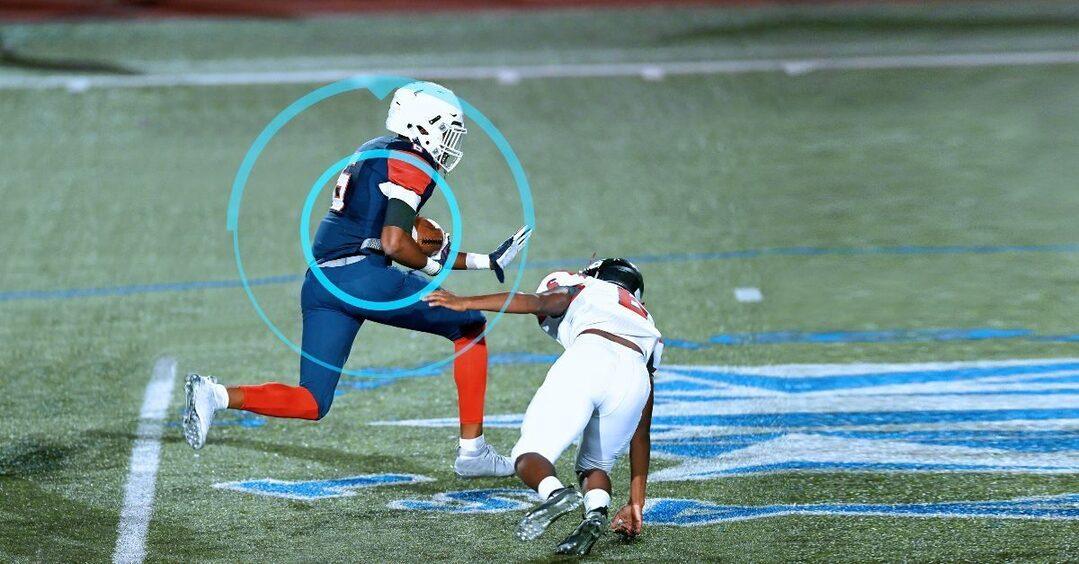
A diving catch might reveal remarkable range or a recovery from a bad first step. When a few seconds in a social feed become the verdict on an entire game, sports performance analysis needs to separate a moment’s visual impact from the quality of the play.
The stakes rise when an impression becomes a prediction. Comparing the best Texas sports betting sites cannot validate an opinion formed from one clip; the offshore sportsbooks listed there are not Texas-licensed operators.
A Truthful Photograph Can Still Invite a False Verdict
A photograph can document the visible position of a foot, the location of the ball or the space between opponents. It cannot, by itself, establish what happened throughout the sequence.
That distinction also belongs beside game-day visual storytelling: a replay can show where the glove met the ball without explaining why the fielder needed to dive. The missing context is often where the performance lives.
Separate observation from interpretation. “The defender is behind the receiver” describes the frame. “The defender missed his assignment” requires knowledge of the coverage and what happened before the shutter fired.
The same restraint applies to expressions. A clenched jaw records an expression, not toughness. One downward glance does not establish that a player stopped caring.
Sports Performance Analysis Needs the Missing Attempts
A montage of four catches shows four successes. It cannot tell you whether those catches came from five targets or fifteen.
Start with successes and opportunities, then examine the circumstances. Were the throws catchable? Was the receiver facing the same coverage? Did the game situation change what the offense was trying to accomplish?
Give routine plays equal attention. Imagine a basketball defender closing a driving lane so effectively that the ball moves elsewhere. Nothing spectacular follows, yet that possession may offer stronger evidence of sound positioning than a desperate recovery block.
To test an impression, choose a stretch of consecutive possessions rather than another collection of best moments. Include failures and ordinary outcomes. Look for the same behavior against different opponents before calling it a dependable strength.
Match the View to the Question
Different formats answer different questions. Treat them as complementary evidence, not interchangeable proof.
| Format | Useful for judging | What remains uncertain |
|---|---|---|
| Still photograph | Visible position and a specific moment | Movement, sequence and intent |
| Short highlight | How a selected play unfolded | Frequency and omitted attempts |
| Full-game footage | Repeated decisions and changing situations | Off-screen action and assignments |
| Statistics with context | Rates across recorded opportunities | Details the chosen measure excludes |
The most complete recording is not necessarily the clearest view of every player. A wide angle can preserve off-ball spacing; a tight angle can reveal finer technique. Match the camera view to the question rather than assuming a longer video resolves every uncertainty.
Watch a disputed sequence at normal speed first. Then pause for positioning and return to normal speed to judge the time available. Slowing a play helps inspection; it should not quietly give the athlete extra decision-making time.
Let the Numbers Challenge the Picture
Use statistics to test your interpretation, not decorate it.
The NFL’s completion probability measures consider factors including receiver separation, field position and proximity of pass rushers. These variables help distinguish the difficulty of a pass from the simple fact that it was completed.
But do not turn an estimate into a complete player grade. A difficult completion does not prove the quarterback chose the best available target. Nor does one failed play establish poor technique.
The distinction is that outcome is not execution. Compare rates over meaningful opportunities, check the player’s role and return to the footage when the numbers and your first impression disagree.
For local games without tracking data, modest records still help. Note attempts, minutes played, opponents and the situation. A transparent, limited count is more useful than an elaborate conclusion built on unavailable information.
Demand More Context From the Next Replay
As you encounter new feeds, edited packages and analysis tools, judge them by what they let you inspect. Can you locate the original game? Are the score and clock visible? Does the sequence begin before the decisive movement?
Look for more coverage, not more polish. Clear dates, accurate captions and preserved sequences deserve more confidence than dramatic presentation alone. Editing that changes context can mislead even when the individual images look convincing.
Professional visual journalism standards require accurate representation and editing that preserves content and context. For fans, that suggests a useful habit: check the caption, game and sequence before turning an authentic photograph into a broader judgment.
An arrow or tracking label is an interpretation layered onto footage, not an extra eyewitness. Ask what the annotation measures and whether it has mistaken one player for another. More sophisticated presentation should raise the standard for checking a claim, rather than make viewers less willing to question it.
Photographers can help by publishing establishing frames alongside close-ups and describing visible actions without assigning motives. Fans should be especially cautious when a clip supplies a strong accusation but removes the moments needed to evaluate it.
Enjoy the Highlight Without Making It the Whole Case
The next extraordinary image deserves appreciation, not automatic promotion into a scouting verdict. Better sports performance analysis starts with a narrower claim, tests it against repeated opportunities and leaves room for what remains unseen. Keep the photograph that captures the night. Demand more evidence before deciding it explains the player.