

Toro District Youth Sports is already a major planning topic for families, coaches, school leaders, and youth league boards across Northwest Harris County. On February 25, 2026, the Houston Texans, Harris County, and Howard Hughes Communities unveiled Toro District™, an 83-acre sports and entertainment destination planned for Bridgeland in Northwest Harris County, with the Texans’ future headquarters at its center Texans announcement. The project is not just a professional football facility. Its plans include training fields, courts, parking, parks, and education partnerships that could shape how young athletes train, compete, and prepare for sports-related careers.
From a sports ethics and compliance view, the promise is significant because youth sports infrastructure is never only about new grass, courts, or buildings. Access rules, supervision policies, scheduling practices, safety planning, and fair treatment of community programs decide whether a major venue benefits a wide group of athletes or only the most connected organizations. For local sports groups, the key question is not whether Toro District will be impressive. The better question is how its resources can be used responsibly for skill development, tournament access, and public benefit.
Toro District Youth Sports And Training Access
The training footprint described in the official announcement is large enough to matter well beyond the Texans’ own football operations. The planned Texans headquarters is listed at 175,000 square feet and includes an indoor fieldhouse plus three outdoor NFL training fields team facility plans. For youth athletes, that kind of setting can create a higher standard for technical skill work, especially if community programming is built with age-appropriate coaching, clear facility rules, and realistic development goals.
Toro District Youth Sports Skill Pathways
Skill development depends on repeated, structured reps. Football players need space for footwork, route timing, blocking angles, tackling progression without unsafe contact, and position-specific film review. Volleyball players need court availability, serving lanes, approach work, defensive movement, and small-group coaching. The Toro District plan includes multiple flag football fields adjacent to the headquarters and up to 21 volleyball courts, according to the Texans’ announcement. That mix matters because it points to more than one sport and more than one athlete profile.
For younger athletes, flag football fields can support safer introductory football programming when coaches use clear contact limits and teach movement before collision. For volleyball, a high court count can help clubs, schools, and tournament operators reduce cramped scheduling, if the booking model allows community use. The difference between a useful youth facility and a difficult one often comes down to how weekend blocks, practice windows, warm-up space, and spectator flow are handled.
Why Indoor Space Changes Technical Training
An indoor fieldhouse creates options that outdoor-only facilities cannot provide. The research notes describe a fieldhouse designed to host nearly 16,000 attendees, with potential uses that include tournaments, community events, and graduations. Even without assuming a final event calendar, that scale suggests a venue where youth sports events could be paired with classroom-style instruction, coach clinics, officiating education, recruiting education, or sports medicine sessions.
Technical training improves when athletes can repeat skills under consistent conditions. Coaches can isolate throwing mechanics, acceleration posture, balance, first-step quickness, passing angles, and court spacing without losing time to venue constraints. For families in Northwest Harris County, that matters because travel time, limited practice slots, and inconsistent facilities can affect participation as much as talent does.
Infrastructure Beyond The Practice Field
The project’s youth sports impact will not be measured only by fields and courts. Harris County’s announcement states that six parks and athletic fields are included in the plan, adding recreation infrastructure in a fast-growing part of the county county project details. Parks can serve younger children, siblings, recreational players, and families who may not be tied to club sports. That helps widen the benefit if park access is planned with safety, transportation, and inclusive programming in mind.
The Texans announcement also describes roughly 5,000 parking spaces planned for the district. For youth tournaments, parking is not a minor detail. Poor parking plans can create late arrivals, unsafe drop-off habits, traffic pressure near fields, and stress for volunteers. Adequate parking, paired with clear arrival windows and pedestrian routes, can make a tournament more manageable for families and safer for children moving between fields, courts, and gathering areas.
Venue Logistics For Youth Events
Youth sports events work best when logistics are designed before registration opens. Tournament directors should know how teams will check in, where buses or vans may unload, how medical support will be reached, and how spectators will move without interfering with warm-ups or competition. If Toro District hosts large youth events after opening, organizers will need written site rules that explain field access, credentialing, emergency contacts, weather procedures, and limits on unsupervised athlete movement.
These are not small administrative tasks. In youth leagues, facility-use agreements often shape who is responsible for injury reporting, coach conduct, background screening, equipment standards, and parent behavior. A large district tied to a professional franchise can raise expectations for organization and safety. Local leagues should be ready to match that standard with clear policies and trained volunteers.
Access For Schools And Career Programs
The planned partnerships with Cypress-Fairbanks ISD, Waller ISD, and Lone Star College may become one of the most important parts of the project for students who love sports but may not become professional athletes. The Texans’ announcement says students from those institutions are expected to have internship, structured career-pathway, and sports-focused academic programs tied to the facility. That creates possible exposure to athletic training, operations, facility management, coaching support, media, event staffing, and sports business roles.
For a community sports site, that matters because youth infrastructure should serve more than elite competition. A student who learns event operations may later run a youth tournament. A student who studies athletic training may support local high school athletes. A student who sees how a professional facility handles scheduling and safety may bring those habits back to a school or club program. The sports ecosystem grows stronger when the pathway includes players, coaches, officials, administrators, and support staff.
Equity, Compliance, And Community Use
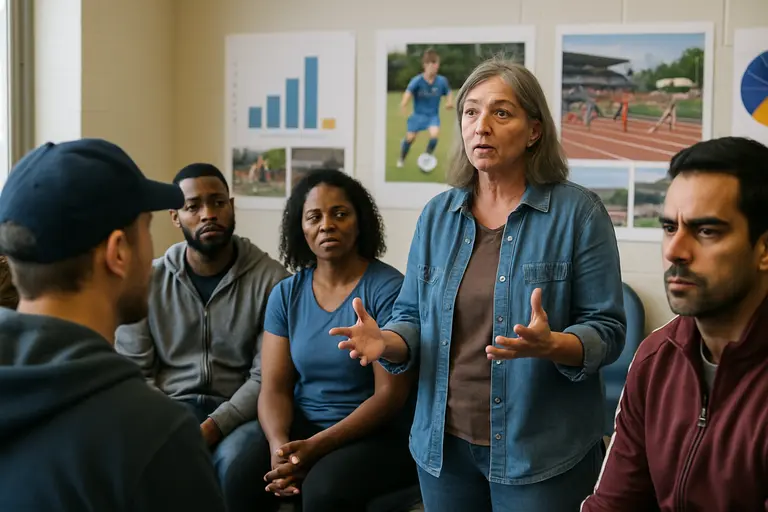
New facilities can create excitement, but youth sports leaders should ask practical fairness questions early. Which organizations will receive access? Will recreational teams have any path into the venue, or only large clubs? Will girls’ volleyball, flag football, adaptive programming, and school-based programs receive fair scheduling consideration? Will cost structures be published clearly enough for families to understand them?
For Toro District Youth Sports, the strongest community value would come from transparent rules. That means written rental policies, conflict-of-interest safeguards for scheduling, consistent insurance requirements, and clear expectations for coaches and vendors. It also means youth photography and media policies should be addressed before major events. Parents should know how images may be used, where credentials are required, and how to raise concerns about athlete privacy.
Local sports communities across Texas face similar questions as new venues open. The same access, sponsorship, and community benefit issues seen in other facility projects are covered in our discussion of Texas Health Mansfield Stadium youth sports, where public benefit depends on more than the size of the building. In Northwest Harris County, the same principle applies: infrastructure creates opportunity, but policy determines who can use it.
- For coaches: plan skill sessions around age, safety, and position development instead of treating premium fields as photo backdrops.
- For league boards: review insurance, background screening, emergency action plans, and facility-use terms before requesting event dates.
- For families: ask whether programs offer clear schedules, qualified supervision, and reasonable communication about costs and expectations.
- For schools: connect facility access with career learning, not only competition calendars.
What Toro District Youth Sports Means For Northwest Harris County
The project is scheduled for completion in 2029, according to the research notes, so its full youth sports impact cannot be measured yet. What can be said as of September 10, 2026, is that the official plans point to a rare concentration of sports infrastructure in Bridgeland: a Texans headquarters, indoor and outdoor training space, flag football fields, volleyball courts, parks, athletic fields, parking, and school-linked career pathways. That combination could help Northwest Harris County become a stronger hub for training, tournaments, and sports education if access is managed with care.
Toro District Youth Sports should be judged by how well it supports young athletes at different levels, not only by the presence of professional-grade facilities. The best outcome would be a district where a beginner can learn movement skills, a club athlete can sharpen technique, a student can explore a sports career, and a family can attend an event without confusion or unnecessary barriers. The facilities may bring the platform, but the community rules, coaching standards, and access decisions will decide the lasting value.