
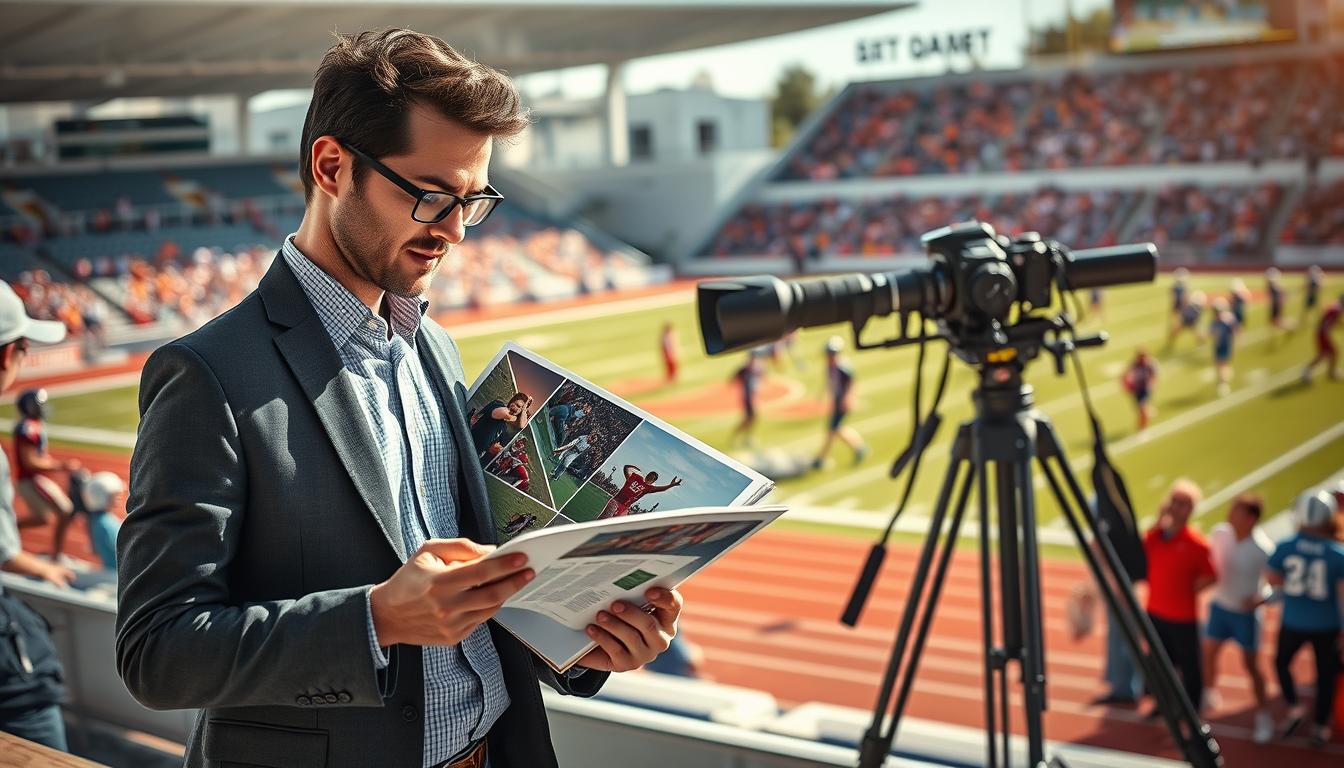
Every youth sports league aims to make the season unforgettable for players and families. Capturing these moments is key. Hiring a Sports Photographer is more than just a budget item; it’s a vital investment in your league’s history. A good photographer does more than just snap photos.
Game days are busy and messy. Organizing a photo session for many young athletes is a big task. Leagues, like Little League, have rules for photography to keep the field safe and manage access.
A professional photographer makes a big difference. They turn chaos into a smooth experience. They know how to work with kids and capture the spirit of the game. This results in a collection of powerful action shots and real smiles that families will cherish.
Choosing the right league photographer is a big decision. This guide will help you understand what to look for when vetting photographers. This ensures you find someone who fits your league’s needs and takes amazing photos.
The Vetting Process
Your league’s first step in hiring a sports photographer is to create a detailed checklist. This checklist helps you find professionals who are serious about working with young athletes. It’s important to separate those who are just casual from those who are truly dedicated.
Begin by asking for and checking professional references. Talk directly to past league directors or sports organizers they’ve worked with. Ask about their reliability, how they interact with kids, and if they stick to schedules. A good photographer for youth sports will already know the pace and emotions of your league.
It’s also key to make sure the photographer follows your league’s rules. You need to confirm they understand and will respect your specific policies. Many leagues require signed consent for photos and don’t allow the sale of images without written permission. They also control who can enter the field and facilities. A good photographer will agree to these rules from the start.
Choosing a local sports photographer has its benefits. They know the community, the fields, and the lighting conditions. This local knowledge helps them plan better and work more efficiently. Good communication and planning are essential for a successful partnership.
Here’s a checklist to help you vet photographers. It covers important areas and explains why they’re important for your league’s safety and quality.
| What to Vet | Why It Matters | Key Question to Ask |
|---|---|---|
| References & Youth Sports Experience | Proven reliability and understanding of the fast-paced, sensitive nature of youth athletics. | “Can you provide contact info for two youth leagues you’ve photographed for in the last year?” |
| Understanding of League Media Policies | Ensures compliance with photo release rules and prevents unauthorized commercial use of images. | “How do you handle model releases and what is your policy on selling photos of our players?” |
| Insurance & Background Checks | Protects the league from liability and ensures child safety is a top priority. | “Are you able to provide proof of general liability insurance?” |
| Local Venue Knowledge | A local sports photographer can anticipate lighting challenges and logistics, saving time. | “Are you familiar with the lighting conditions at our main sports complex in the evening?” |
A thorough vetting process is essential. It helps you find photographers who are skilled and share your league’s values. This careful selection makes the next steps of building a standout sports photography portfolio and interviewing more productive. You’re not just hiring a photographer; you’re choosing a trusted partner for your season.
Reviewing Action and Portrait Portfolios
A photographer’s skills are shown in their action and portrait shots. This review is key when hiring a sports photographer. You’re checking their technical skill, creativity, and reliability.

First, look at their action shots. The ball, a player’s face, or a bat should be sharp. If it’s blurry, it might mean slow shutter speed or poor tracking.
Great photographers, like Gerald Leong, capture the peak of emotion and action. Leong has worked for the NBA and ESPN. He finds the “leading line” in a scene, guiding the viewer’s eye.
For youth or amateur leagues, check their portfolio for similar events. Does their work match your vision? Look for shots that tell a story, like a player’s determination or a team celebration.
Then, examine their portrait work. Team photos, coach portraits, and award shots are important. Look for good lighting and natural posing.
The background should be clean and not distract. A strong portrait photographer makes people look confident and teams unified. This is key for promotional materials and league archives.
| Evaluation Criteria | Action Portfolio Focus | Portrait Portfolio Focus |
|---|---|---|
| Technical Skill | Sharp focus on fast-moving subjects; no motion blur. | Even, flattering lighting; sharp focus on faces. |
| Composition | Use of leading lines, rule of thirds; dynamic framing. | Balanced grouping, clean backgrounds, engaging poses. |
| Emotion & Storytelling | Captures decisive moments: victory, effort, intensity. | Conveys team spirit, individual personality, pride. |
| Lighting Handling | Adapts to challenging stadium or outdoor light. | Creates controlled, professional studio-like lighting. |
| Turnaround Time | Evidence of quick editing for same-day social media. | Consistent delivery of polished, retouched images. |
A strong portfolio helps in negotiating sports photography contracts. When a photographer shows top-tier work, you can discuss specific needs. You know they can deliver.
Use the portfolio to set contract terms. If their action shots are great, specify the number of “highlight” images per game. If their portraits are excellent, outline the requirements for team and individual sessions.
Also, discuss usage rights. A portfolio shows the quality you expect to own or license. Fast turnaround, as shown in social media posts, should be a contract clause. This ensures timely content for your league.
Ultimately, a detailed portfolio review makes hiring a sports photographer a data-driven choice. It moves from promises to proof. It ensures the photographer can freeze action and create timeless portraits for your organization.
Understanding Equipment and Lighting Capabilities
Looking at a photographer’s skills is more than just liking their style. You need to check their equipment and light skills. These are key parts of sports photography.
The right equipment is vital for capturing fast action. A pro needs a camera that shoots fast and focuses well. They also need lenses that work in low light, like indoor arenas or evening games.
Lighting is just as important. A good photographer works with light, not just against it. They know how to use natural and artificial light for the best shots.
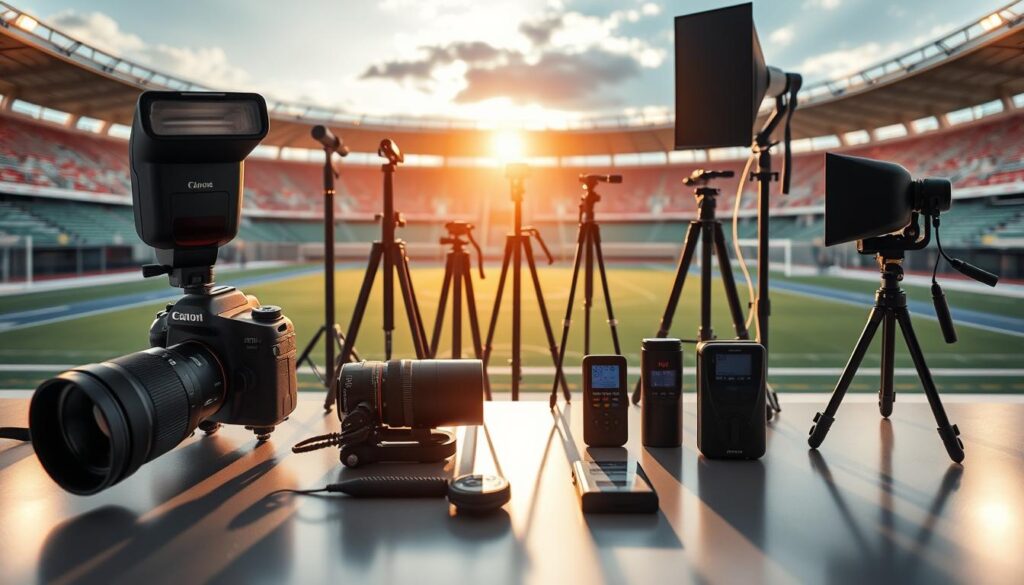
Mastering light makes athletes look great in photos. It’s important when choosing where to take photos. A pro knows how to avoid bad shadows or glare.
| Gear Category | Essential Specs for League Sports | Why It Matters |
|---|---|---|
| Camera Body | High frames-per-second (FPS), advanced autofocus, good high-ISO performance | Freezes fast action, tracks moving subjects, works in dim light without excessive grain. |
| Lenses | Fast aperture lenses (e.g., f/2.8), telephoto zoom (70-200mm), wide-angle | Allows more light in for low-light shots, brings you close to the action, captures wide team shots. |
| Lighting | Portable strobes or speedlights, modifiers, knowledge of ambient light mixing | Fills in shadows, ensures proper exposure on faces, provides consistency in changing conditions. |
| Support | Sturdy tripod or monopod, multiple high-capacity memory cards, backup batteries | Provides stability for sharp images, ensures no missed shots due to full cards or dead power. |
Knowing these skills is key when vetting photographers. It shows if they’re a pro who can get sharp, well-exposed photos every time. Experts like Gerald Leong use this gear to make quick, precise shots. For more details, check out a detailed gear list.
When Hiring a Sports Photographer, ask them about their equipment and lighting. Their answers will show if they’re ready for your league’s big moments.
Insurance and Background Checks
Before a photographer works with your league, two important things are needed. These are proof of insurance and a background check. They protect your league from legal issues and show you care, like when kids are involved.
It’s a must to have general liability insurance when hiring a sports photographer. Accidents can happen, like a photographer getting hurt or damaging something. If they’re not insured, your league could face big costs. A good photographer will have their own insurance to cover everyone.
For leagues with kids, a background check is key. The photographer will be around kids a lot, in busy places. Make sure they’ve been checked out properly. Don’t rely on someone else’s check; do your own.
Make sure your sports photography contracts cover these points. The contract should say the photographer has insurance and has been checked out. This makes their promise official.
Getting these steps done might seem like the end, but it’s really the start. Finding the right photographer means they’re checked out both personally and professionally. This makes sure your league is safe and well-protected.
Questions to Ask During the Interview
The final interview is your chance to confirm your choice. Prepare a list of questions that cover logistics, creativity, and legal details. This step is key when hiring a sports photographer for your league.
Start with practical matters. Ask about their typical schedule for game days and how they coordinate with league officials. Find out their backup plan for equipment failure or last-minute schedule changes. A reliable local sports photographer will have clear answers.
Discuss their creative process. How do they capture key action moments while also preparing for team and individual portraits? Ask how they handle challenging lighting conditions common in gyms or evening games. Their approach should match your league’s spirit.
Clarify deliverables and rights. Request specifics on file formats, delivery timelines, and online gallery access. You must understand copyright ownership and image usage rights. Ask if they provide model release forms and how they adhere to your league’s specific media policies.
Clear communication during this interview sets expectations for the entire season. As noted by Kemmetmueller Photography, asking these questions ensures you partner with a professional who delivers quality work and understands your community’s needs.