
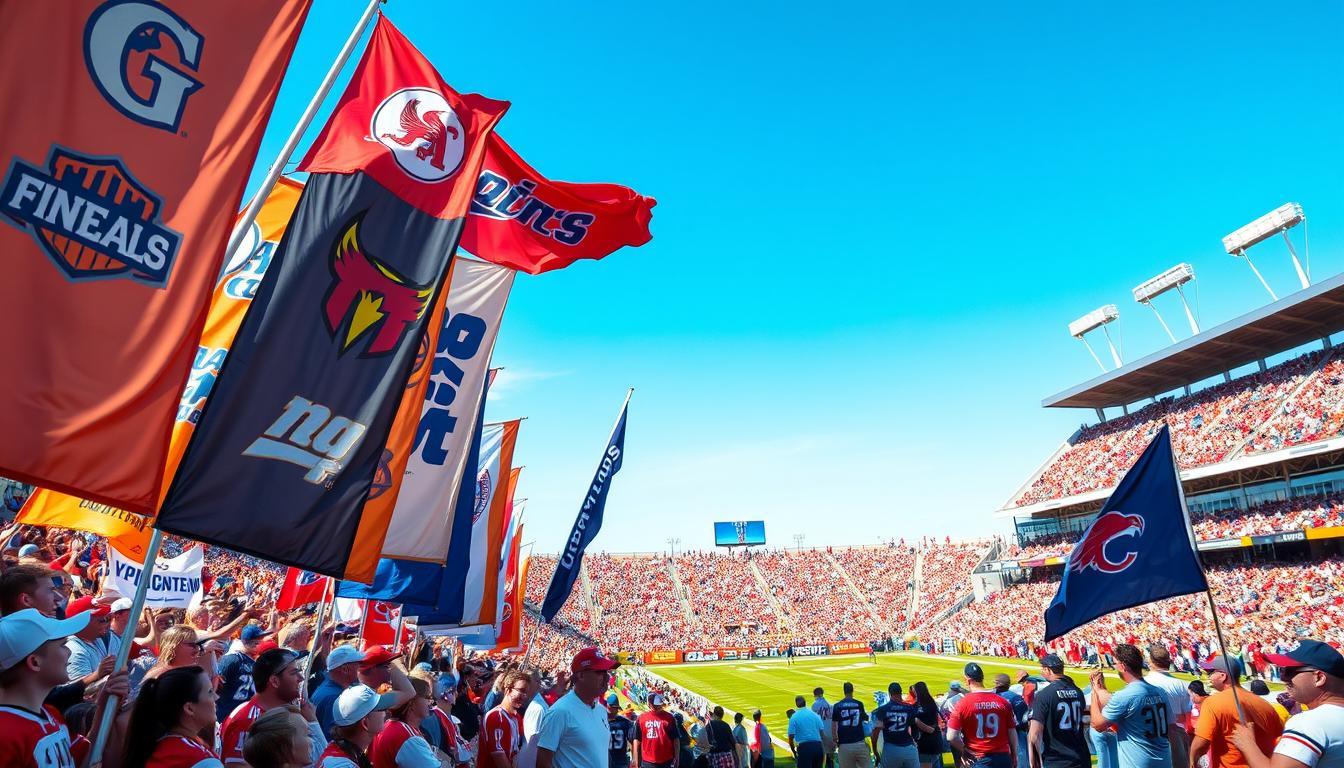
The roar of the crowd. The flash of team colors. A stadium’s visual identity is a powerful force. It turns a simple game into an unforgettable event.
Professional stadium graphics are far more than decoration. They are strategic tools designed to perform. Every project requires venue-specific design and brand alignment.
This approach creates a cohesive and electric environment. It directly boosts visibility and elevates the fan experience from the moment they arrive.
Strategic venue branding builds team spirit and projects a professional image. This powerful atmosphere not only energizes players and fans but also serves as a key tool for recruiting talented athletes.
Types of Banners (Team vs. Individual)
Sports banners come in two main types: team and individual. Each has its own purpose and design needs. Choosing between them shapes the whole creative process.
No two venues are the same, and neither are our designs. Every team, stadium, and game is unique. Your signage must fit your specific needs, brand, and facility.
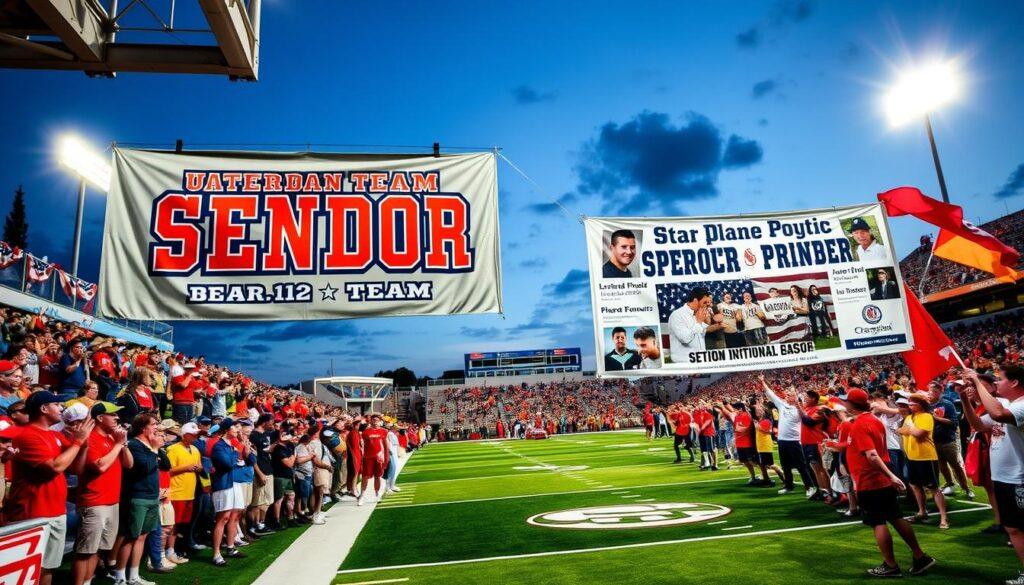
Understanding this difference is key to making your investment count. It helps decide on size, imagery, text, and placement.
Team Banners: Building Collective Identity
Team banners unite fans and players. They are giant rallying cries. Their main goal is to create a strong, shared identity.
These banners are often seen in key spots. They line player tunnels or cover main stadium walls. They feature official logos, mascots, and bold slogans.
The message is about the team. Phrases like “Defend This House” or “Home of the Champions” are common. The design must be clear and striking from afar. It should energize the crowd and represent the team.
These banners are essential for professional arenas, college fields, and high school gyms. They make a place feel like a home-field advantage.
Individual Banners: Celebrating Personal Achievement
Individual banners focus on one athlete. They celebrate personal milestones, career achievements, or special moments. They create lasting memories for players and their families.
These banners need a personal touch. They often include a high-quality photo of the athlete. Statistics, jersey numbers, and quotes are common. The tone is celebratory and respectful.
Senior banners and achievement plaques are very meaningful. They honor an athlete’s dedication over a season or career. They are smaller and placed in hallways, locker rooms, or banquet halls.
For a senior banners project, working with a photographer is essential. You need a perfect photo that captures the player’s essence. The result is a personalized tribute that athletes will cherish long after their playing days.
| Feature | Team Banners | Individual Banners |
|---|---|---|
| Primary Purpose | Unify fans, build team spirit, create home-field advantage. | Honor an individual’s achievement, create a personal memento. |
| Design Focus | Collective identity: logos, mascots, team colors, rally slogans. | Personal recognition: action photos, player stats, personal details. |
| Common Placement | Stadium walls, entrance tunnels, large facade spaces. | Hall of fame corridors, locker rooms, banquet spaces, gym entrances. |
| Typical Audience | Thousands of spectators and the broader fan community. | The honored athlete, their family, teammates, and close supporters. |
| Common Examples | Season run-out banners, championship celebration graphics. | Senior banners, milestone plaques, record-holder tributes. |
The type of league or school you’re in affects your choice. A youth league might focus on fun, colorful team banners. High school athletic departments might need both. Professional teams invest in large-scale team identity graphics.
Always ask: “Who is this banner for?” Is it for the team or the individual? The answer guides a successful design that resonates with its audience.
Design Elements That Stand Out
Sports banners are more than signs. They set the mood for game day. They turn empty spaces into stories waiting to be told. While big screens grab attention, details like stadium ribbons add fun and facts.
The right design makes your message unforgettable. It’s not just seen; it’s felt and remembered.
Color & Contrast: The First Impression
Your team’s colors are its identity. Using them with high contrast makes them stand out. Bright colors cut through the noise.
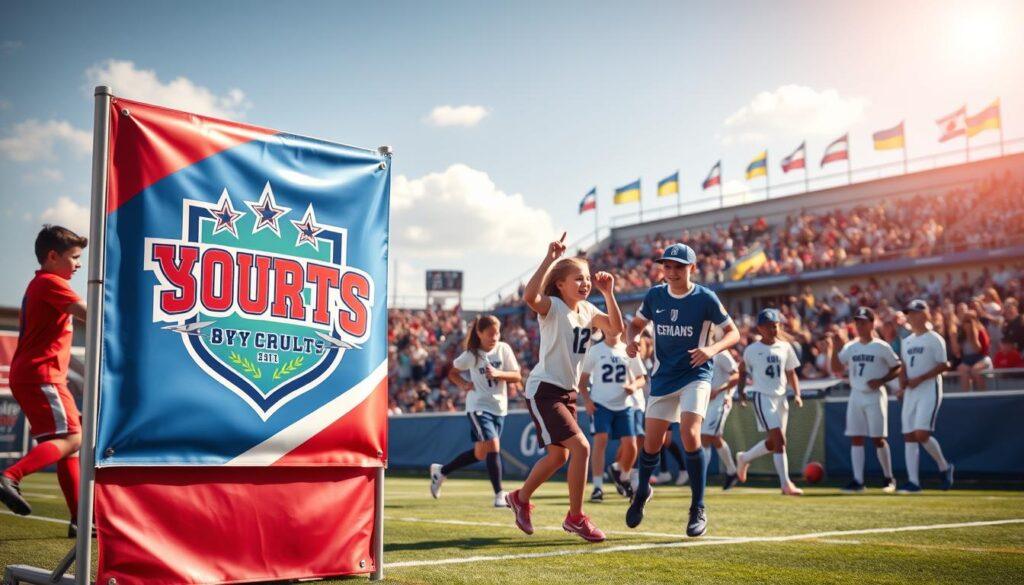
This is key for youth sports signage. Clear, bold graphics boost pride and help families find their team.
Don’t just use colors. Add contrasting borders or shadows to make text and logos pop. A dark background with bright lettering, or vice versa, makes sure your message is clear.
This turns a simple banner into a beacon.
Legibility from Any Distance: Logos & Typography
A detailed logo loses impact if too small or complex. Placement and sizing are critical. The main logo or mascot should be the biggest visual element.
Typography should be clear, bold, and simple. Avoid fancy fonts for important info like team names or slogans. Sans-serif fonts are often best.
Test your design from 50 feet away. If it’s hard to read, simplify. This ensures your message reaches everyone, not just those close by.
Imagery with Impact: Action & Mascots
Dynamic photos or mascot artwork creates an emotional bond. A photo of an athlete in motion shows energy and hope. A mascot builds team spirit.
These elements should enhance, not overwhelm, the design. Balance is essential. Leave space around images for sponsor logos, blending them into the story.
Cohesion Across a Series
Single banners are powerful, but a series tells a complete story. Use a consistent color palette, font, and style for all. This includes welcome, sponsor, and player highlight banners.
Cohesion creates a professional atmosphere. It turns signs into a unified brand experience. For more ideas, check out our complete guide to sports banner ideas.
Design principles vary by venue. The table below shows key considerations:
| Venue Type | Primary Design Focus | Scale & Viewing Distance | Typical Color Use |
|---|---|---|---|
| Professional Arena | High-impact brand spectacle, sponsor integration | Very large, viewed from far away | Official, precise team colors |
| School Gymnasium | Team spirit, player recognition | Medium, mixed viewing distances | School colors, high contrast |
| Outdoor Field (Youth) | Clear identification, spirited encouragement | Small to medium, often close-up | Bright, simple, weather-resistant colors |
Great design is for everyone, not just pros. A well-made banner at a youth game creates pride and excitement. It shows players their hard work is valued. It guides and energizes fans. By focusing on color, legibility, and imagery, you create standout designs.
Sizing and Material Options
Choosing the right size and material for your team banners is key. The wrong size or material can make your banner fade or tear. This guide helps you pick the best for your needs.
Think about where the banner will be. An exterior facade needs different specs than an interior. Getting these choices right ensures your investment looks professional for seasons to come.
Determining the Right Size for Your Space
Size matters a lot. A banner for a high school gymnasium needs to be seen from the bleachers. One for a field fence should be legible from across the turf.
For large team banners, bigger is almost always better. Text and logos should be large enough to be clear from the farthest expected point. For example, a banner on a stadium exterior might need to be 10 feet wide or more to command attention.
Consider the installation location carefully. Tight concourse spaces may need a portrait orientation, while wide fence lines are perfect for long, horizontal runs. Providing accurate measurements of your space to your printer is the first step to a perfect fit.
Choosing Materials Engineered for Longevity
The material is what stands between your vibrant design and the elements. Modern banner materials are engineered for durability and performance. Your choice depends on whether the banner is for indoor or outdoor use and how much wear it will face.
Here are the most common and effective options:
- Durable Vinyl: The standard for outdoor signage. High-quality vinyl is flexible, accepts brilliant color, and can be treated for extra resilience. It’s ideal for most exterior applications.
- Reinforced Mesh Fabric: Essential for windy locations. The tiny holes in the mesh allow wind to pass through, reducing stress on the banner and its mounting system. Perfect for fences and large stadium displays.
- Heavyweight Substrates: Used for rigid, semi-permanent installations. These thicker materials won’t flap in the wind and provide a premium, substantial feel for indoor hallways or entryways.
Material alone isn’t enough. The printing and finishing process adds critical protection. As noted by industry experts, using UV-resistant inks is non-negotiable for outdoor banners. These inks prevent the sun’s rays from bleaching and fading your colors.
A final weatherproof laminate or coating adds another shield. This layer protects against rain, humidity, and physical contact from high-traffic areas. It makes the surface easy to clean and helps the print endure season after season.
This combination of robust material and protective finishes ensures your football signs and team banners capture vibrant colors and withstand the elements. The goal is a display that remains as bold and sharp on the last game day as it was on the first.
Securing Sponsor Logos
Getting sponsor logos on banners is key. It makes a banner look professional and shows support. It’s all about finding the right balance.
Acquiring the Right Logo Files
Quality printing starts with quality files. Always ask for vector files like .EPS or .AI. These files can be made bigger without losing quality.
If you only get a raster file, like a .JPG or .PNG, make sure it’s high resolution. It should be 300 DPI at the final print size. A blurry logo looks bad for everyone involved.
Check that the files match the sponsor’s brand guidelines. This shows you care about their brand.
Strategic Placement for Maximum Impact
Where you put the logos is important. The main message should be the focus. Logos should support the main message.
Good places for logos are at the top, bottom, or sides. This way, they’re seen but don’t take over. Always check the sponsor contract for specific rules.
Integrating Sponsors on Senior Banners
Even senior banners can have sponsor logos. The main focus should always be on the student-athlete. A good idea is to add a “Proudly Supported By” section around the main photo.
This way, the athlete stays in the spotlight. It also shows community support, adding to the banner’s value.
The Approval Process
Always proof your design before printing. Send a digital proof to sponsors for approval. This catches any mistakes before it’s too late.
Getting written approval is key. It makes sure everyone is happy with the final product. It’s the last step to a successful project.
| Logo File Type | Best For | Key Advantage | Potential Issue |
|---|---|---|---|
| Vector (.EPS, .AI, .SVG) | All banner sizes, even large ones | Can be made bigger without losing quality | Sponsor may not have file |
| High-Resolution Raster (.TIFF, .PNG) | Medium to large banners if DPI is good | Supports complex graphics | Can get pixelated if too big |
| Low-Resolution Raster (.JPG from web) | Only for small decals or digital mockups | Easy to share by email | Not good for printing banners |
Following these steps helps everyone win. Sponsors get clear visibility, and your team gets better banners. Every senior banner becomes a symbol of community pride.
Working with Your Photographer for Design
The look of your custom sports banner starts before it’s printed. It’s a team effort between you and your photographer or designer.
Set up a photo shoot to get clear, action-packed images. Shots of players in action or sharp team portraits are ideal. Make sure these photos will look good on big banners, a key point for youth sports signage. Give your designer all the logos, colors, and style guides you have.
Your designer will turn these into detailed mockups for you to see. This step is like the design process for press walls. It lets you check the layout before it’s made. You’ll approve every detail before it’s printed.
This teamwork makes sure your banner looks great. It will make game days better for varsity teams or youth sports signage. A well-made banner becomes a key part of the game day excitement, cheering on the team and fans.