
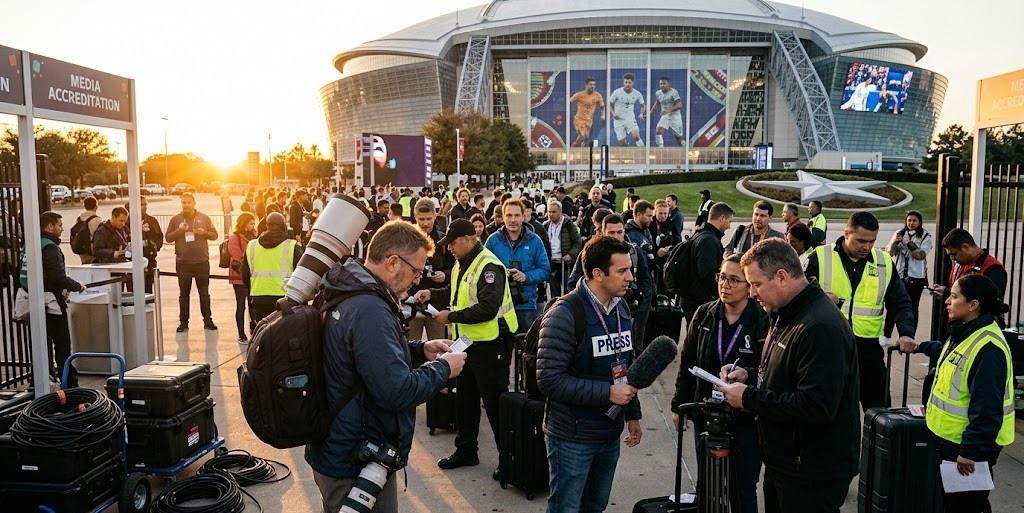
Dallas is not just hosting World Cup matches. It is hosting a global media operation.
With Dallas Stadium in Arlington scheduled for nine FIFA World Cup 2026 matches, including five group-stage games, two Round of 32 matches, one Round of 16 match, and a semifinal on July 14, North Texas has become one of the tournament’s most important visual storytelling hubs. That means more than fans, teams, security staff, and volunteers moving through the region. It also means credentialed photographers, broadcast crews, editors, agency shooters, team media staff, international reporters, and non-rights holders all trying to capture the same high-pressure moments from very different access points.
For Texas sports photographers, local leagues, school administrators, and event organizers, the Dallas World Cup media rush offers a bigger lesson than soccer. Major matches only work when image access is planned before the gates open.
The difference between a clean matchday operation and a chaotic one often comes down to one thing: clear photography rules that everyone understands before kickoff.
Why Dallas Became A Global Media Test Case
Dallas has a special role in the 2026 World Cup because the region is handling both matchday crowds and global media infrastructure. Dallas Stadium in Arlington is one of the tournament’s premier venues, while the Kay Bailey Hutchison Convention Center Dallas is serving as the International Broadcast Centre, the technical nerve center that supports tournament broadcast operations.
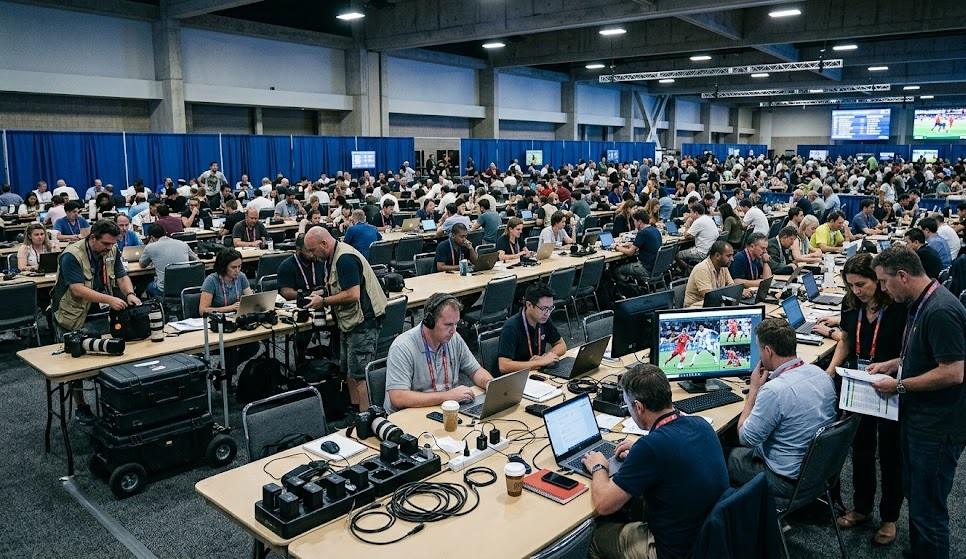
That matters because professional sports photography does not happen in isolation. Every sideline image, tunnel shot, mixed-zone portrait, press conference frame, and fan-atmosphere photo exists inside a controlled system. At a World Cup match, the camera position is not simply “where the photographer can get a good angle.” It is where credentialing, safety, broadcast rights, sponsor visibility, crowd movement, security, and player protection all intersect.
Local Texas sports organizations may never deal with a FIFA-scale media center, but they face the same basic issue in smaller form. A youth soccer championship, college showcase, high school rivalry game, or club tournament can quickly become messy when parents, volunteers, paid photographers, social media managers, and outside media all assume they have the same access.
That is why a strong local policy should answer the questions before the first whistle:
| Matchday Access Area | Why It Matters For Photographers | What Organizers Should Define |
|---|---|---|
| Sidelines and end lines | Best action angles, but highest safety risk | Who can stand there, where they can move, and when |
| Team benches | Sensitive coaching and athlete moments | Whether images are allowed and under what limits |
| Locker rooms and tunnels | High-value media areas with privacy concerns | Strict credential-only access |
| Fan zones | Strong atmosphere images, but public-space complexity | Commercial use, minors, and crowd photography expectations |
| Press conferences | Controlled media setting | Credential requirements and approved usage |
The World Cup makes these boundaries visible because the event is massive. But the underlying principle applies everywhere: access is not just about who owns a camera. It is about who has permission, responsibility, and a defined role.
Credentialed Photographers Are Not Just Taking Better Pictures
Professional photographers are often judged by the final image: the celebration, the save, the tackle, the crowd reaction, the confetti, the coach’s stare. But at an event like the World Cup, their real value starts long before the shutter clicks.
Credentialed photographers understand how to work within a live sports environment without interfering with competition. They know how to move around broadcast lanes, respect security instructions, avoid restricted team areas, and deliver images quickly under deadline pressure. They also understand that a single image can travel globally in minutes.
That is why FIFA’s media accreditation process matters. The World Cup does not treat photographers as casual attendees with long lenses. It treats them as working media professionals who need approved access through official systems, controlled zones, and tournament-specific rules.
For Texas leagues and sports organizations, this is the exact distinction that often gets overlooked. A volunteer parent with a good camera may produce useful images. A professional photographer brings a different level of reliability: coverage planning, file delivery, editing standards, liability awareness, backup equipment, and a better understanding of consent and image usage.
That does not mean every league needs a paid photographer for every game. But it does mean leagues should know the difference between casual documentation and professional media coverage. For a deeper local-level comparison, TexasSportsImage has already explained the practical decision points in volunteer photographers vs professional services, and the same framework becomes even more important when the event has higher visibility.
Why Matchday Rules Protect Athletes, Photographers, And Organizers
Clear access rules are not designed to make photography harder. They are designed to make photography safer and more useful.
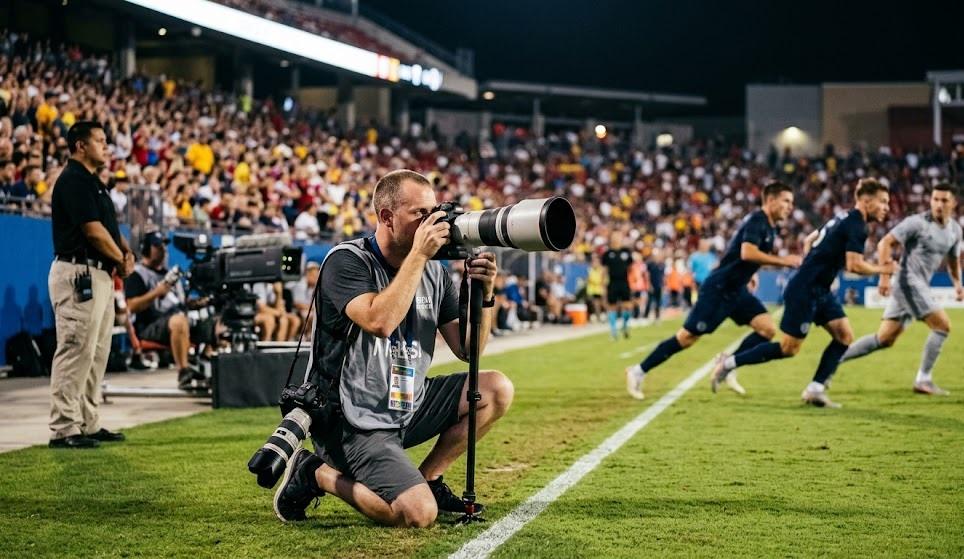
At a World Cup match in Arlington, access control protects players, team staff, officials, media crews, and spectators. At a youth or amateur event in Texas, the stakes are different but the logic is similar. A photographer stepping too close to the field can create a safety issue. A parent posting images of another child without context can create privacy concerns. A league using a player’s image in promotion without consent can create trust problems.
The best matchday photography policies usually cover three areas.
First, they define who may shoot from restricted areas. This includes paid photographers, approved volunteers, school media, local press, and league staff.
Second, they explain how images may be used. A photo taken for editorial coverage is not the same as a photo used in advertising, sponsorship promotion, merchandise, or paid social campaigns.
Third, they create a process for consent, complaints, and removal requests. That is especially important in youth sports, where families may have privacy concerns that are not obvious to coaches or photographers.
The World Cup shows what happens when the entire sports world is watching. But local Texas leagues do not need global attention to need good rules. They only need a game, a camera, and one unclear expectation.
The Dallas Crowd Factor Changes The Photo Story
Dallas’ World Cup schedule creates a visual environment that is bigger than the pitch. International fans are arriving in North Texas. Supporter groups are filling entertainment districts. Fair Park’s FIFA Fan Festival adds another layer of public viewing, live music, cultural programming, and crowd photography.
That gives photographers more storytelling opportunities, but also more responsibility.
A matchday photographer may capture the field. A documentary-style sports photographer may capture the fan walk. A news photographer may focus on security, transportation, heat, weather, or crowd movement. A team photographer may stay locked on players. A sponsor photographer may be looking for branded activations. These roles can overlap, but they are not identical.
For local sports organizations, this is a valuable planning lesson. A tournament is not only the game. It is parking, warmups, sidelines, medal ceremonies, sponsor signage, parent reactions, volunteer work, and postgame emotion. If leagues do not assign responsibilities ahead of time, important images get missed while unnecessary conflicts multiply.
Professional photographers help because they think in coverage layers. They do not just ask, “Where is the action?” They ask, “What story does this event need to tell after it is over?”
Betting Attention Adds Another Layer To Texas Sports Media
The World Cup also brings another reality to Texas sports coverage: major matches create heavy fan discussion around odds, predictions, and betting markets. Texas does not have a full state-regulated online sports betting market, which is why some fans research legal context, offshore discussions, and market availability before major events. Readers looking for that broader landscape can compare the state’s current betting environment through this Texas sports betting guide.
For TexasSportsImage.com, the betting angle is not the center of the story. The image story is. But the connection matters because professional sports media increasingly operates in a world where images, highlights, odds graphics, social posts, and fan commentary move together.
A viral photograph from a World Cup match can shape the way fans discuss momentum. A player reaction image can become part of a betting narrative. A crowd shot can frame the atmosphere around a high-stakes match. A sideline injury image can circulate before official updates are released.
That is another reason access rules matter. Professional photographers are not just capturing memories. They are producing media assets that can influence public conversation, fan perception, and commercial storytelling.
What Texas Leagues Can Learn From The World Cup
Texas leagues do not need FIFA’s infrastructure to act more professionally. They need a simple, written matchday access plan.
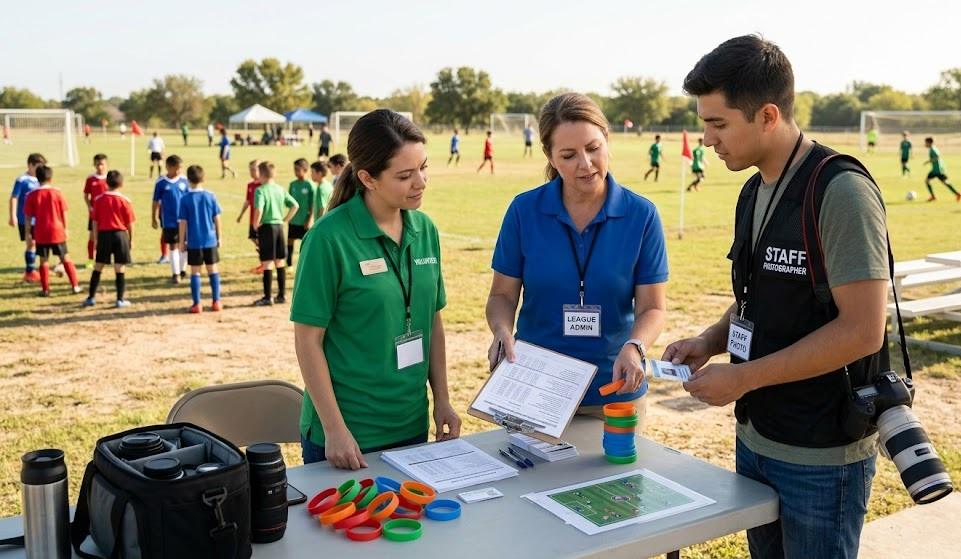
A strong local policy should identify approved photographers, define restricted zones, clarify commercial use, address minors and consent, and explain how images will be stored or shared. It should also tell volunteers what they can and cannot do. That prevents confusion when a parent, sponsor, freelancer, or local reporter asks for field access five minutes before kickoff.
For bigger tournaments, leagues should consider color-coded credentials, a photographer check-in area, a basic shot list, and a clear contact person. The goal is not bureaucracy. The goal is consistency.
The Dallas World Cup media rush shows the high-end version of the same lesson. When sports events become more visible, photography becomes more valuable. When photography becomes more valuable, access becomes more sensitive. And when access becomes more sensitive, informal rules are no longer enough.
Clear Access Is The Future Of Texas Sports Photography
The most important image from a match is rarely an accident. It comes from preparation: the right person, in the right place, with the right permission, at the right moment.
Dallas’ World Cup spotlight makes that obvious on an international scale. Thousands of media professionals do not arrive in North Texas and simply figure it out from the sideline. They rely on accreditation systems, media zones, venue rules, broadcast operations, and event planning.
Texas leagues can learn from that without copying all of it. They can create simple photography policies. They can separate volunteer access from professional access. They can protect athletes while still giving families the images they value. They can build trust with parents, photographers, and media partners by making expectations clear before matchday pressure begins.
That is the real lesson from Dallas. The camera is only part of the job. The policy behind the camera is what makes the work sustainable.