
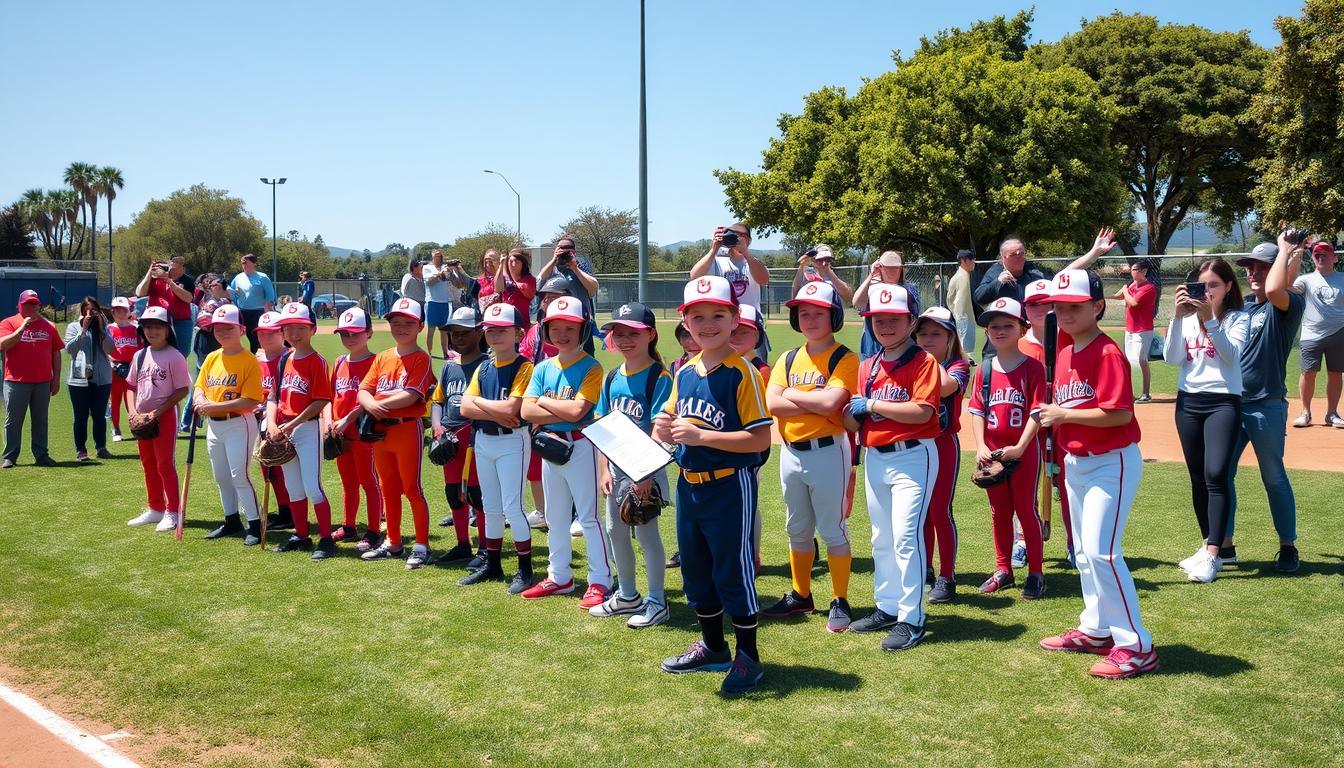
Planning a successful event for diamond sports, like Baseball Picture Day, needs careful thought. It’s not just about taking pictures. It’s about setting up a plan that makes everything go smoothly.
Youth leagues and travel teams in the U.S. face big challenges. They must plan weeks ahead for schedules and uniforms. It’s key to keep parents and coaches in the loop with all the details.
Also, think about how players will move through photo stations and what to do if the weather changes. Using a detailed plan and pre-written messages can make picture day stress-free. This way, everyone can enjoy the day.
Choosing the Right Background (Field vs. Green Screen)
The choice between a field and a green screen can change how baseball team pictures look. Each option has its own benefits and challenges. These can affect the final photos.
A field background, with the diamond and grass, looks authentic and timeless. Many families and leagues like this. It captures the real feel of the sport.
But, field backgrounds have their own issues. Lighting can be unpredictable, and things like cars might show up in the photo. Also, photos taken in different places might not match.
Green screen photography gives more control over the image. You can add backgrounds like team logos or custom graphics. This makes all baseball team pictures look the same, no matter where they were taken.
Yet, green screen photos can look fake if not done right. They also need extra work to look good. Many photographers use a mix of both. They take some photos on the field and others with green screens for team prints.
League organizers should think about their budget, the photographer’s skills, and what families want. Here’s a table showing the main differences between field and green screen backgrounds:
| Feature | Natural Field Background | Green Screen Background |
|---|---|---|
| Authenticity | High – captures real game environment | Variable – can look artificial if poorly executed |
| Control Over Background | Limited – affected by surroundings | High – can customize as needed |
| Lighting Consistency | Unpredictable – varies by location | Consistent – controlled lighting setup |
| Post-Processing Time | Minimal – straightforward editing | Higher – requires background integration |
The choice between a field and a green screen depends on what you want from the photos. For camera settings for sports photos, check out this page.
Scheduling Around Game Times
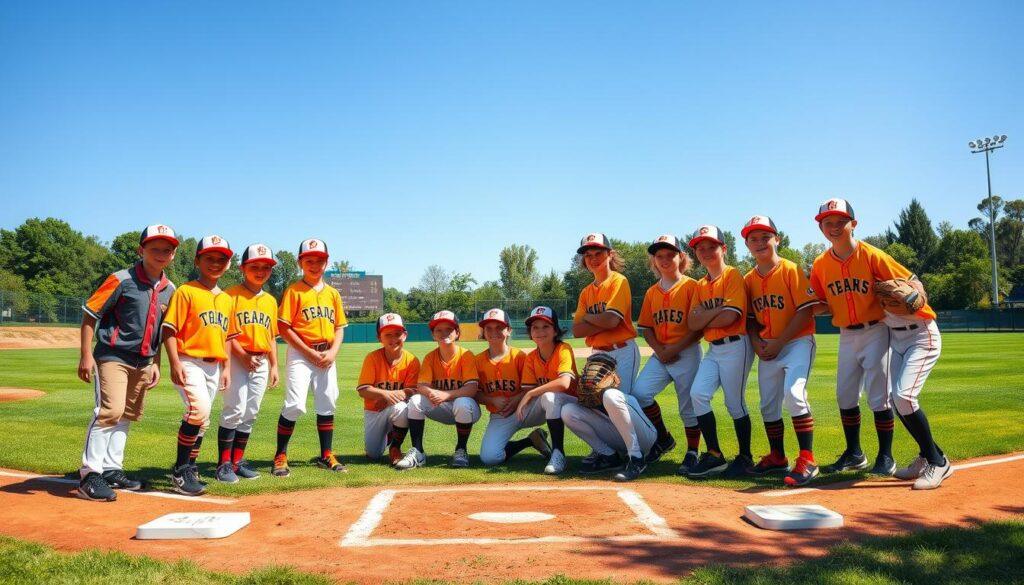
The timing of little league photos must be carefully planned to avoid game conflicts. Organizing these photo sessions is a big challenge. This is true for leagues with many teams playing in different divisions.
It’s best to schedule team photos before games. This way, players can arrive in clean uniforms, ready to go. Post-game photos often show tired, sweaty athletes, which parents might not like.
Working with league schedulers to include picture day in the calendar early is key. This helps avoid scheduling conflicts. It ensures each team has a time slot that doesn’t clash with their game or warm-up.
A good rule is to schedule photos 45 to 60 minutes before the first game. This allows for individual shots, buddy photos, and team photos without rushing. For leagues with picture day on a single Saturday, staggered scheduling is vital. Teams with early games should be photographed first, followed by those with mid-morning and afternoon games.
Good communication with coaches and parents is essential. Families need to know when to arrive, where to gather, and what to wear. Using digital scheduling tools and reminders can help reduce no-shows and latecomers, like the AI Coaching Course 2026 suggests.
Lastly, having a plan for rainouts is important. Letting everyone know a backup date in advance helps keep picture day on track, even if the weather is bad.
Managing Equipment and Props (Bats, Gloves)
Creating memorable baseball team pictures needs careful attention to equipment and props. Items like bats, gloves, and helmets make the pictures look better and help players relax. When players hold familiar gear, they feel more comfortable and confident in front of the camera.
Photographers should set clear rules about what equipment is okay for photoshoots. Players should bring their own gloves and helmets. The photographer or league should provide clean, matching bats and baseballs to keep the team’s look consistent.
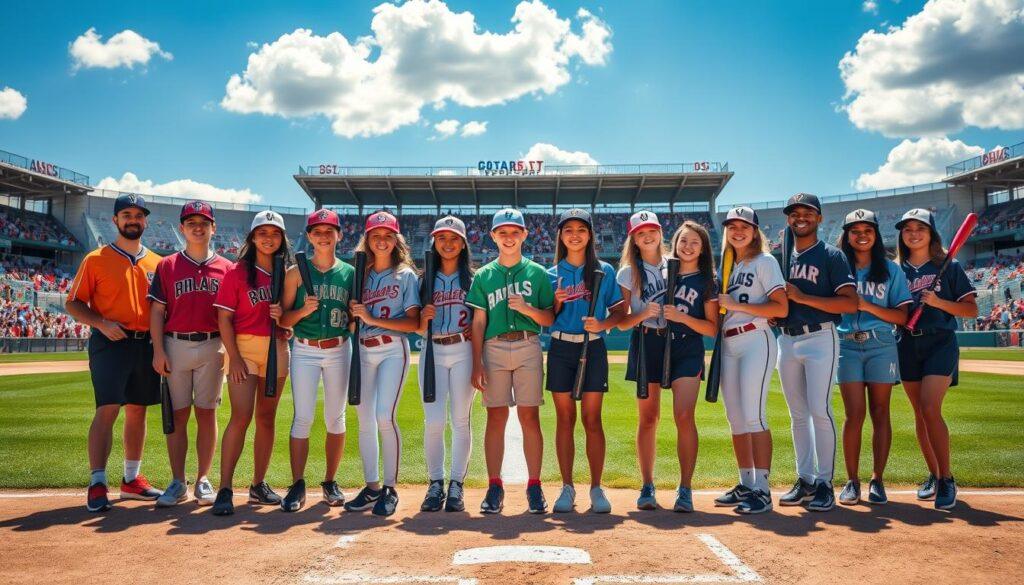
Before the session, make sure all bats are clean. Remove any pine tar, dirt, or scuff marks. Also, check gloves for wear or colors that might take away from the player’s face. For individual portraits, consider classic poses like:
- The batter stance with a bat resting on the shoulder.
- The infield ready position with a glove.
- The pitcher’s windup with a ball in hand.
Team photos look better with everyone holding their gear in a coordinated way. Players in the front row can hold bats vertically, and gloves can be placed in front of the team. This makes the team look unified and enhances the photo’s impact.
But, remember, props should add to the photo without taking over. Avoid oversized novelty bats or bright accessories that can make the photo look dated. Designate a spot for players to put their gear before and after photos. This keeps the area tidy and prevents lost items.
Team managers should remind families to label all personal equipment. Identical-looking gloves and bats can get mixed up, which is common when many teams are at the photo station. By following these tips, you can make sure the equipment and props add to the baseball team pictures that families will treasure for years.
Sun Position and Shade Considerations
Knowing where the sun is is key for great photos at diamond sports events. Planning around the sun helps avoid harsh shadows and overexposed spots. The best time for photos is early morning or late afternoon, when the sun is softer.
In the middle of the day, the sun’s strong light can make shadows under eyes and caps. This makes it hard to get clear photos of faces. Before the photo shoot, check the field to find the best spots for natural shade.
Positioning the team so the sun is behind the camera helps light everyone evenly. If there’s no natural shade, use panels or canopies to soften the sun. This makes the photos look more consistent.
The direction of the baseball field also matters. Fields facing east-west have different lighting needs than those facing north-south. Photographers need to adjust their setup based on the field’s orientation.
For photo days that last all morning and afternoon, move the photo station as needed. This keeps the lighting right for each team session.
| Time of Day | Sun Position | Recommended Actions |
|---|---|---|
| Early Morning | Low Angle | Soft Light, Ideal for Photos |
| Midday | High Angle | Avoid Direct Sun, Use Shade |
| Late Afternoon | Low Angle | Soft Light, Excellent for Portraits |
Dealing with Dirt and Uniforms
Keeping uniforms clean is key for great little league photos. White baseball pants easily show dirt and stains. This is tough, mainly after warm-ups or before a game.
Coaches and parents should make sure players wear clean uniforms. Having extra clothes for photos after games is smart. Stain wipes and small brushes can keep uniforms looking good. Baby powder or white chalk can hide small stains.
Photographers can place players to hide dirt. For example, dirty knees in the back row work well. A clean waiting area helps keep uniforms clean.
Green screen photos can fix some uniform issues later. But, this might cost more time and money. Talking to families about uniform rules helps. This ensures photos show a neat team that parents will love.