
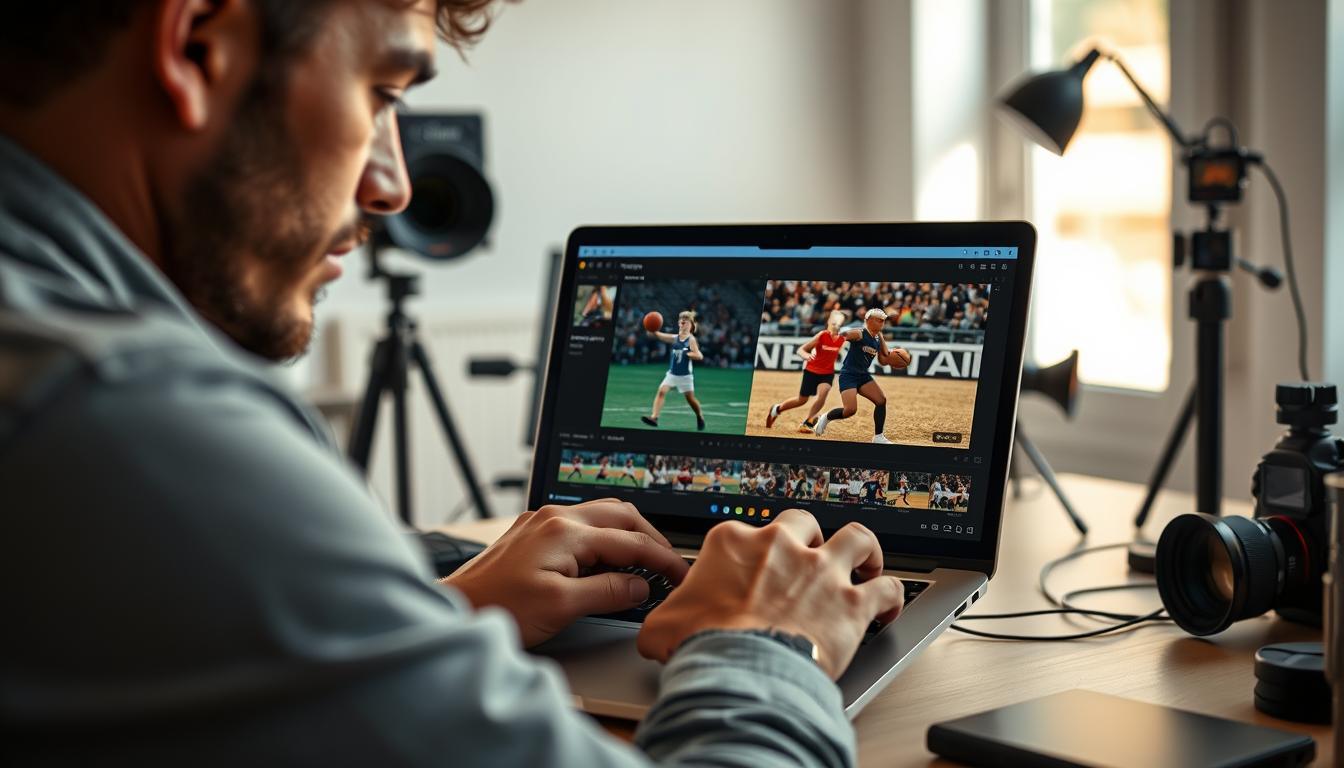
The debate over your camera’s file format can feel like choosing a religion. Some photographers defend their choice with the fervor of a holy war.
But on a chaotic sideline, dogma doesn’t capture the winning goal. Your choice isn’t a simple binary. It’s more like picking between a surgeon’s scalpel and a Swiss Army knife.
One option gives you pure, unprocessed sensor data. This is the RAW file. It offers immense editing latitude, letting you recover blown highlights or murky shadows in post-production. The trade-off? Massive files and a slower workflow.
The other is the JPEG. It’s a compressed, camera-processed file format ready for instant sharing. You get smaller files and a pleasing look straight out of the camera. The cost? Very limited editing headroom.
So, is one the purist’s path to salvation and the other a pragmatic compromise? Grab your coffee. We’re cutting through the noise to find what actually works when the game is on the line.
Hybrid Workflows for Fast Turnaround
In youth sports photography, speed is key. Parents want to see their kids’ photos fast, not weeks later. They crave instant results, like seeing their child’s action shots right away.
Using RAW+JPEG camera mode helps a lot. It lets you take two photos at once. One is a JPEG for quick sharing, and the other is a RAW file for later editing.
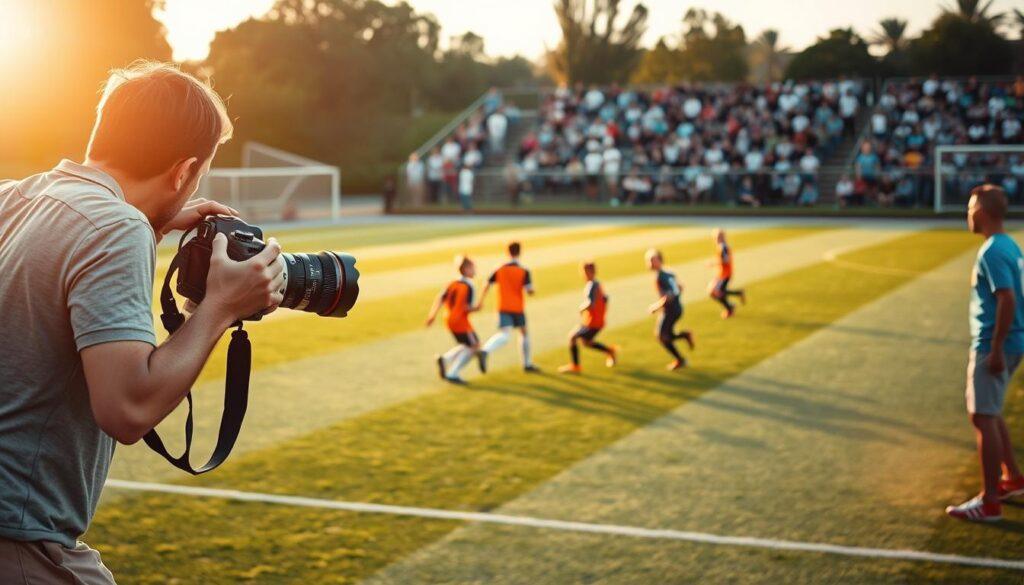
The JPEG is perfect for instant sharing. You can send it to parents or post it online quickly. It’s a fast way to show you’ve got the shot.
The RAW file is for later editing. It’s full of data and can be edited to perfection. You can fix lighting and details later, making the photo even better.
This method is like a studio photographer’s workflow. They use JPEGs for quick previews and RAWs for final photos. It’s the same for youth sports. JPEGs are for fast sharing, and RAWs are for detailed editing.
To make this work, start with the right camera settings. Choose a JPEG profile that’s sharp and colorful. This way, your previews will look good. The RAW file stays untouched for later editing.
This approach lets you work fast and keep your photos top-notch. You meet the quick needs of the sideline while keeping your work of high quality. It’s the best way to be both fast and perfect.
Color Profiles and Sharpening
RAW files show their true power in bad lighting. JPEGs are like Polaroids—quick but final. Your camera has already set everything, like an overzealous designer.
RAW files are like blueprints. They have editing latitude, your superpower. A muddy soccer field under clouds? In a JPEG, it’s dull and dark. But RAW captures more detail.
RAW files have 12 or 16-bit depth, unlike JPEG’s 8-bit. It’s like having a huge color palette. You can make greens pop and faces clear, even in bad light.
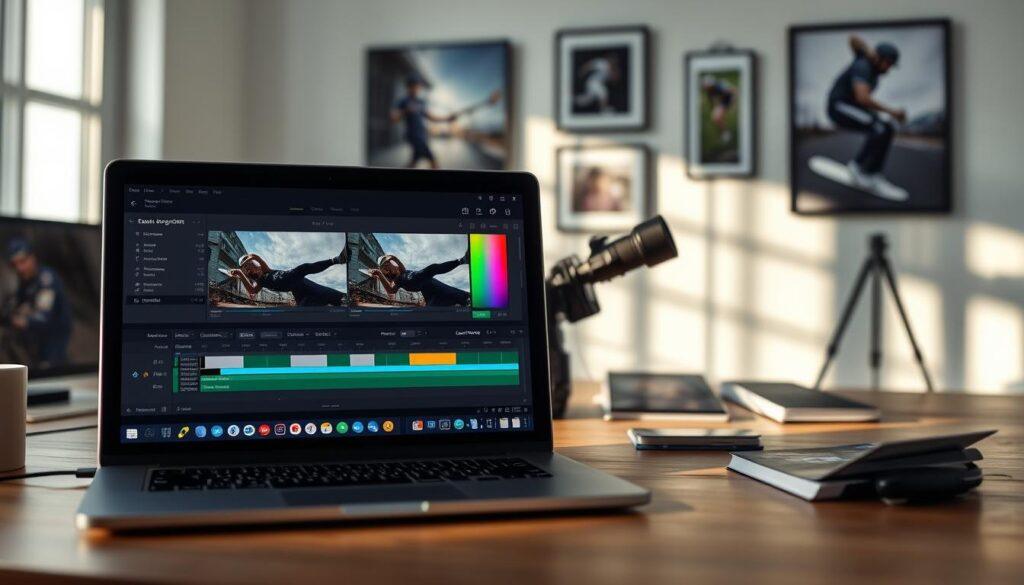
Color science in youth sports is about control, not accepting what’s given. JPEGs lock in white balance, like that awful orange glow. But RAW lets you fix it easily.
Sharpening is another area where RAW excels. In-camera sharpening can make things look artificial. But RAW lets you sharpen just what you need, like a player’s edges.
This RAW vs JPEG debate is about tools, not which is better. RAW gives you the power to fix mistakes and improve your work. It’s your safety net for unpredictable lighting.
So, when faced with tough lighting, editing latitude is your creative shield. You’re not just taking a photo; you’re saving every detail for the edit. It’s the difference between a snapshot and a story.
Storage Planning for Seasons
If you buy another memory card when the warning light comes on, you’re taking a big risk. Your file format choice greatly affects how much you can store.
RAW files take up a lot of space. Using RAW and JPEG together means you need even more storage. This can slow down your workflow, making backups and transfers a long wait.
Creating a smart plan is key. Figure out how much storage each game needs. Compare the cost of cloud storage to buying physical drives. Also, delete bad photos right away to keep your workflow smooth.
Planning is not just for photos. It’s also about keeping important documents safe, like photo release forms. A good storage system helps you focus on the game, not digital problems.