

Ever tried to post a team photo online and got an angry email from a parent? That’s what photo releases are for. They’re like a legal handshake that keeps everyone safe from lawsuits.
Think of it as your free pass in photography. Whether it’s youth sports or professional portraits, it lets you use someone’s photo without fear of legal trouble.
Youth leagues use them to share team photos safely. Professional photographers need the model release for commercial work. It’s the key to using photos without legal issues.
These forms are genius for managing risks. They turn lawsuits into peaceful publishing. And who doesn’t love paperwork that protects their photos?
Sample Agreements Explained
Welcome to the legal buffet where every release agreement has its own flavor. It’s like a journey through contracts, some spicy, some sweet. All need careful reading.
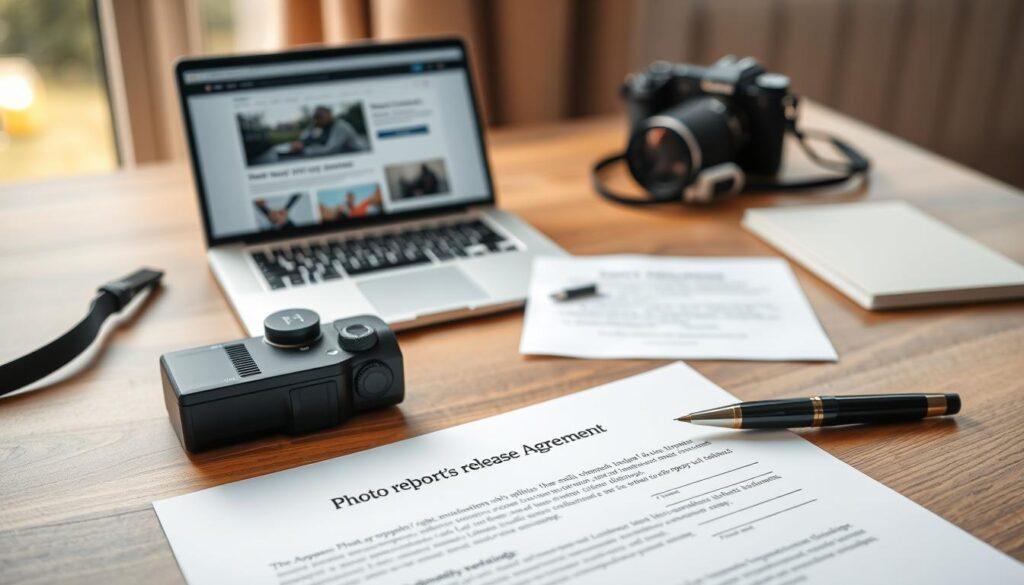
The Youth Sports Symphony
Youth sports have turned making agreements into an art. They’ve created a world of contracts that impress even corporate lawyers.
Player Participation Agreements
These documents are like sportsmanship guides and wish lists for parents. They include tryout details, safety rules, and fairness guidelines. They’re the base of the season.
Liability Waivers
These are like “you break it, you bought it” for kids’ bones. They mean: “If Timmy breaks his wrist, that’s on you and your insurance.”
Code of Conduct Agreements
These are the most hopeful documents. They try to keep sports parents in line through contracts. It’s like trying to stop a hurricane with a paper umbrella.
Model Release Sophistication
Model release forms are at a different level. They’re like the smart, law-school-grad siblings of contracts.
Proper photo release agreements for models have key parts. They make youth sports contracts seem simple:
- Full names and contact info (no “that model guy”)
- Details on the photoshoot, including dates
- How long the images can be used
- Clear payment info, like prenups
They need specific details, like shot numbers and dates. It’s like NASA’s precision.
| Agreement Type | Primary Focus | Complexity Level | Typical Duration |
|---|---|---|---|
| Youth Sports Participation | Safety & Conduct | Moderate | Seasonal |
| Liability Waiver | Risk Management | Simple | Single Event |
| Model Release | Usage Rights | High | Multi-year |
| Code of Conduct | Behavior Standards | Low-Medium | Ongoing |
Creating these agreements is like building a legal Lego set. Each piece must fit perfectly. Whether for soccer parents or models, the right photo release is key to protection.
When and How to Use Releases
Handling photo releases is like playing legal chess. You must know when to move. It’s not about looks; it’s about avoiding costly lawsuits.
The Legal Sweet Spot
Youth sports teams face many legal hurdles. A simple team photo can lead to a privacy lawsuit without the right paperwork.
The Sport Law & Strategy Group suggests adding photo releases to registration packages. This turns boring paperwork into a smart risk management move.
Commercial Use Versus Editorial Freedom
Commercial use needs releases, like in ads or catalogs. But editorial use, like in newspapers, has different rules.
Newspapers can use crowd shots without releases. Educational materials also have freedom. The main question is: Are you selling or informing?
Unrecognizable people don’t need releases. But if someone is identifiable, the rules change a lot.
The Minor Conundrum
Working with minors adds more complexity. Kids can’t legally agree to much. Their signatures are almost meaningless.
Getting parental consent is essential. You need two signatures to protect every photo. This shows you’re serious.
Think of it like this: A soccer team photo needs more legal work than many business deals. Parents’ signatures turn a risk into an asset.
Practical Application Scenarios
- Team websites and social media: Requires releases, even for minors
- Local newspaper features: Often falls under editorial use
- Sponsorship promotional materials: Definitely commercial use
- Internal organizational archives: May not require releases
- Crowd shots at events: Context-dependent but often safe
The line between art and lawsuit can be a signed document. Smart groups see releases as creative tools, not just paperwork.
They know that proper documentation frees creativity, not limits it. This is how amateurs become pros: by focusing on creating, not worrying about lawsuits.
Handling Refusals
So, someone just gave back your model release without signing it? You’re not alone. Dealing with refusals is more about understanding people than winning arguments.

When No Means No
In youth sports, a parent’s no on the photo release means you can’t share that amazing shot. But, there’s a catch. Even if these contracts don’t hold up in court for minors, they can lead to penalties. This could mean less playing time or even being benched.
For pro photographers, an unsigned model release means your best work stays hidden. And, let’s be real, facing a lawsuit is not something you want to talk about at parties.
The Art of Diplomatic Retreat
Being flexible can be better than being strict, as the first source suggests. Here are some ways to handle a refusal:
- Propose alternatives, like using blurred faces or partial images
- Make sure to explain the benefits clearly, as fear of the unknown can be a big issue
- Understand that sometimes, it’s not about the document but about trust
Remember, contract cancellation rights are what you’re dealing with when someone says no.
When to Fold ‘Em
Knowing when to stop is key. Sometimes, the best photos are the ones you can’t use. It’s a tough call, but it’s better to walk away than to risk legal trouble.
| Refusal Scenario | Immediate Action | Long-term Strategy | Risk Level |
|---|---|---|---|
| Parent denies minor consent | Delete images immediately | Develop tiered consent options | High legal risk |
| Model regrets agreement | Cease all usage | Review communication process | Medium legal risk |
| Ambiguous verbal agreement | Assume no consent | Implement digital signature system | High ethical risk |
| Group photo refusal | Blur/remove individual | Create group consent protocols | Medium management risk |
The table shows that different refusals need different actions. Smart photographers plan ahead for these situations. It’s better than trying to figure it out on the fly.
Handling refusals is what separates the pros from the amateurs. Sometimes, the best move is to walk away. That perfect shot might keep you up at night, but it won’t get you sued.
Digital vs. Paperwork Releases
Are you a fan of the old-school feel of paper or the modern ease of digital? Do you love the touch of paper or the quickness of digital?
The Digital Revolution
Digital photo releases are leading the way. Tools like Jersey Watch make it easy to manage releases online. No more lost forms or hard-to-read handwriting.
Everything is online and easy to access from your phone. No need for filing cabinets.
The Paper Persistence
Paper releases have a certain charm. Signing on paper feels official and special. But in today’s world, it’s not very practical.
It’s like choosing a typewriter over a computer. It’s charming but not efficient for handling many signatures.
The best approach is to use digital for everyday tasks and keep paper for special cases. Your photo release process should be efficient, not outdated.