
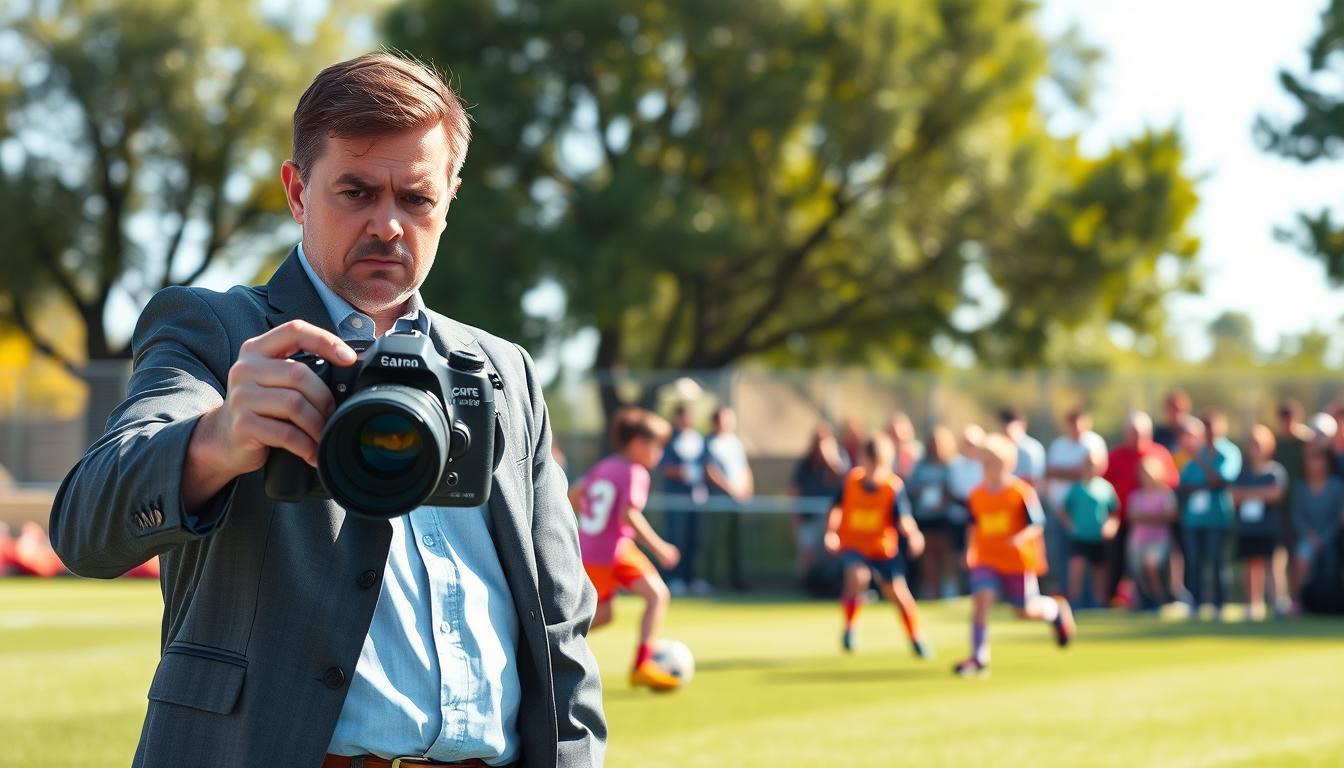
Think youth sports photography is just about capturing perfect moments? Think again. It’s full of legal risks, like a minefield.
Privacy torts can confuse even lawyers. Intrusion claims happen when you cross boundaries. And misappropriation can ruin your day when images appear where they shouldn’t.
Remember that California water polo incident? It was a big mistake.
Before you start snapping photos, know the business side. One mistake could send you to small claims court fast. Your homeowner’s insurance might not cover your photography business.
Not knowing the law can lead to big legal problems. Let’s look at what every photographer needs to know before they start.
Insurance and Indemnification
Let’s talk about something more important than your fastest lens: insurance. Your homeowner’s policy might cover your couch, but not for business. Once you start making money from your photos, your personal coverage no longer applies.
Imagine you’re on the sidelines, taking photos, when an athlete runs into you. Suddenly, you’re facing a lawsuit. This is a real risk in dynamic environments where accidents can happen fast.

Photography insurance is not a luxury; it’s essential. Your homeowner’s policy might cover your gear at home, but not for business. Professional photography insurance, like TD Insurance’s photographer coverage, offers real protection for your business.
What does good coverage include? It’s like a triple-threat package:
- Equipment coverage that doesn’t shy away from expensive gear
- Liability protection for unexpected incidents
- Client injury coverage for when your subjects get hurt
Indemnification is your legal shield. It protects you from financial ruin in lawsuits. In today’s world, someone might sue you for anything, like making them look bad or missing a key moment.
Insurance might seem expensive at first, but it’s cheaper than a lawsuit. Don’t worry about that new lens; worry about your financial safety. In professional photography, not having insurance is like shooting without memory cards – you’ll regret it.
Smart photographers know insurance is more valuable than any gear. It lets you focus on your craft without worrying about lawsuits. In this business, the only surprise you want is how great your photos look – not how much a lawsuit will cost.
Handling Accidents and Complaints
In the world of youth sports photography, emotions run high. Handling complaints is like being a UN ambassador with a camera. It’s all about diplomacy.
Photographing kids can turn into a legal challenge. One minute, you’re snapping a great soccer goal. The next, you’re explaining why their child is in your shot.
Schools and athletic directors have the power. Without their okay, you’re not a photographer but a risk. Today’s culture means small issues can quickly turn into big problems.
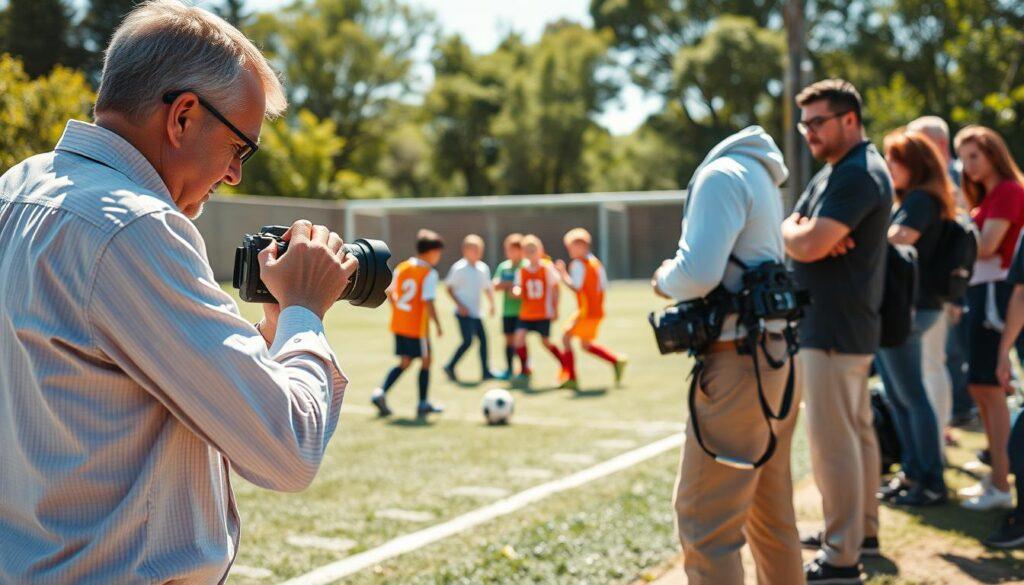
Legal defenses depend on your preparation. Are you shooting for free or for money? This question is key when disputes come up.
Being proactive is your best defense. Explain your goals before you start. Show your portfolio to prove your professionalism.
Accidents will happen. Keep detailed records like a stenographer. Apologize and let your insurance for photographers speak for you.
Here’s a look at different permission scenarios in youth sports photography:
| Scenario | Risk Level | Recommended Action | Documentation Needed |
|---|---|---|---|
| School-sponsored event | Low | Obtain athletic director approval | Written permission letter |
| Tournament with multiple teams | Medium | Contact all team coaches | Email confirmations |
| Public park practice | High | Individual parent consents | Signed release forms |
| Championship game | Variable | Check event photographer policy | Press credentials if required |
Photography in youth sports is more than just taking pictures. It’s about being socially smart, legally aware, and ready for any crisis.
Remember, your camera captures moments, but your preparation keeps your career safe. In youth sports, being open is not just right—it’s necessary to survive.
Case Studies
Let’s explore real photography nightmares that make you check your insurance. These are real stories from court documents and photographer forums.
Remember that photographer who started an LLC? They found out that making money is hard. Low sales and high costs are a common problem.
The legal world is full of surprises. The Sanders v. American Broadcasting Cos. case changed how we think about recording. A journalist secretly taped conversations, leading to a big privacy ruling.
The Schifano v. Greene County Greyhound Park case is also interesting. A photographer faced legal issues at a racing venue. The court decided where public and private spaces meet.
In Southern California, a water polo photo controversy happened. Photos were used without permission, leading to new rules. Suddenly, everyone was talking about copyright.
These stories show how unexpected Photographer Liability can turn creative work into legal fights. Privacy, property, and image misuse are all risks.
Here’s a scary fact: many photographers find their work online without. Digital theft is like shoplifting in the creative world. It’s common, but costly.
| Case Study | Primary Issue | Outcome | Photographer Liability Lesson |
|---|---|---|---|
| Sanders v. ABC | Covert Recording | Privacy Rights Victory | Consent matters everywhere |
| Schifano Case | Public Space Limits | Property Rights Upheld | Location defines legality |
| Water Polo Controversy | Image Misuse | Usage Restrictions | Clear contracts prevent problems |
| Online Photo Theft | Digital Copyright | Ongoing Challenge | Protection requires active measures |
What do these cases teach us? First, public spaces and privacy are not always what we think. Second, digital sharing increases risks. Third, managing risks is key for photographers.
The main lesson? Photographer Liability often surprises us. It’s wise to learn from others’ mistakes instead of making our own.
Creating a Risk-Ready Business
Ready to build a photography business that doesn’t crumble at the first sign of trouble? Let’s get strategic. Creating a risk-ready business means more than just great shots; it’s about infrastructure. Start with the basics: form an LLC to separate personal and business assets.
Calculate your CODB—because time is money, and undervaluing it is like giving yourself a pay cut.
Invest in backup gear; because nothing screams “amateur” like canceling a shoot over a broken camera. Build relationships with athletic directors and coaches; they’re your gatekeepers to sideline access. And always, always have a crisis plan—for accidents, complaints, or legal threats.
Think of it as your playbook for success.
Because in the end, being risk-ready isn’t about avoiding fun; it’s about ensuring that your passion project doesn’t become a cautionary case study. So, suit up, plan smart, and shoot with confidence—because the only thing you should be catching is the action, not Photographer Liability.