
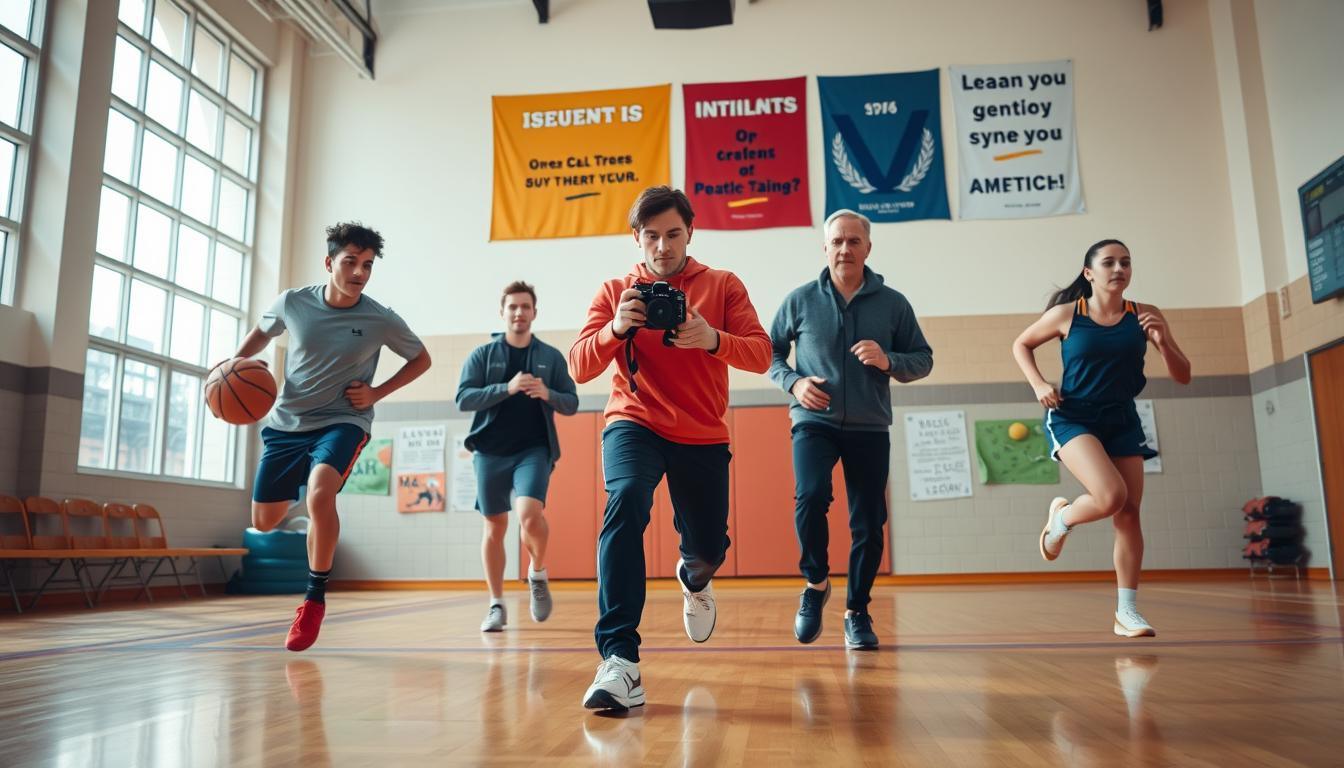
In today’s world, high school recruiting has changed a lot. With new “name, image, and likeness” (NIL) rules, student athletes see themselves as brands. This shift lets athletes like quarterback Trent Seaborn show their skills in more ways.
Having a good visual portfolio is now a must. Quality photos show an athlete’s skills, character, and hard work. These images act as a resume, helping athletes stand out in a crowded field where scholarships depend on being marketable.
College teams and sponsors look for talent on MaxPreps, Hudl, and social media. A strong visual image can open doors to scholarships and endorsements. To understand more about this new world, read this article on marketing high school athletes.
The Role of Images in College Recruiting
In today’s competitive world, high-quality images are key for athletes. Coaches and scouts often judge athletes by their photos. It’s important for athletes to look good in pictures.
According to Opendorse, college athletes’ earnings from NIL are expected to jump from $917 million in 2021 to $2.5 billion by 2026. This shows how important pictures are in recruiting. William Carter, a top NIL consultant, says high school students can now pursue NIL opportunities in over 70 percent of the country.
Images in sports portfolios let recruiters see an athlete’s look and skill quickly. Platforms like Hudl and MaxPreps act as digital stores for these images. Charles Stanfield, who represents top quarterbacks, believes even athletes with few followers can get noticed with good photos.
| Year | NIL Earnings (in billions) | Percentage Growth |
|---|---|---|
| 2021 | 0.917 | – |
| 2022 | 1.2 | 30.9% |
| 2023 | 1.5 | 25% |
| 2024 | 1.8 | 20% |
| 2025 | 2.2 | 22.2% |
| 2026 | 2.5 | 13.6% |
In conclusion, images play a huge role in college recruiting. They are not just photos; they are a way for athletes to show their skills. With the rise of NIL, having a good sports portfolio is more critical than ever.
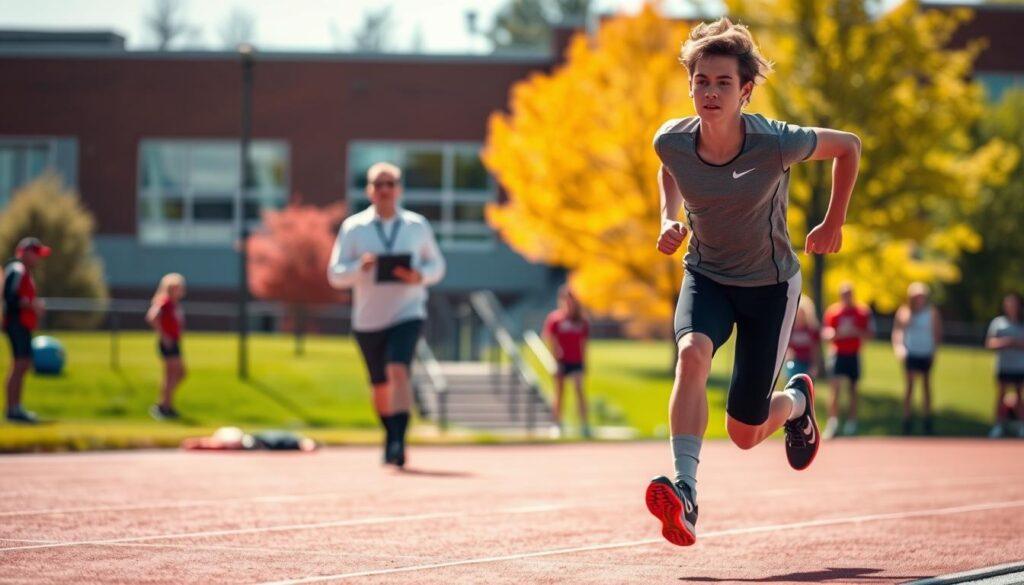
Creating a Professional Sports Portfolio
Building a standout sports portfolio is key for athletes wanting to boost their high school recruiting chances. A professional portfolio shows off an athlete’s skills and personality. It’s a vital tool for catching the eye of college recruiters.
To make a great sports portfolio, athletes need to include different types of images. Action shots that show game smarts are very important. These should show the athlete in action, highlighting their decision-making and skill.
Also, images that focus on specific positions are key. For example, a soccer player should have photos that show their dribbling, passing, and shooting skills.
Off-field portraits are also important. They help show an athlete’s personality and how coachable they are. Recruiters look for athletes who are talented and have the right attitude and work ethic. A good portrait can show these traits well.
In today’s world, where 40 states let high school athletes get some compensation, a polished portfolio can lead to earning chances. Even athletes with a small following can get deals with local businesses. For example, a soccer player with 5,000 followers can work with a local pizza place, helping both sides make money.
According to NIL consultant William Carter, getting sponsorship opportunities is easier than ever. Families should invest in good photography to improve their athlete’s recruiting profiles.
When picking photographers, choose someone who knows sports and can capture the athlete’s essence. Look for locations that match the athlete’s sport and enhance the images. Also, curate images for different places, like social media or recruiting websites, to show the athlete’s best side.
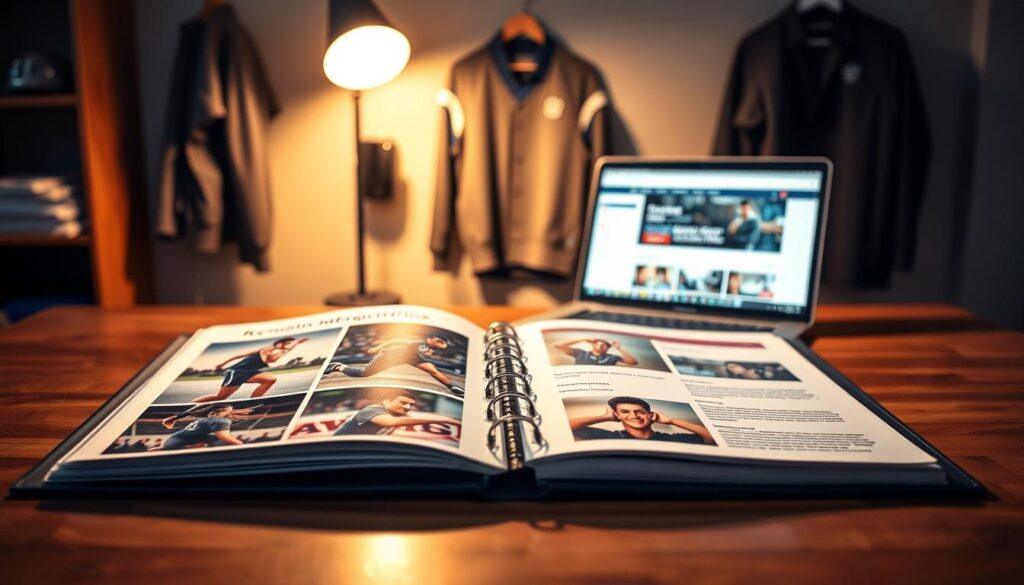
In conclusion, a professional sports portfolio is a strong tool for athletes aiming to boost their high school recruiting chances. By mixing action shots, technical images, and personal portraits, athletes can tell a compelling story that catches recruiters’ attention.
Highlighting Form and Technique
Specialized photography can capture an athlete’s form and technique in detail. It shows things that game footage might miss. For sports like football, baseball, track and field, and basketball, photos let coaches study mechanics step by step. They can see a quarterback’s release, a pitcher’s arm slot, and a sprinter’s stride.
Quincy Avery, a top quarterback trainer, stresses the value of looking at photos to improve technique. He works with over 100 high school and middle school players through QB Takeover. Avery says parents often have too high hopes for their kids’ sports future, calling it “parent goggles.”
To overcome this, athletes should have photo sessions that show their technical skills well. Real, accurate photos help scouts see true talent. When college scouts look at athletic scholarships, they want to see solid basics that will work at the next level.
| Technique | Importance | Photography Focus |
|---|---|---|
| Quarterback Release Point | Essential for passing accuracy | Capture at peak release |
| Pitcher’s Arm Slot | Crucial for pitch effectiveness | Highlight arm position during throw |
| Sprinter’s Stride Length | Key for speed assessment | Document during full sprint |
In conclusion, using specialized photography helps athletes show their skills to college recruiters. This method boosts their chances in high school recruiting and avoids the trap of too high hopes. For more on recruiting, see this guide on photo release forms.
Standout Headshots for MaxPreps and Profiles
A standout headshot can open doors for high school athletes in the competitive recruiting landscape. When scouts browse profiles on platforms like MaxPreps, Hudl, and NCSA, the first image they see is often a headshot. This image needs to convey professionalism and authenticity.
Karissa Niehoff, executive director of the National Federation of State High School Associations, has strict rules. High school athletes must avoid using images that feature their school logos or team jerseys. The NFHS actively works to remove non-compliant photos from recruiting sites.
To create a compelling headshot, consider the following tips:
- Lighting: Natural light works best. Aim for soft, diffused lighting to avoid harsh shadows.
- Background: Choose a simple, uncluttered background that keeps the focus on you.
- Attire: Wear something that reflects your personality while maintaining a professional look.
- Expression: A genuine smile can make a significant difference in how you are perceived.
Regularly updating your headshot is essential. As your skills develop and your appearance changes, a fresh image keeps your profile relevant. Tailor your headshots for different platforms to meet their specific requirements while showing your competitive spirit.
By following these guidelines, athletes can create effective sports portfolios that comply with regulations. They will make a lasting impression on recruiters.
Working with Leagues to Spot Talent
In today’s competitive world of High School Recruiting, good photography is key. Local leagues and national showcases need professional images to showcase events and athletes. Working with league photographers can boost an athlete’s recruiting profile with top-notch photos.
Vincent Minjares from the Aspen Institute says families spent $883 per child on youth sports in 2022. This shows the importance of making smart choices in how athletes present themselves. High-quality photos from league events can make athletes more visible in recruiting. Athletes should aim to attend events with professional photographers to stand out.
With private equity firms like Unrivaled Sports investing in youth sports, the need for professional images is growing. This change shows a move towards making athlete representation more professional. By knowing which events to focus on and using league-affiliated images, athletes can improve their High School Recruiting chances. The right photos can also make the most of the money families invest in youth sports.