
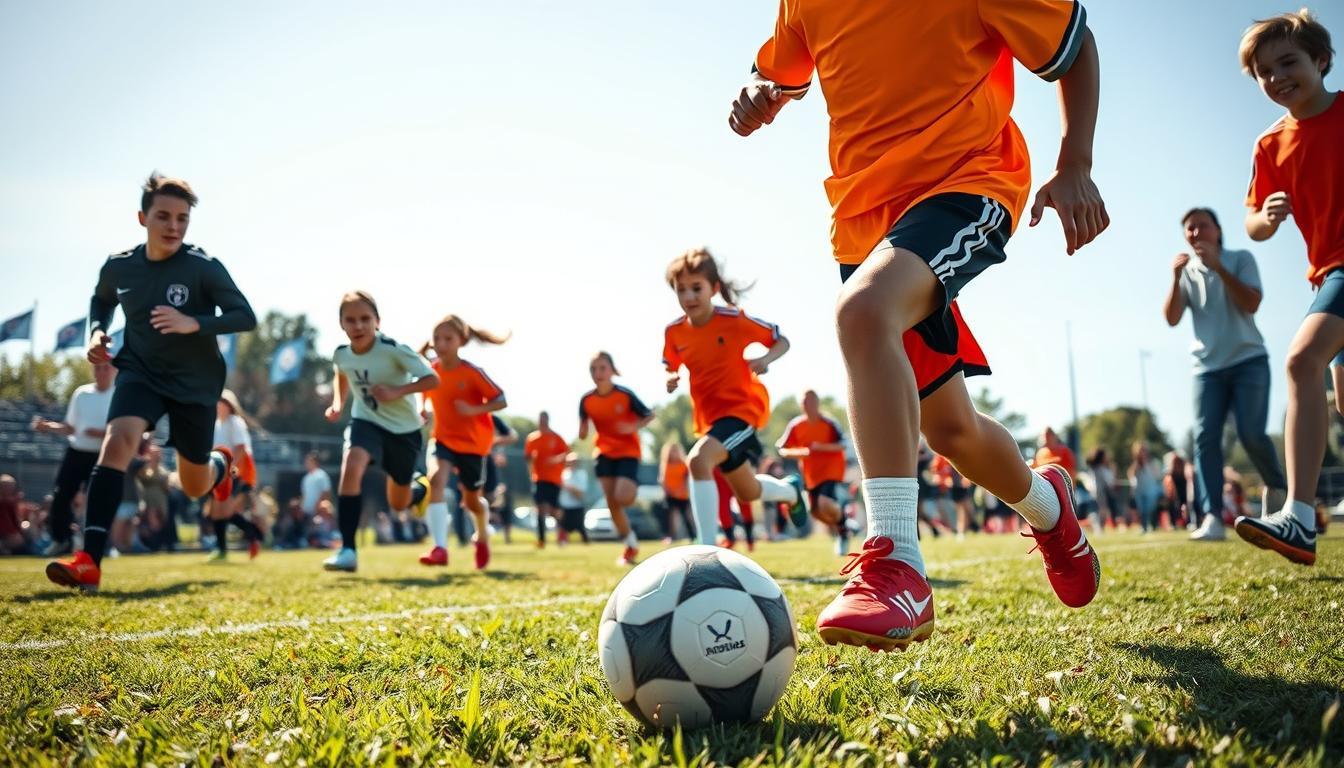
Capturing the essence of youth sports is an art. Youth soccer photos can freeze moments that define a player’s journey. They show the excitement of a child’s first goal and the intensity of a championship match.
Jaison Sterling is a master of this art. He turns ordinary action shots into extraordinary portraits. His use of off-camera flash and a smoke machine creates stunning backgrounds.
Knowing how to use light and composition is key for photographers. Whether it’s a local match or a big tournament, the goal is to mix technical skill with creativity. This way, you document the play and show the passion and intensity of the game.
Covering the Large Field
Photographing soccer is fast and requires smart planning and quick timing. The big field is a challenge for photographers wanting to capture the game’s excitement. Knowing the sport and your camera settings are key to taking great club soccer pictures.
A telephoto lens, like a 70-200mm or longer, is vital for getting close to the action. It lets you zoom in on important moments, like a key pass or goal. Also, having a second camera with a wide-angle lens helps show the game’s bigger picture, like fan reactions and team interactions.
Photographers like Lily and astroo am say it’s important to guess where the action will be. Knowing when a through-ball is coming or where a corner kick will land lets you focus and capture the perfect shot. This skill is what makes your photos stand out.
Changing your view is also key in soccer photography. Moving along the sidelines gives you different angles, from low for a hero shot to high for a tactical view. This variety makes your photos more interesting and tells a better story.
Soccer’s fast pace means you need to adjust your camera settings often. Finding the right balance between shutter speed and aperture is essential. With the right settings, you can take club soccer pictures that show off individual players and the team’s spirit.
| Equipment | Purpose | Recommended Lens |
|---|---|---|
| Telephoto Lens | To capture distant action | 70-200mm or longer |
| Wide-Angle Lens | To capture the broader scene | 16-35mm |
| Camera Body | To switch between lenses quickly | Full-frame or APS-C |
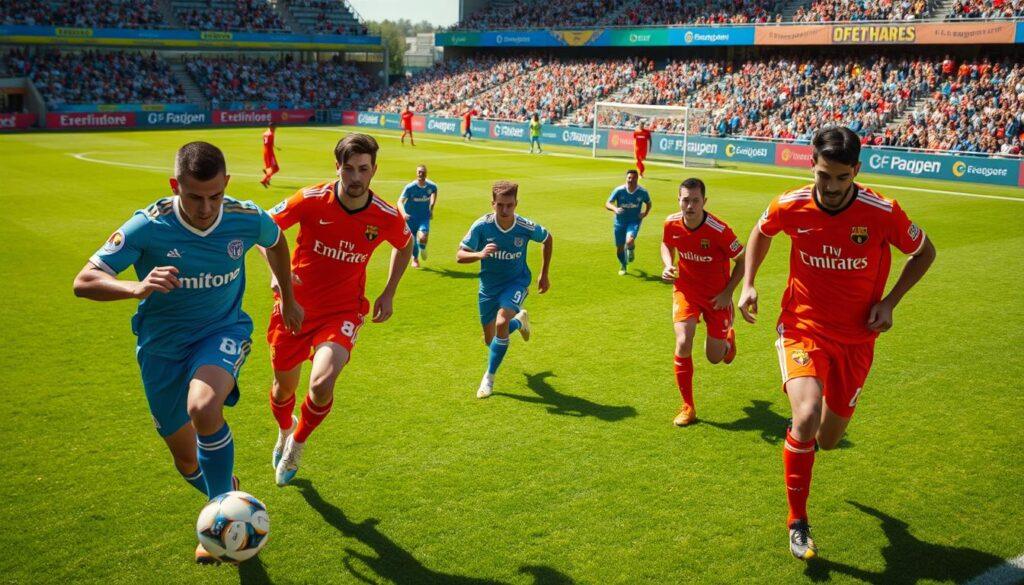
Anticipating Passes and Goals
To excel in soccer photography, you need to predict game-changing moments. The most memorable images are those of decisive passes or stunning saves. Knowing the game’s flow is key to capturing these moments.
Outdoor sports lighting is vital for your photos. As the sun changes or clouds block the light, you must adjust. Jaison Sterling’s advice is priceless. He says to use fast shutter speeds and strong flashes to freeze action.
But sometimes, a bit of motion blur can make your shots better. A blurred ball or a panning background shows the game’s speed and excitement. This adds emotion to your photos, making them more powerful.
Knowing about outdoor sports lighting is key to capturing the right moment. The golden hour’s soft, directional light adds drama to your photos. But the harsh midday sun can cause overexposure. Using fill flash or adjusting your settings can help.
| Lighting Condition | Recommended Settings | Tips |
|---|---|---|
| Golden Hour | Slow shutter speed, wide aperture | Utilize natural light for dramatic effects |
| Midday Sun | Fast shutter speed, fill flash | Watch for harsh shadows on players |
| Cloudy Conditions | Moderate shutter speed, adjust ISO | Embrace the softer light for even tones |
Mastering these techniques and understanding outdoor sports lighting will help you capture those key moments. The players’ emotions, combined with the right lighting, will make your photos unforgettable.
Ideal Angles for Soccer Team Portraits
Capturing a soccer team’s essence goes beyond action shots. It’s about using the right angles and poses. To make youth soccer photos pop, try these methods:
- Low-Angle Shots: These angles make players look powerful and heroic, adding drama to the portraits.
- High-Angle Shots: Shooting from above shows unity and pattern in group photos.
- Natural Expressions: Get players to show their true selves through candid moments or props.
Jaison Sterling’s work is a great example. He uses rim lighting and blue gels to make subjects pop against a smoky background. This technique adds depth and contrast, making portraits stand out.
Adding fun to your photos can make them memorable. Try having players hold light bars or balance soccer balls. These ideas bring out the sport’s youthful energy.
When posing teams, mix serious and fun shots. A player sitting thoughtfully with the ball or a team huddle can make media day photos unforgettable. Make sure to guide your subjects into poses that feel natural.
Using off-camera flash can shape light and add depth. This ensures your photos are both professional and emotionally engaging. For more tips on capturing sharp action shots, check out this resource on sports photography camera settings.

Managing Tournament Weekend Shoots
To manage tournament weekend shoots well, photographers need to be organized and ready. These weekends are a long photo marathon. They require stamina and a smooth workflow to capture club soccer pictures across many games.
Before the event, preparation is key. Make sure you have enough memory cards, charged batteries, and backup gear. Also, create a detailed shot list. It should include action shots, candid moments, coach interactions, and team celebrations.
During the tournament, managing your time is essential. You might need to move fast between fields. A lightweight, mobile setup is helpful. Use a camera strap for easy access and a bag that’s not too heavy.
Photographers might also coach, needing to capture corner kicks while managing their team. This highlights the importance of quick-access settings. Keeping a consistent look across all teams is also vital. Use a preset editing style or consistent lighting to maintain a professional brand.
After the tournament, culling and editing images quickly is necessary. Use batch processing and clear file-naming to handle hundreds of photos. This makes your workflow smoother and lets you deliver top-quality club soccer pictures on time.
| Preparation Tips | During the Event | Post-Tournament |
|---|---|---|
| Ample memory cards | Quickly move between fields | Efficient culling of images |
| Charged batteries | Lightweight mobile setup | Batch processing for editing |
| Backup gear | Capture both action and candid moments | Clear file-naming conventions |
For more sports photography tips, check out these high-impact strategies. They can improve your skills and results.
Weather Contingencies for Outdoor Leagues
Outdoor soccer leagues face many weather conditions, from bright sunshine to rain. Photographers need to adjust their plans to get great photos in any weather. Using outdoor sports lighting can make your photos better, even when it’s not sunny.
When it’s overcast, the sky acts like a softbox, giving even lighting. This is great for action shots without needing flash. But, bright sun can cause players to squint and shadows to be harsh. Using off-camera flash can balance the light and make your photos look professional, as Jaison Sterling shows.
Rainy days are tough, with water on your lens. Waterproof covers and lens hoods are key. By using gels and creating dramatic effects, you can turn a rainy day into a beautiful scene. Knowing how to adjust your camera settings for different weather helps you capture the game’s beauty.
For more on weather safety, check out weather safety protocols. Being ready for any weather lets photographers capture the game’s speed and skill. This way, every moment is preserved beautifully.