
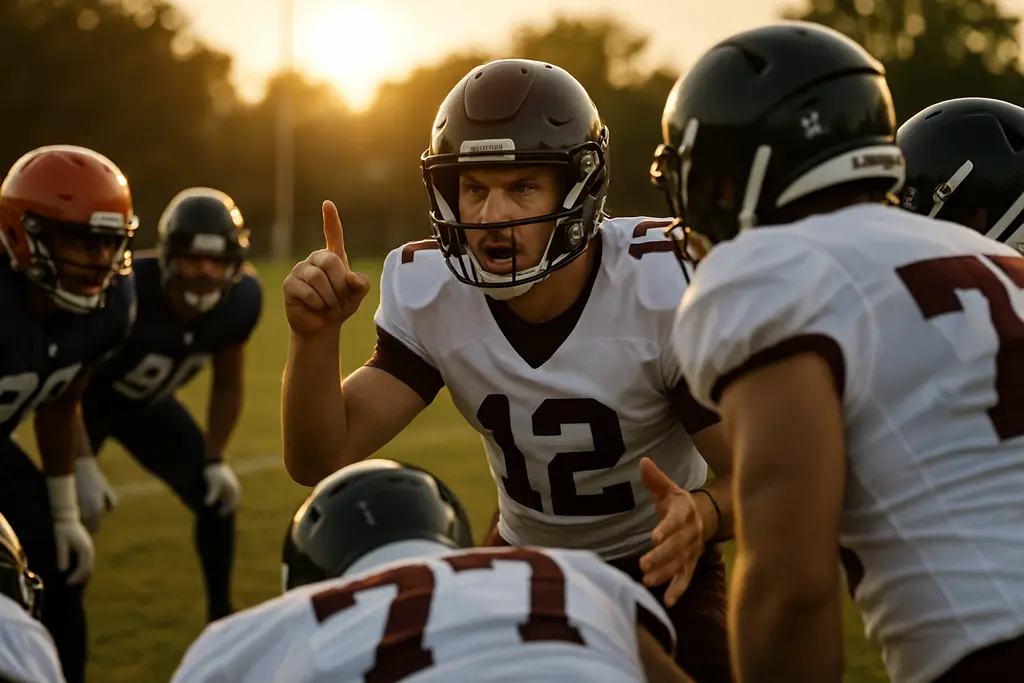
District rivalry communication matters most when the crowd is loud, the stakes are clear, and young athletes are playing in front of classmates, parents, alumni, and future teammates. Week 7 high school football offered a useful reminder: rivalry messaging works best when it explains why the game matters without pushing players or student sections into disrespect. As a sports photographer, I see that balance from the sideline. The best images come from real intensity: a receiver fighting through contact, a linebacker reading the backfield, a coach settling a huddle, or two captains shaking hands before kickoff.
Recent Week 7 examples showed two different sides of rivalry coverage. In South Louisiana, Eastbank and Hahnville were framed before their Week 7 meeting as teams that both entered undefeated in District 7-5A play, with the matchup likely to decide the district championship, according to the Pelican State Prep Football Preview. In Texas, North Crowley and Duncanville drew attention after a tense pregame midfield meeting, with coaches stepping in to keep the moment from escalating, as reported by Yahoo Sports. Those two cases point to the same lesson: rivalry stories need context, control, and care.
Why District Rivalry Communication Matters After Week 7
District Rivalry Communication Starts Before The First Whistle
The public story of a rivalry game begins before the ball is snapped. Schools, booster clubs, student media teams, local photographers, and coaches all shape expectations. The Eastbank-Hahnville example showed how clear stakes can serve the audience. Saying both teams entered undefeated in district play gives families a reason to understand the playoff pressure without exaggerating the moment. It tells the community why the game carried weight.
Good district rivalry communication also helps protect the athletes. A teenager should not have to carry a week of unchecked trash talk into warmups. A team can promote a district championship race, a long-running local rivalry, or a packed home-side crowd while still reminding students that the night belongs to the players on the field. That is not soft messaging. It is disciplined sports communication.
Respectful Framing Keeps The Focus On Football
The North Crowley-Duncanville situation showed why tone matters. A tense midfield meeting can produce dramatic photos and video, but the responsible story is not just the tension. The responsible story includes the coaches who stepped in and the expectation that emotion stays inside the rules of the game. For photographers, that means capturing the whole scene: not only the stare-down, but also the coach’s arm across a player’s chest, the official resetting the group, and the captains returning to warmups.
That wider view helps a community remember that rivalry does not have to mean disorder. Coaches want competitive edge. Families want a safe, memorable night. Players want the chance to show their preparation. Communication should serve all three groups.
Communication Lessons From Recent Week 7 Matchups
Use Stakes, Not Hype, To Build Interest
One of the strongest Week 7 lessons is that real stakes are better than loud slogans. If two teams are undefeated in district play, say that. If a matchup may decide a district race, say that with attribution. If a recent meeting shaped community memory, explain the context only if it is verified. The audience does not need inflated language. It needs a clear reason to care.
For youth sports programs, that clarity also helps younger athletes. Middle school players and flag football families often follow varsity rivalries closely. When schools frame a big game around preparation, teamwork, and district standing, younger players learn that competitive identity is built through practice and execution, not noise.
Matchday Details Should Be Part Of The Message
Rivalry communication is not only a social media caption. It includes parking instructions, student-section expectations, entry points, arrival timing, band and drill team movement, and postgame exit flow. Even when those details are not the headline, they shape the fan experience. A strong rivalry week message should tell families what they need to know before they leave home.
That approach also helps photographers and local media. Clear sideline access rules, credential pickup locations, and field movement boundaries reduce confusion. When game-day operations are calm, photographers can focus on telling the story of the athletes. That means cleaner action frames, better crowd context, and fewer distractions around the benches.
- State the stakes clearly: district record, title impact, or playoff pressure should be tied to verified information.
- Set behavior expectations: student sections and adults should hear the same message about respect.
- Coordinate media access: photographers, school media teams, and local reporters need clear field rules.
- Use images responsibly: publish photos that show effort, emotion, and sportsmanship, not only conflict.
Photography Supports District Rivalry Communication

Dynamic Images Can Tell The Right Story
Photography is a communication tool, not just a keepsake. In a rivalry game, a well-timed frame can show why the matchup mattered: a running back lowering his pads on third down, a defensive back breaking on the ball, a kicker watching a late attempt, or a student section reacting after a turnover. Those images carry emotion without needing careless captions.
For district rivalry communication, the strongest photo set usually mixes action, sideline reaction, and community context. A gallery that only shows collisions can make the night feel hostile. A gallery that includes handshakes, coaches teaching between series, trainers checking on players, and teammates celebrating together gives a fuller account. Youth sports communities deserve that fuller account.
Capturing Rivalries Without Feeding Conflict
There is a technical side to responsible rivalry photography. Long lenses let photographers stay out of player space. Fast shutter speeds freeze the critical moment without needing to crowd the sideline. Wider frames can show the scale of the crowd while keeping students from being singled out for the wrong reason. Editing choices matter too. A photo of two players jawing may be real, but it may not be the image that best serves a school community.
This is where communication teams and photographers should work together. Before rivalry week, schools can decide how they want to present the event: competitive, community-focused, and athlete-centered. That does not mean hiding intensity. It means choosing images that show football as football. For related perspective on how teams adjust tempo, turnovers, and rivalry pressure in Southeast Texas, the discussion of district rivalry coaching fits the same sports-first approach.
Week 7 District Rivalry Communication For Local Programs
Week 7 showed that rivalry messaging is strongest when it is accurate, calm, and grounded in the game itself. The Eastbank-Hahnville framing worked because the district stakes were easy to understand. The North Crowley-Duncanville coverage mattered because it showed how quickly emotion can rise and how much coaches matter in keeping control. Both examples offer practical value for athletic directors, school communicators, booster clubs, and local media teams.
For future rivalry weeks, programs should build the message around verified records, kickoff logistics, sportsmanship expectations, and athlete development. Then let the game provide the emotion. From my spot near the sideline, the best rivalry photos are rarely the loudest moments. They are the honest ones: the quarterback listening to a coach, the lineman helping a teammate up, the freshman watching varsity speed for the first time, and the final handshake after a hard district game. That is the version of high school football worth sharing.