Ever snapped a perfect shot only to find it floating around the internet without your name attached? Welcome to the digital Wild West, where right-clicking has become the new frontier of theft.
That moment your shutter clicks isn’t just capturing magic—it’s triggering automatic legal protection. Your digital file becomes more valuable than you might realize, wrapped in layers of legal armor most photographers never understand.
The Copyright Office doesn’t just collect dust in Washington. It’s your first line of defense against image thieves who treat your work like public property. From black and white classics to vibrant action shots, your creations deserve more than just likes—they deserve legal recognition.
Think of this as your playbook for transforming from casual shooter to protected professional. Because in today’s game, knowing the rules isn’t just smart—it’s essential survival gear.
Who Owns the Photos?
Think you own that amazing sports action shot because you clicked the shutter? Welcome to copyright law’s version of sudden death overtime. Here, common sense gets benched and technicalities become the MVP.
The brutal truth? That incredible photo might belong to someone else entirely. I’ve seen more ownership disputes than questionable referee calls. They all stem from one simple question: were you working for yourself or someone else when you took the shot?
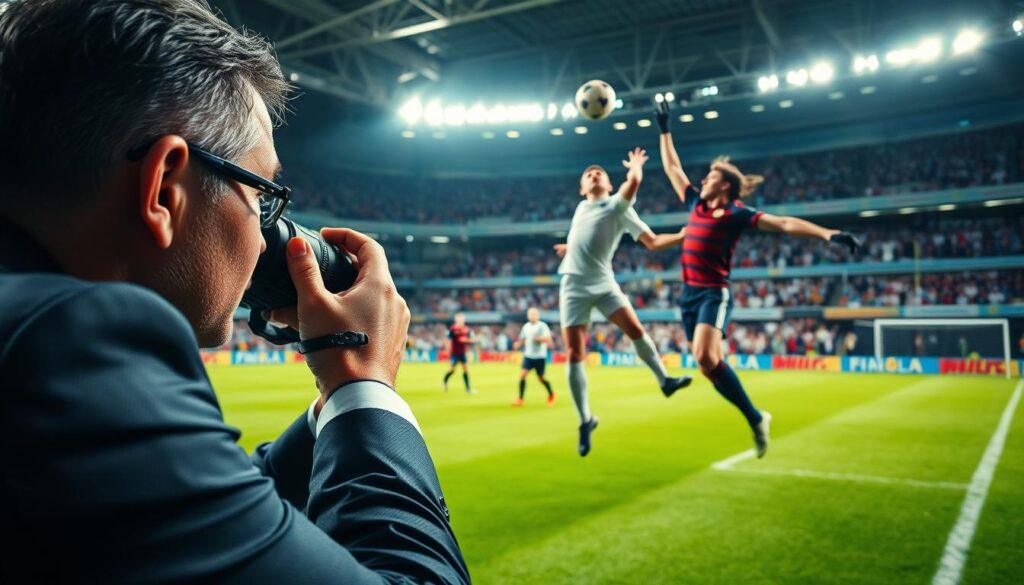
Let’s break down the two main scenarios that determine who actually owns those stunning sports action shots:
Work-Made-for-Hire: You’re the team photographer or media outlet employee? Congratulations – your employer likely owns your genius. That perfect touchdown catch photo? Belongs to the company, not you. It’s like Tom Brady throwing passes while Belichick owns the football.
Independent Creation: You’re a freelancer with your own gear? You’re probably the master of your domain. But beware of vague contracts that might transfer rights without proper compensation.
The Copyright Office recognizes various photo categories – commercial, editorial, events, and sports photos. But the classification matters less than the circumstances of creation. I’ve witnessed contracts so ambiguous they make the NFL’s catch rule look crystal clear.
Here’s a quick reference table showing how different photography scenarios affect ownership rights:
| Photographer Type | Typical Rights Holder | Common Pitfalls | Protection Strategies |
|---|---|---|---|
| Team Employee | Team/Organization | Assuming personal ownership | Clear employment contracts |
| Media Outlet Staff | Media Company | Unauthorized personal use | Understanding company policies |
| Freelancer with Contract | Varies by Agreement | Vague rights transfer clauses | Specific licensing terms |
| Independent Creator | Photographer | Infringement without registration | Copyright registration |
The reality is that sports photography ownership has more gray areas than a rainy day in Seattle. I’ve seen disputes that make Deflategate look straightforward – from team photographers selling shots independently to media companies claiming ownership of freelance work.
Your best defense? Understanding where you fall on the spectrum before you even click the shutter. Knowing who actually owns those images is the difference between cashing checks and crying over stolen glory shots.
For broader context on how these principles apply to other sports content, explore our analysis of copyright on sports broadcasts and related.
Remember: the camera might not lie, but copyright ownership can deceive. Your next incredible sports action shot deserves proper ownership clarity from the opening snap.
Contracts and Rights Transfers
Think of photography contracts as your legal playbook. Missing a clause can ruin your career. It’s like fumbling a fourth-down conversion. Knowing what you sign is key to protecting your work.

There are two main contract types that affect your legal rights. Licensing agreements let clients use your work under certain conditions. Rights transfers, on the other hand, give away your work forever. Most photographers should stick to licensing agreements.
Why do “exposure” deals feel like getting a participation trophy? Exclusive rights mean only one client can use your images. Non-exclusive lets others use them too. One pays your mortgage, the other buys you coffee.
| Right Type | Territorial Limits | Duration | Usage Restrictions |
|---|---|---|---|
| Exclusive | North America only | 2 years | No competitor use |
| Non-exclusive | Worldwide | Perpetual | Editorial use only |
| Work for Hire | Unlimited | Forever | All rights transferred |
“Work for Hire” is like throwing interceptions. Unless you’re getting paid like Tom Brady, avoid giving up all your legal rights. Territorial limits are important too. A local bakery doesn’t need worldwide rights.
Duration clauses are key. Perpetual rights might sound good but can lock you out of future earnings. Use renewable terms to stay in control.
Watch out for red flags in negotiations. When clients want all rights for little money, stand firm. Your contract should protect your work while meeting client needs. It should be like a game plan, not a desperate play.
International copyright frameworks protect your work worldwide. But your contract defines how. Get it right, and you’ll be winning legal victories.
Your creative work needs strong protection. Understanding contract details is more than just following the law. It’s how you build a lasting career in the creative industry.
What to Do If Your Photos Are Used Without Permission
Seeing your photos used without permission feels like someone wearing your favorite jersey without permission. That feeling of seeing your work online without credit or pay? Yeah, we’ve all been there.
Before you start legal battles or post angry messages, think about your strategy. The right approach can lead to a good outcome, not just shouting online.
First step: become a digital detective. Use reverse image search tools to find where your photos are used. Google Images, TinEye, and others can help track your work online. Keep records of where you find it, with dates and URLs.
How you first contact the infringer is key. A calm, professional demand letter works better than yelling. It’s like a smart game plan versus losing control.
Here’s what I include in effective infringement notices:
- Clear identification of the stolen work
- Specific copyright ownership details
- Demand for immediate removal or proper licensing
- Reasonable deadline for response
- Calm but firm tone suggesting further action
Figuring out damages is more than just feeling upset. Copyright law allows for damages from $750 to $30,000 per work. For willful infringement, it’s up to $150,000. “Exposure” doesn’t count as payment.
Threatening legal action can be more effective than actually suing. Many infringers will back down when faced with solid evidence and knowledge of copyright law. It’s like showing your opponent you know their game plan.
Know when to take action and when to let it go. If a big company is stealing your work, legal action might be needed. But for a small blogger who didn’t know better, a takedown notice is usually enough.
Your response to theft shows how you value your work. It’s not just about protecting your photos. It’s about showing that your creative work is valuable and deserves respect.
Preventive Legal Steps
Think of copyright registration as your legal safety net. Nobody plans to fall, but smart photographers prepare for the landing.
The Copyright Office offers several paths to protect your work. GRUPH handles unpublished collections while GRPPH covers published photos. For individual images, choose between Standard or Single Applications based on your needs.
Registering before infringement occurs strengthens your legal rights dramatically. That certificate becomes your strongest weapon if someone steals your work. It transforms your position from hopeful negotiator to empowered rights holder.
I’ve registered thousands of images throughout my career. The paperwork feels about as exciting as watching paint dry on a rainy Sunday. But that registration paperwork separates professionals from amateurs in copyright disputes.
Your camera gear represents your creative investment. Copyright registration protects that investment. It’s the difference between having legal rights and having legal power when you need it most.
In the game of intellectual property, the best victories happen before the conflict begins. Secure your legal rights now, and you might never need to fight for them later.