
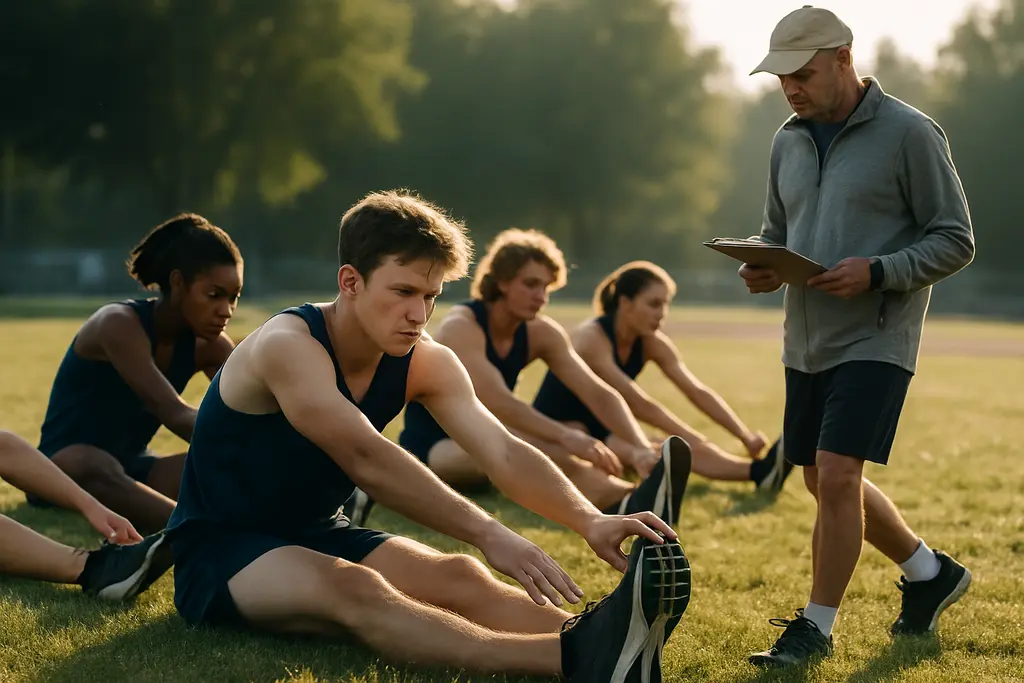
Texas Cross Country district prep in October 2026 asked coaches to balance rules, heat safety, race rhythm, and athlete mechanics at the same time. By October 19, 2026, the UIL district certification deadline of October 17, 2026, had already passed, so the practical coaching lesson is clear: the teams that handled paperwork, heat protocols, and race-day routines early gave their runners a steadier path into championship scoring.
As a sports photographer, I watch cross country through a technical lens: posture on an incline, shoulder tension in the last mile, foot strike on uneven ground, and the split-second expression that shows whether a young runner is pressing or fading. Coaches see those same clues in real time. The best district preparation ties those visual cues to training choices, especially in Texas, where heat, travel, course layout, and school-community pressure all shape championship week.
Texas Cross Country District Standards After Oct. 17
Certification And Rule Readiness
For Texas Cross Country staffs, the October 17, 2026 district certification deadline was not a small administrative item. It determined whether district results could move properly into the postseason process. Coaches needed rosters, entries, classifications, scoring awareness, and meet procedures settled before that date. The UIL cross country manual for 2026-2027, identified in the research as updated by June 15, 2026, also pointed coaches toward rules on distance, participant limits, scoring, and classifications.
The technical skill here is planning backwards. A coach who waits until meet week to sort entries is using energy that should go toward athlete readiness. District week is where small misses show up: a runner unsure about the course walk, a relay-style warm-up that does not match a distance race, or a family confused about arrival timing. Good coaching turns those details into a written meet-day rhythm that athletes can follow without stress.
Heat Policy As A Training Skill
Effective August 1, 2026, UIL heat protocols became required standards for the 2026-2027 school year in the research notes, including Wet-Bulb Globe Temperature readings before outdoor activity. Early fall practices also called for heat stress and participation steps such as rapid cooling zones, ice-water immersion access for heat distress, WBGT monitors, unrestricted hydration, and rest. That matters for district cross country because the fitness built in August and September often decides whether athletes can close well in October.
Texas coaches do not need dramatic workouts to prove toughness. They need workouts that fit the day. On forecasted upper-90s to 100°F days, the research notes described guidance from Texas athletic trainers and instructors: shift earlier, reduce intensity, and protect hydration. In practical terms, that can mean tempo segments by feel instead of all-out time targets, shorter hill repeats, or a controlled pack run where the final mile is observed for form rather than forced pace.
Biomechanics Coaches Can See From The Course
Texas Cross Country Cadence Cues
A 2025 study of high school cross-country runners found that increasing cadence by 10% from baseline reduced peak joint angles at the pelvis, hip, knee, and ankle, lowered peak ground reaction forces, and increased hip moment and power; the authors reported those changes may help reduce injury risk cadence study. For Texas Cross Country runners, that does not mean every athlete should race with the same turnover. It means coaches can use cadence as a tool, especially for athletes who overstride late in races.
From the side of the course, overstriding is visible. The foot reaches too far ahead, the torso leans back, and the runner appears to brake with every step. Video from a phone can help, but still photos are valuable because they freeze the exact instant of ground contact. A sequence of three or four images on a flat section, an incline, and the finishing stretch can show whether cadence falls apart under fatigue. Coaches can then cue shorter contacts, quicker arms, or a controlled surge instead of simply telling a runner to “go faster.”
Form Differences Across A Full Distance
A 2026 study comparing adolescent female and male runners over a 5-mile distance found males had 4.4° to 5.1° more knee varus than females across all miles, higher hip flexion moments and ankle dorsiflexion moments in males, and about a 2.5° increase in trunk flexion range of motion for females from Mile 1 to Mile 5 adolescent distance-run study. Coaches should treat those findings as context, not as a label for any single athlete.
The useful skill is observation. If an athlete folds forward in the final third of a race, the coach can ask whether the issue is pacing, strength, heat, terrain, or recovery. If another athlete’s lower leg alignment changes on turns or uneven ground, the coach can watch practice footage and speak with an athletic trainer if pain or repeated soreness appears. Cross country coaching works best when the coach connects what is seen on the course with what the athlete reports after the workout.
Practice Design For Heat, Pace, And Recovery
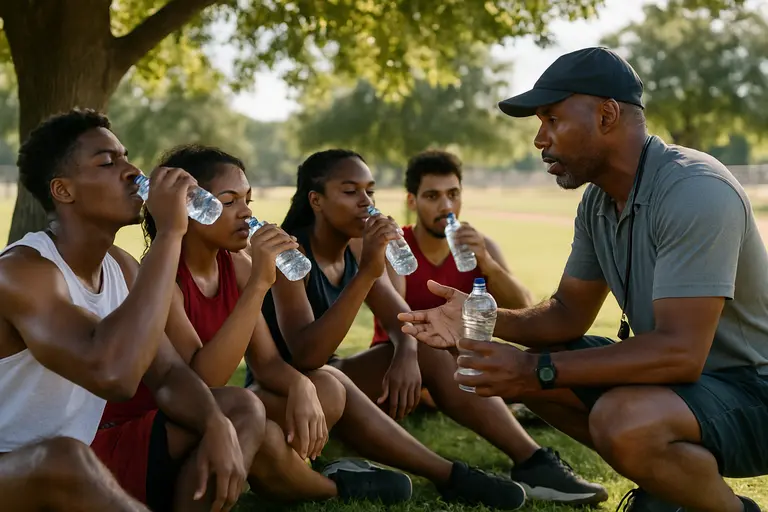
Workouts That Match District Demands
A Texas Cross Country week before district racing should not feel like a random collection of hard days. It should reflect the course and the athlete group. If the district course has long grass, narrow turns, or rolling grades, coaches can include controlled efforts that teach runners how to settle after a surge. If the course is flat and fast, rhythm work and pack discipline matter. The research notes also highlighted that running economy, VO₂max, and the percentage of VO₂max that can be sustained explain 89% to 95% of performance variance among trained long-distance runners, so conditioning choices need to support both fitness and sustainable pace.
Younger runners respond well to simple, repeatable teaching points. A short phrase such as “quick feet on the turn” or “tall through the hill” is easier to carry into a race than a long speech. Coaches working with middle school and early high school athletes can build confidence with short drills and game-like reps, then connect those drills to race moments during the course walk.
Photo Review Without Overloading Athletes
As Kendall Shepherd, my best advice to coaches is to use images sparingly and with purpose. Do not hand a teenager twenty corrections after a hard race. Pick one frame that shows a strong habit and one frame that shows a fixable issue. A runner who sees proof of a strong arm drive at the mile mark is more likely to trust the next cue. A runner who sees shoulders rising near the finish can understand why relaxation drills matter.
Photography also protects the team story. District cross country is often a community event: parents at the fence line, younger siblings chasing from point to point, and teammates yelling splits from the chute area. Capturing those dynamic moments gives schools a record of effort, not just finish order. That record can support athlete development because runners see themselves as part of a team standard, not as isolated times on a results sheet.
- Before race week: confirm certification steps, course details, heat plan, and communication with families.
- During the final quality workout: watch cadence, posture, foot contact, and how athletes respond after surges.
- On race day: keep cues short, track heat conditions, and record key visual moments for later teaching.
- After the meet: review results, athlete feedback, and a small set of photos or clips before setting the next training focus.
Why District Cross Country Prep Matters In Texas
Benchmarks And Community Standards
The research notes list the 2023-2024 girls’ 5A individual state champion time as 16:25.5 at the State Meet. A district coach should not turn that into pressure for every runner. Instead, it can serve as a benchmark that shows how wide the performance range is across Texas. Some athletes are chasing state-level marks, some are learning how to race three miles with discipline, and some are giving their school enough depth to affect team scoring.
Texas Cross Country coaching is technical, local, and personal. The coach has to know the rules, protect athletes in heat, teach race mechanics, and still make room for the pride that comes with wearing a school singlet. District championship preparation is strongest when it respects all of those layers. The stopwatch matters, but so does the stride in the final straight, the calm before the gun, and the community that recognizes a young runner’s effort long after the chute clears.