
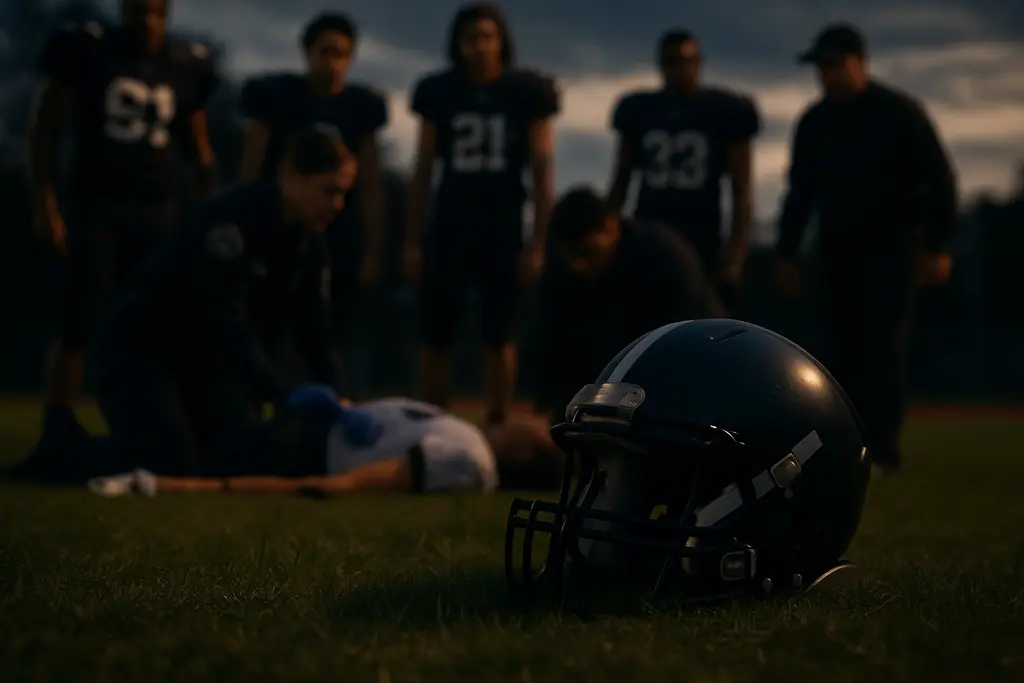
Crandall Player Safety became a shared community concern after a Crandall High School football player was injured during practice on August 19, 2026, and transported by medical helicopter from the PIT in Crandall, Kaufman County, about 20 miles east of Dallas, for advanced care, as CBS Texas reported. The incident had already concluded before September 8, 2026, but the questions it raised remain active for families, coaches, campus leaders, and athletes across the local sports community.
Crandall ISD treated the situation as a medical emergency and used a social media alert to notify the community ahead of the helicopter landing near the baseball fields. The district also asked for privacy for the student and family. That balance matters: families deserve timely information during a frightening moment, while a student athlete’s medical details should not become public discussion without consent.
For a football program, the practice field is part classroom, part training space, and part community gathering point. A serious emergency there can shake trust quickly. The responsible response is not rumor or blame. It is a clear review of what procedures were in place, how they worked under pressure, and whether the same level of emergency readiness exists at every practice site used by athletes.
Crandall Player Safety And The Practice Emergency
What Was Publicly Confirmed
The confirmed public facts are narrow. A Crandall High School football player was injured at practice on August 19, 2026. A medical helicopter was called. The transport location was near the baseball fields at the PIT in Crandall. Crandall ISD communicated with the public before the helicopter landed and asked the community to respect the family’s privacy.
No public information in the supplied research identifies the player, the specific injury, or the student’s medical outcome. That uncertainty should guide how the community talks about the event. In local sports, people often want immediate answers because they know the athletes, coaches, and families involved. Still, responsible sports communication should avoid guessing about a minor’s health or assigning fault before records, timelines, and official reviews are available.
Why Crandall Player Safety Is A Community Issue
Crandall Player Safety is not only a district operations topic. It affects parents deciding whether their children should participate, players deciding how to report symptoms, coaches managing practice intensity, trainers preparing for emergency response, and spectators who may be present near fields or gyms. A medical helicopter landing on campus also affects traffic flow, facility access, and the emotional tone of a school community.
One of the clearest ethical lessons is that practice cannot be treated as a lower-risk setting than a game. Games often come with visible staffing, crowd control, and a stronger sense that emergency response must be ready. Practices may be quieter, spread across fields, or held at times when fewer adults are watching. The safety standard should not drop because the bleachers are empty.
Existing Safety Duties Around Texas School Sports
Emergency Readiness Beyond Game Night
Texas school sports operate under multiple safety expectations. The research supplied for this article identifies requirements tied to hydration, asthma medication access, open emergency lanes, heatstroke prevention materials, and physician clearance before an unconscious student returns to play. Those areas speak directly to practice design: water access, medical supplies, traffic routes, and written return-to-play decisions must be handled before an emergency happens.
UIL-related concussion rules also matter because practices and games both involve athletic contact, collisions, conditioning load, and player reporting. The research identifies annual training expectations for coaches, athletic trainers, and relevant staff, along with concussion management protocols for UIL athletic activities. A community response should ask whether families understand those procedures, not simply whether they exist in a binder or online form.
Emergency action planning is also a facility issue. The research notes UIL expectations for campus AED access, venue-specific emergency action plans, and catastrophic injury reporting for incidents during UIL practices or contests. For a local district, that means each field, gym, track, and off-campus practice space should have a known access point, a clear role assignment, and a communication path for first responders.
State Rulemaking Adds Pressure For Clarity
The Texas Education Agency has also placed more attention on school safety standards. TEA’s school safety update referenced rulemaking for 19 TAC § 103.1217, concerning safety during extracurricular activities for the 2026–2027 school year, including practices, competitions, and events beyond the classroom, according to the agency’s school safety updates. That timing matters for local sports programs because it connects athletic safety to wider campus safety expectations.
For Crandall families, the state-level conversation can feel distant until a medical emergency happens on a familiar field. Then policy language becomes practical: Who calls 911? Who meets the ambulance or helicopter crew? Which gate is opened? Where is the AED? Who communicates with parents? Who documents the incident? Each answer should be simple enough to use under stress.
Ethical Questions For Coaches, Families, And District Leaders
Transparency Without Exposing A Student
The Crandall ISD alert showed why communication is part of safety. The district told the community about the helicopter landing and framed the event as a medical emergency. That likely helped reduce confusion around the campus and nearby fields. At the same time, the request for privacy set a needed boundary around the student and family.
Good sports communication in a community setting should do both: share operational facts and protect personal health information. A district can say that emergency responders were called, that a student was transported, that families will receive updates through official channels, and that privacy should be respected. It does not need to release a name, injury type, medical condition, or locker-room detail to show accountability.
Crandall Player Safety also depends on trust between athletes and adults. Players need to know they can report dizziness, pain, heat stress, breathing problems, or unusual symptoms without fear of being labeled weak. Parents need to know that coaches will stop drills when needed. Coaches need training and staffing support so that safety decisions are not left to one person managing dozens of athletes.
Questions Worth Asking At The Local Level
Community members can help keep the conversation constructive by asking specific, answerable questions. These are not accusations; they are a way to test whether the system protects athletes during routine training as well as high-profile games.
- Are emergency action plans written for each athletic venue, including practice fields?
- Are emergency lanes kept open during after-school practices, camps, and scrimmages?
- Who is assigned to call emergency services, guide responders, and contact families?
- Are AED locations known to coaches, trainers, athletes, and event staff?
- How are hydration, heat risk, asthma medication access, and return-to-play rules reviewed with families?
- Does medical staffing at practice match the risk level of the sport and activity?
These questions also connect to broader sports facility ethics. Communities weighing venue access, safety, and youth priorities face similar concerns, as seen in local discussions of sports complex ethics. The setting may differ, but the core issue is the same: young athletes should not carry avoidable risk because adults failed to plan around access, supervision, or emergency response.
Legal Risk And The Limits Of Compliance

No Public Lawsuit Identified
The research supplied for this article does not identify any public lawsuit tied to the August 19, 2026, Crandall practice emergency as of September 8, 2026. That matters because public discussion should not assume legal claims, legal fault, or a final finding that has not been reported. A careful review can still happen without turning a student’s injury into a courtroom prediction.
Texas law and UIL policy create documentation and training expectations that can affect legal exposure. The research notes that schools may receive certain protections when they follow mandated concussion protocols, training requirements, and required documentation. That does not mean compliance should be treated as the finish line. Families tend to judge safety by lived experience: Was help fast? Did adults know their assignments? Were parents informed? Were athletes protected before, during, and after the emergency?
Why Minimum Standards May Not Be Enough
Crandall Player Safety should be measured by readiness, not paperwork alone. A district can have a policy and still need better drills. A campus can have an AED and still need every coach to know where it is. A field can have an emergency lane and still need cars, equipment, and gates managed so responders can reach an athlete quickly.
That is where ethics and sports operations meet. Football is demanding, and Texas high school programs are built on commitment, conditioning, and team identity. Those values should sit beside a clear duty of care. Athletes should be challenged, but not ignored. Coaches should push development, but not dismiss symptoms. Districts should support competition, but not leave emergency planning to habit or hope.
What Crandall Player Safety Requires From Local Sports
The strongest community response after the August 19 airlift is steady, specific, and athlete-centered. Crandall Player Safety now requires clear communication from school leaders, consistent training for coaches and staff, practical emergency rehearsals at athletic venues, and parent-facing explanations of how practice safety works. It also requires restraint from the public: respect the student’s privacy, avoid unverified claims, and focus on systems that can be improved.
For Crandall and similar Texas communities, the lesson is not that football practice should stop or that every injury can be prevented. The lesson is that emergency readiness must be visible before it is needed. If families can see how hydration, heat risk, concussion protocol, AED access, emergency lanes, and medical communication are handled, trust becomes easier to rebuild. Local sports are strongest when ambition and care show up together on the same field.