
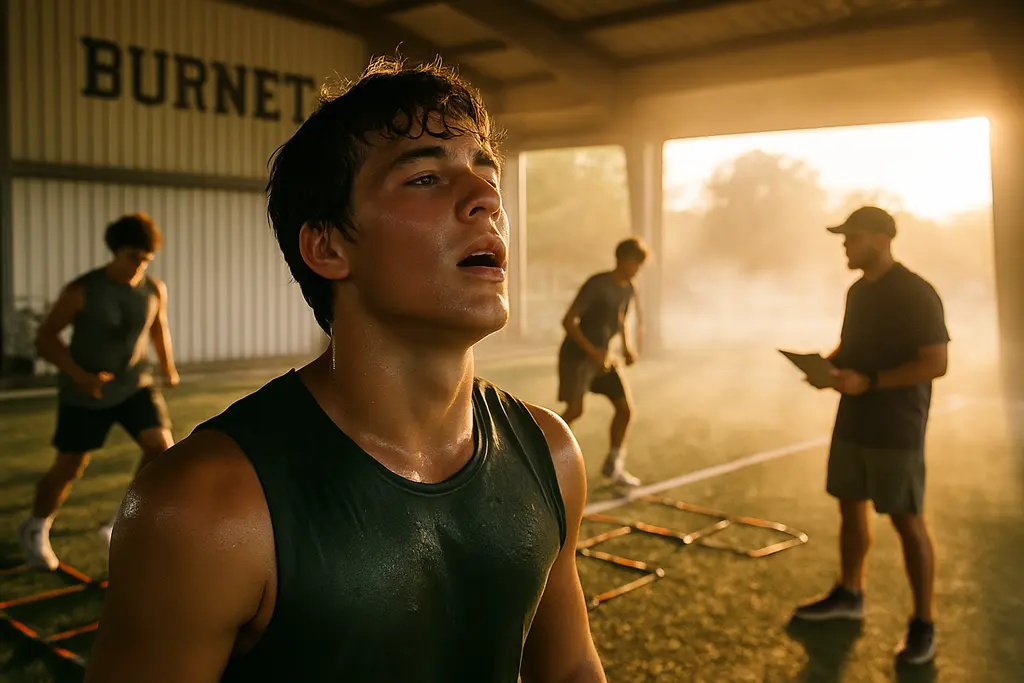
Burnet Practice Structures became a local example of smart football planning after the Bulldogs adjusted early August work around Texas heat, UIL safety expectations, and the need to keep technical skill development moving. On August 3-4, 2026, Burnet High School football used shorter outdoor blocks at Bulldog Stadium, a scheduled recovery window, and indoor work at the Student Activity Center to continue teaching without treating heat as an afterthought.
For youth sports families in Burnet County, that matters because football practice is not only about conditioning. It is where quarterbacks build timing, linemen learn footwork, receivers sharpen stems, defenders fit run gaps, and coaches test whether a young roster can process calls under pressure. As a sports photographer, I also see how these adjusted sessions change the visual rhythm of practice: the best frames often come in brief, intense windows when athletes are fresh enough to execute with purpose.
How Burnet Practice Structures Managed Heat
Burnet Practice Structures And Skill Reps
The key detail from Burnet’s August 3-4 sessions was not that the Bulldogs stopped working. They changed the shape of the work. According to Texas Chalk Talk, Burnet practiced outdoors at Bulldog Stadium for no more than about 75 minutes, took a 30-minute break, and then completed remaining work inside the Student Activity Center Burnet practice report. That structure protected the most football-specific portion of the day while limiting direct sun exposure.
The outdoor split also gave coaches a cleaner teaching lane. During those same August 3-4 practices, the varsity group focused on offensive drills outdoors while the junior varsity worked with defense. That kind of separation can help a staff reduce standing time, keep position groups from crowding drill space, and make every rep easier to coach. It also gives photographers cleaner angles: fewer bodies in the background, clearer ball movement, and sharper images of individual technique.
Indoor Work After Outdoor Blocks
The move inside the Student Activity Center was more than a comfort choice. Indoor space gave Burnet a way to keep meetings, walk-throughs, film-style teaching, footwork periods, or assignment review on the schedule after the outdoor block ended. In youth and high school sports, that balance can protect learning time. Players still hear corrections while the practice is fresh in their minds, but they are not forced to repeat high-intensity reps in rising heat simply to finish the plan.
The value of Burnet Practice Structures was in the order of operations. Coaches used the field for the work that needed space, speed, and ball flight. Then they shifted inside for teaching that could be handled with lower heat exposure. For technical development, that is a strong model: do the full-speed work when conditions allow, then use the indoor block to clean up details.
Technical Skill Work In Shorter Outdoor Windows
Why Short Blocks Can Help Technique
Shorter outdoor windows can sharpen a practice if the staff is organized. A 75-minute cap leaves little room for drift. Coaches have to know which periods matter most, which groups need live timing, and which corrections can wait until the indoor segment. For offense, that may mean prioritizing cadence, route spacing, mesh timing, and ball security. For defense, it may mean fits, pursuit angles, coverage communication, and tackling footwork without extended full-contact volume.
That same teaching thread fits a broader discussion of coach technical skills, especially in fall camp settings where communication checks and role clarity help new players learn faster. Burnet’s heat-adjusted format showed how a staff can keep the skill plan intact without pretending weather is a minor detail.
What Photographers Can Learn From The Format
For community sports photography, these practices require a different eye. The dynamic moments arrive quickly: a receiver breaking out of a route, a quarterback finishing his release, a linebacker opening his hips, or a lineman taking a first step in a pass set. With less outdoor time, there is less room to wait for the perfect sequence. The photographer has to anticipate drill order, find clean sightlines early, and capture technique before the team shifts indoors.
That matters for families and athletes because images from practice can show progress that a scoreboard cannot. A still frame can reveal pad level, hand placement, stride balance, or focus during instruction. In a heat-adjusted practice, good photography also documents the care behind the program: water breaks, coach-player communication, and the move from stadium turf to indoor teaching space.
What The UIL Protocols Changed For Practice Design
WBGT Readings Became A Planning Tool
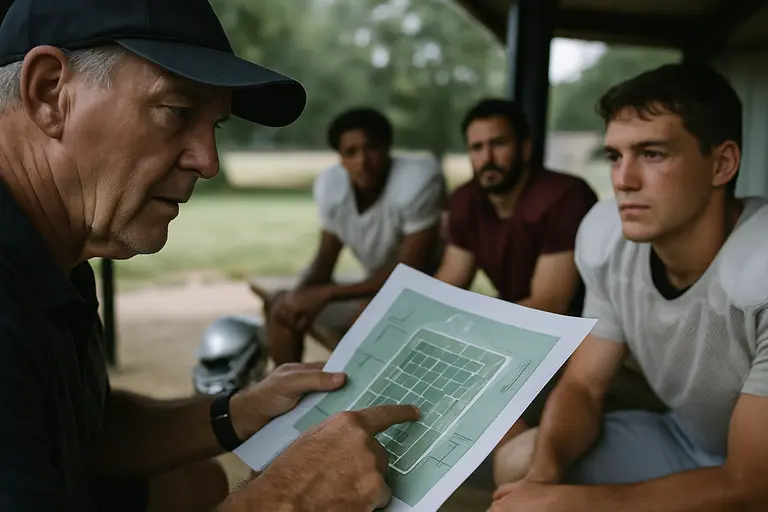
Starting August 1, 2026, UIL heat-safety rules required Texas schools to use Wet Bulb Globe Temperature readings before and during outdoor athletic and marching band practices, with those readings guiding whether activities should be modified or canceled UIL heat stress FAQs. That is a direct shift from simply checking the air temperature. WBGT accounts for heat factors that affect the body during activity, which makes it more useful for practice decisions.
Under the 2026-2027 UIL protocols cited in the research, schools also had requirements tied to rapid cooling zones when WBGT readings reached 79.7 degrees Fahrenheit or higher in certain classifications. Those zones could include cold-water immersion tubs or ice-water wraps, along with shade, ice towels, misters, or indoor shelter. For Burnet, the Student Activity Center gave coaches a practical option when outdoor conditions became less suitable for longer work.
Why Compliance Still Needs Coaching Judgment
Rules set the floor, but coaches still have to build the day. If a practice begins in one WBGT category and conditions worsen, the UIL framework calls for moving to a more restrictive activity level. That can mean more breaks, reduced equipment, a move indoors, or ending outdoor activity. The best local programs will not treat those choices as interruptions. They will build flexible plans before practice starts.
Burnet’s August 3-4 structure showed that approach. Outdoor football work, a timed break, and indoor completion gave the staff several adjustment points. If conditions changed, coaches were not locked into one long outdoor session. From a technical standpoint, that protects repetition quality. Tired athletes in heavy heat often lose posture and timing. A planned shift can help preserve cleaner reps and safer instruction.
- For athletes: shorter high-focus periods can support sharper technique and better attention during corrections.
- For coaches: segmented practice blocks create clear decision points for heat response and teaching priorities.
- For families: visible heat planning builds trust that development and safety are being handled together.
- For photographers: practice flow cues help capture peak action before the group moves indoors.
Why Burnet Practice Structures Matter For Bulldog Development
Burnet Practice Structures matter because they connect safety, skill growth, and community expectations in one plan. The Bulldogs did not need to abandon football teaching during the August 3-4 heat challenge. They changed the format, kept the key outdoor work, gave athletes a recovery break, and used indoor space to finish the day.
For a local program, that sends a clear message. Player development is not measured only by how long a team stays outside. It is measured by whether the team can teach with purpose, protect young athletes, and keep families confident in the process. In Burnet, the structure also reflects the reality of Texas football: heat is part of the calendar, so practice design has to be part of the answer.
From the sideline, the best images from a session like this are not only the diving catch or the quarterback throw. They are also the moments that show discipline: players rotating through drills, coaches giving quick corrections, and athletes carrying technique from one rep to the next. That is where strong youth sports coverage serves the community. It captures the work behind Friday nights and shows how a program adapts without losing its football identity.