
Local sports streaming works best when it starts with the real needs of a community: parents following a road game, alumni checking in from another city, coaches reviewing film, and local fans trying to stay connected to school, club, and community teams. The research available here does not name a specific city, league, venue, or school system, so this guidance stays focused on verified technical building blocks rather than unsupported local claims.
A successful platform is not just a camera pointed at a field. It needs planning for live traffic, secure access, clear scheduling, device support, rights management, and support when a stream fails five minutes before kickoff. For local sports communicators, those skills matter because the audience is often personal. A missed stream can affect grandparents, players, sponsors, students, and small businesses tied to the event.
Local Sports Streaming Architecture For Matchday Demand
Build For Traffic Spikes, Not Average Nights
Live sports creates uneven demand. A weekday practice recap may draw a small audience, while a playoff match, rivalry game, senior night, or tournament final can create a sharp traffic spike. The research points to event-driven microservices that can scale independently during live events, a design approach also discussed in sports streaming development guidance. For a community platform, that means the video service, user login, payment access if used, content schedule, and notifications should not all fail together if one part is overloaded.
For local sports streaming, the practical lesson is simple: build for the biggest night on the calendar, not the quietest. A district championship, regional tournament, or homecoming game may produce far more viewers than a normal match. Systems should be tested before those dates, with backup workflows for encoders, internet connections, and staff communication.
Local Sports Streaming Starts With Rights
Before any technical setup goes live, the platform operator needs clarity on who owns the broadcast rights and who has permission to show the event. The research notes that platforms must follow broadcasting rights, licensing agreements, and local rules. Nationally, streaming has drawn more public attention; on April 10, 2026, The Washington Post reported that the NFL faced increased federal scrutiny as more games shifted to streaming, according to its NFL streaming report. A local platform is not the NFL, but the reminder is useful: access, rights, and distribution should be documented before launch.
Video Quality, Devices, And Venue Realities
Low Latency And Adaptive Playback
Fans care about whether the stream starts quickly, stays clear, and keeps close to the live action. The research identifies low-latency streaming and adaptive bitrate streaming as core needs. HTTP Live Streaming, often shortened to HLS, is listed as one protocol option. Adaptive bitrate matters because local audiences rarely watch from identical connections. One viewer may be on fiber at home, another on a mobile network at a youth tournament, and another on hotel Wi-Fi during travel.
A local platform should aim for stable playback before chasing extra features. If the score is close late in the game, a frozen stream will cause more frustration than a plain interface. Technical teams should test streams from the same kinds of locations where families watch: phones in parking lots, school-issued laptops, older tablets, and home smart displays if supported.
Multi-Device Testing For Real Homes
The research calls for support across mobile devices and web browsers. That point is especially relevant for community sports, where a single household may include parents watching on phones, siblings using tablets, and alumni opening a web browser at work. Multi-device compatibility should include screen size, audio sync, caption or scoreboard readability where available, and simple account recovery.
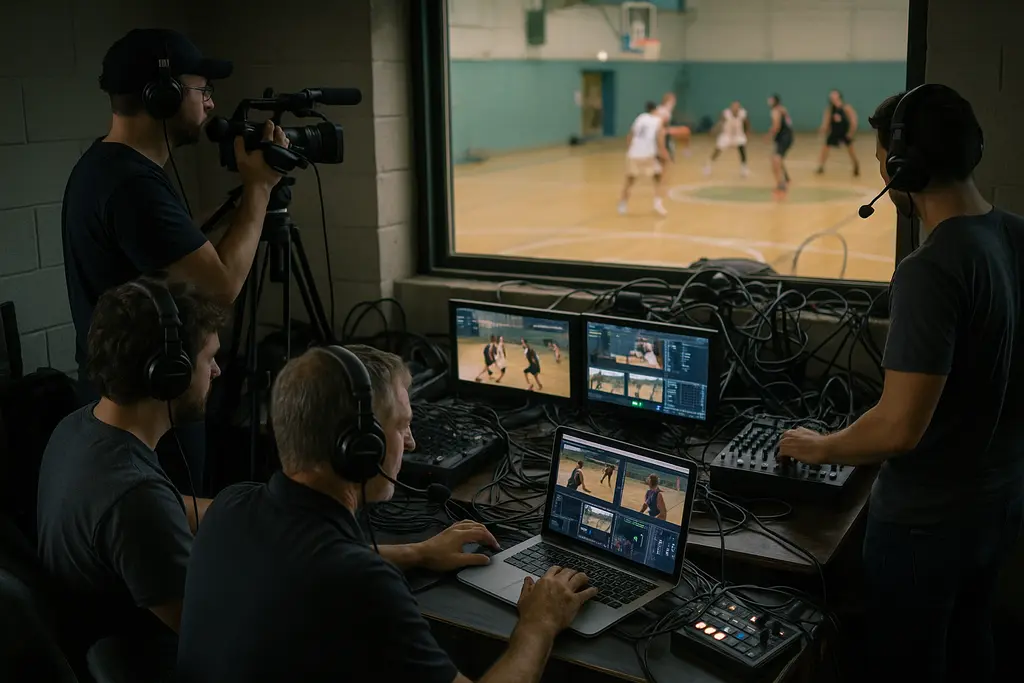
A local sports streaming platform also needs to consider venue limits. Many high school gyms, parks, and smaller stadiums were not built with broadcast operations in mind. Camera placement, power access, and network strength can vary from one site to another. A technical checklist for each venue can help crews avoid repeat problems across a season.
Rights, Access, And Trust With Families
Secure Login And Access Control
User authentication and access control are listed in the research as key platform needs. In community sports, this is not only a business issue. Some events may be open to all viewers, while others may require restricted access because of school policies, youth privacy concerns, or licensing terms. Secure sign-in helps a platform manage those differences without putting the burden on coaches or volunteer staff at game time.
Access rules should be easy to explain. If a platform uses subscriptions, pay-per-view, or ad-supported access, the audience should know what they are receiving and how to get help if something breaks. The research identifies those revenue models as possible options, but the local sports angle should remain centered on service, reliability, and community value rather than sales pressure.
Encryption, DRM, And Responsible Distribution
The research names digital rights management and encryption as ways to protect content from unauthorized access and piracy. These tools can help schools, clubs, and leagues protect the value of their media rights. They can also support responsible sharing, since clips and full broadcasts may include minors, spectators, and school facilities.
Trust is part of the product. Families are more likely to support a platform if they understand how accounts work, how content is protected, and who can view archived events. Clear policies should be written in everyday language, not only in technical terms.
Operations Skills That Keep A Season On Track
Content Management For Schedules And Archives
The research points to the need for a content management system to organize, schedule, and manage live and on-demand programming. For a local sports staff, the CMS is where a season can either stay organized or become confusing. Game titles, start times, opponent names, venue labels, and replay availability should be consistent.
Local teams often deal with weather changes, gym conflicts, tournament bracket updates, and bus delays. A CMS should make it easy to adjust a broadcast listing without forcing a full rebuild of the page. It should also help volunteers or staff find archived games for coaches, players, and families after the final whistle.
Monitoring And Support During Live Events
Real-time analytics and monitoring are listed in the research as important for platform performance and viewer behavior. In practice, that can mean checking stream health, viewer drop-offs, device issues, and load times while the game is still happening. For local operators, live monitoring should connect directly to action: restart an encoder, switch a network source, update a status message, or route a support request.
Customer support is also part of the technical skill set. The research calls for responsive support channels, and that point carries extra weight in local sports. A parent locked out during warmups does not need a long technical explanation. They need a fast, calm response and a clear fix if one is available.
- Before kickoff: test camera, audio, network, login, schedule page, and backup contact path.
- During the event: monitor stream health, viewer errors, latency, and support messages.
- After the event: confirm archive status, label the replay, and review issues before the next game.
Why Local Sports Streaming Skills Matter Locally
Technical Choices Shape Community Access
Local sports streaming can strengthen connections between teams and the people who support them, but only if the platform is reliable enough to earn repeat use. A clean interface helps families find the right game. Scalable systems help the stream survive a major matchup. Secure access protects content. Better monitoring helps staff fix problems before the audience gives up.
The strongest local platforms treat technical work as part of sports communication. Coaches want dependable film. Athletes want their games represented well. Families want access when travel, work, weather, or distance keeps them away from the venue. Schools and clubs want a system that reflects well on their programs.
For local sports communicators, the next skill is not only learning a tool or protocol. It is connecting platform design to the rhythm of a season: schedule pressure, tournament timing, venue limits, and the emotional weight of community games. When those pieces work together, local sports streaming becomes more than a broadcast feed. It becomes part of how a community follows its teams.