
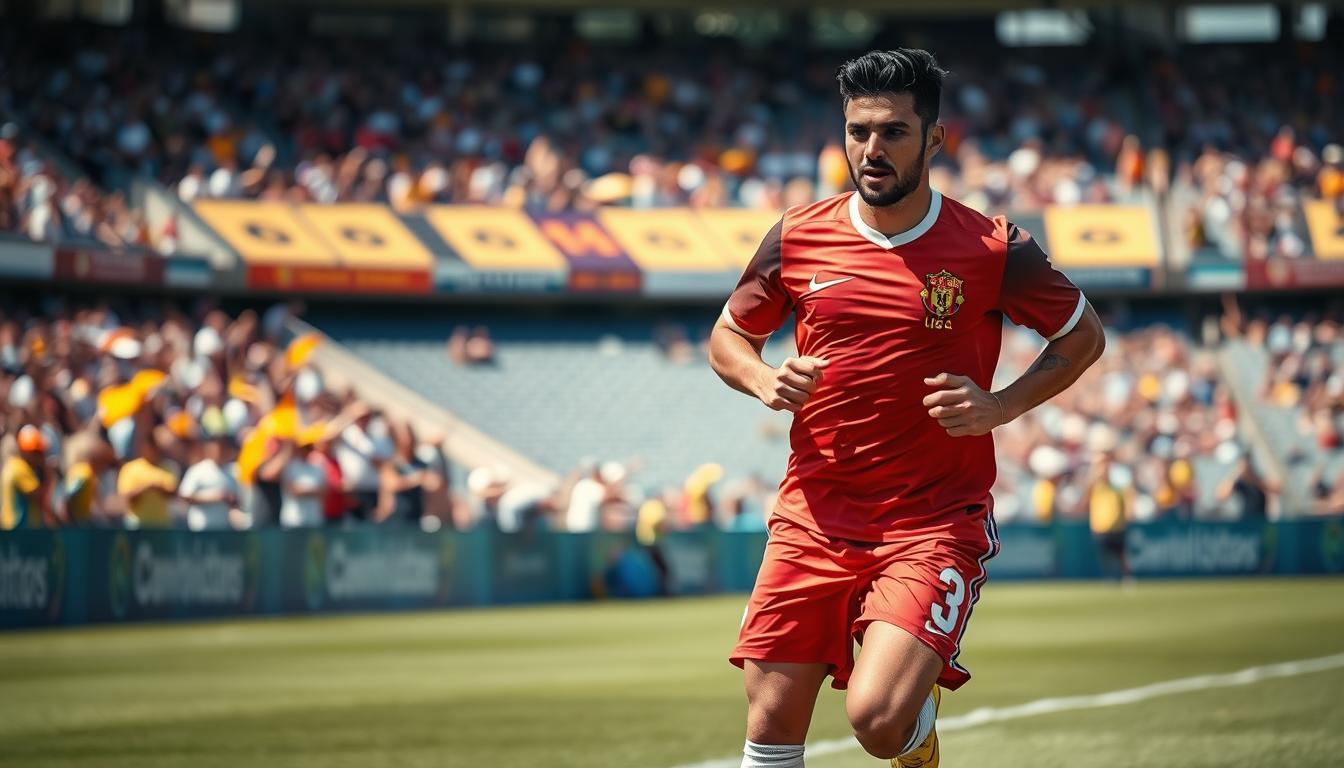
In the fast-paced world of sports, your camera’s f-stop is more than a technical detail. It’s like a director, choosing who gets the spotlight and who blends into the background.
Imagine a quarterback standing out clearly, while a chaotic scrum blends into the background. This contrast is all about your depth of field. It’s the key to telling a story with your camera. If you’re new to this, our complete beginner’s guide to aperture is here to help.
A wide aperture (like f/2.8) makes your athlete stand out against a soft background. On the other hand, a narrow setting (like f/8) captures the whole scene. This is what pros do in Texas youth leagues. It’s not just about numbers; it’s about telling a story with your camera.
Controlling Background Distractions
Subject isolation is more than a trick; it’s a choice between minimalism and context in sports visuals. Every background in your shot is either a great helper or a distracting noise. Your aperture decides its role.
Think of it as directing a tight character study or an epic ensemble piece. The answer guides every technical choice you make.
In sports photography, two schools clash. The Bokeh Purists use fast glass to blur backgrounds. They turn chaotic scenes into nothingness, focusing the viewer’s eye on the athlete.
The Contextualists prefer a wider aperture. For sports like rugby or cross-country, they use f/8. This lets the environment tell a fuller story, not just the athlete.
Lisa Cannon’s football photos show this well. The helmet’s shadow adds drama, not just a technical challenge. Her work asks: when does a “distraction” become meaningful context?
The Gear Dictates the Philosophy
Your equipment choices often shape your artistic approach. A telephoto lens with a wide aperture creates separation. A standard or wide-angle lens invites the environment into the story.
Consider a motocross photographer using a 300mm at f/4. This combo delivers clean subject isolation against a blurred track. The flying dirt becomes abstract texture, not visual noise.
Now imagine a fell running shot made with a 20mm lens. The runner is smaller, and the landscape dominates. Here, subject isolation takes a backseat to environmental storytelling.
The technical rule is simple: use the longest focal length with the widest aperture available. A 70-200mm f/2.8 is a workhorse for good reason. Fill the frame with your subject to minimize destructive cropping later.
| Approach | Typical Gear | Best For | Philosophical Stance |
|---|---|---|---|
| Bokeh Purist | 70-200mm f/2.8, 300mm f/4 | Individual athletes, portraits, sports with chaotic sidelines | Minimalism: The subject is the entire story |
| Contextualist | 24-70mm f/2.8, 20mm prime | Team sports, landscape sports (running, skiing), cultural events | Environmental: The setting completes the narrative |
| Technical Hybrid | Fast prime (85mm f/1.4), zoom with variable aperture | Versatile shooting, changing conditions, editorial work | Pragmatism: Choose based on the moment’s needs |
| Crowd Master | Telephoto zoom (100-400mm), monopod | Stadium sports, events with deep backgrounds | Separation: Isolate subjects from complex environments |
Making the Intentional Choice
Deciding in the moment? Start by asking what story you’re telling. Is it about an individual’s grace or a team’s battle? Choose your aperture wisely.
Remember, depth of field calculations are narrative tools. A shallow depth of field whispers intimacy. A deep one shouts context.
Here’s my field-tested process:
- Scan the background first. Assess what’s behind your subject before raising your camera. Is it clean or cluttered?
- Choose your weapon. Select the lens that matches your story—telephoto for isolation, wider for context.
- Set your aperture with intention. Don’t default to f/2.8. Ask if f/5.6 might serve the story better.
- Fill the frame. Get closer or zoom in. This minimizes background real estate.
- Review and adjust. Check your shots. Is the background helping or hurting? Tweak as needed.
A clean background isn’t always best. Sometimes, the “distraction” is the point. A cheering child or a scoreboard can add layers.
True mastery of subject isolation means knowing when to use it. It’s understanding that sometimes the background speaks as loudly as the subject.
Your aperture is more than a light valve. It’s a narrative dial. Use it for intimate character studies or epic sports sagas. The choice is yours. Make it intentional.
Fast Glass vs. Stopping Down for Teams
F/2.8 lenses are like the attack ads of photography—expensive and flashy. They make your subject stand out alone. But, when you’re shooting a team, you need everyone sharp.
Do you spend a lot on a 70-200mm f/2.8 lens? Or do you use what you have? Let’s look at the options.
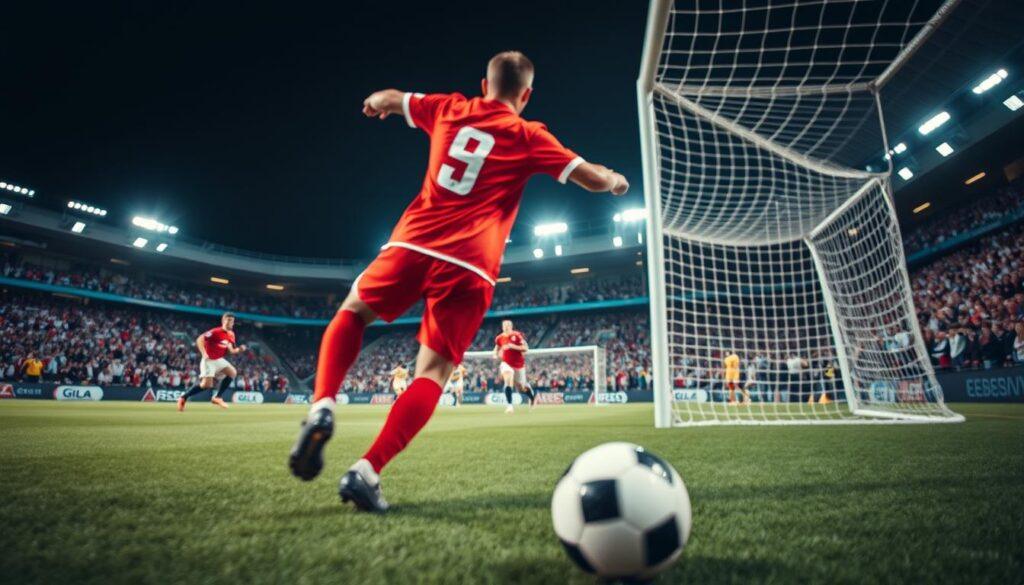
The 70-200mm f/2.8 lens is a favorite for many. Its wide aperture lets you take fast photos in low light. You’ll need a camera that handles high ISOs well.
This lens also makes your subject pop by blurring the background. Its fast autofocus is key for catching fast-moving subjects.
For sports like beach volleyball, a 24-70mm f/2.8 lens is better. It gets you close to the action and keeps your subject sharp.
Now, let’s talk about stopping down. This means using a smaller aperture like f/5.6 or f/8. Why? For depth of field.
When you need a team photo, stopping down is the way to go. It keeps everyone sharp, from the front row to the back. It’s all about the story, not just one person.
You don’t need to spend a lot to get great team shots. A less expensive f/4 or f/5.6 lens can be stopped down to f/8. It’s a budget-friendly way to get everyone sharp.
| Attribute | Fast Glass (f/2.8 Strategy) | Stopping Down (f/5.6-f/8 Strategy) |
|---|---|---|
| Primary Goal | Subject isolation & speed. Crush the background, freeze action in low light. | Context & group clarity. Get the whole team, play, or scene in focus. |
| Ideal Scenario | Individual athletes in poor light; creating dramatic, singular focus. | Well-lit daytime games; team portraits; explaining player formations. |
| Key Trade-off | High cost for lens & body; very shallow depth can miss critical moments. | Requires more light; less dramatic “pop”; can struggle in dark stadiums. |
Choosing between fast glass and stopping down depends on the situation. For night games, go for the f/2.8. For sunny days, stop down and save money.
The best photographers know when to use each approach. They adapt to the game, just like the best coaches do.
DOF Calculations and On-Field Tips
Forget the math of online calculators—depth of field on a muddy field is like conducting an orchestra. It’s not just about f-stops and focal lengths. It’s about managing chaos, anticipating movement, and telling a story with sharp and blurry elements.
The textbook says three things matter: aperture, focal length, and distance to your subject. A 200mm lens at f/4 focused 20 yards away has a specific depth. But on turf, it can either isolate a quarterback or cut his receiver’s hands out of focus. It’s all about the moment.
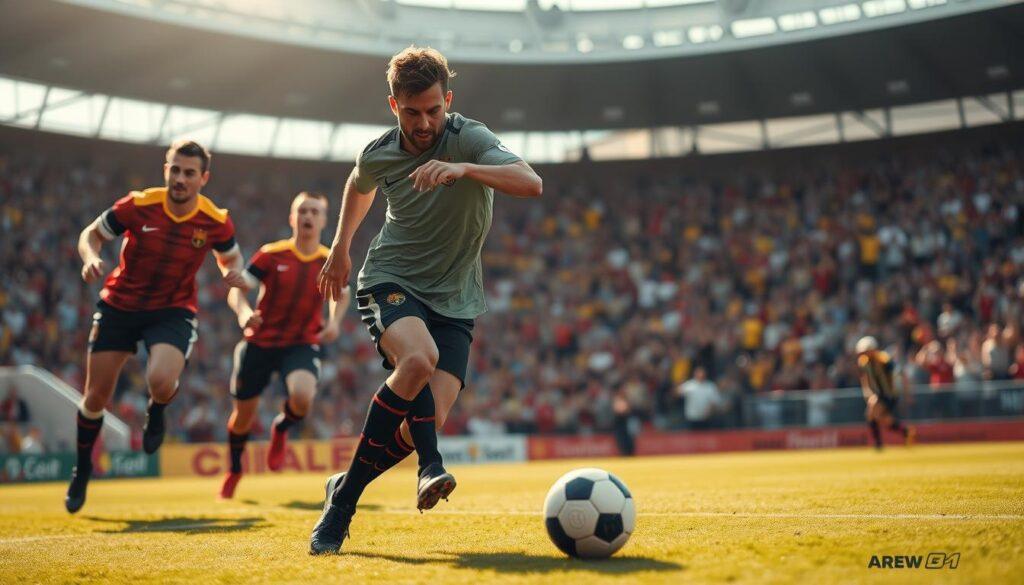
Longer lenses compress perspective and shrink your zone of sharpness. A 135mm lens has a much shorter depth of field than a 50mm at the same aperture. This is your secret weapon for separating an athlete from a busy sideline. Think of it as visual crowd control.
So how do you command this zone of focus in real time? You need a field manual, not just a calculator.
| Scenario | Recommended Settings | DOF Effect | On-Field Tip |
|---|---|---|---|
| Isolating a Single Player | f/2.8 – f/4, 200mm+, 10-20 yards | Very shallow; player sharp, crowd blurred | Kneel for a low angle. This makes the athlete look monumental and often simplifies the background. |
| Small Group Action (3-5 players) | f/5.6 – f/8, 70-135mm, 15-30 yards | Moderate; keeps key players in focus | Ensure faces or jersey numbers are visible. The story is in the expression. |
| Full Play Development | f/8 – f/11, 24-70mm, 30+ yards | Deep; shows context of the entire play | Always keep the ball in the frame. It’s the narrative MacGuffin—the object everyone is chasing. |
| Backlit or High Contrast | f/4 – f/5.6, Spot Metering | Prioritizes exposure over maximum blur | Manage helmet shadows and bright skies. Slightly deeper DOF helps maintain detail in challenging light. |
Your stance is your first compositional tool. Getting low isn’t just for stability. It changes the plane of focus, often replacing a distracting horizon line with grass or sky. It makes a linebacker look like a Titan emerging from the mist.
Focus technique is where theory meets muscle memory. Back-button focus, using AI Servo or AF-C mode, is non-negotiable. It decouples focusing from the shutter button. Your thumb tracks the subject continuously while your index finger waits for the peak moment to fire. This is your dedicated spotter.
Remember, composition rules serve the story. Use the rule of thirds to place a runner’s effort in context. Fill the frame with a gymnast’s concentration. Leverage foreground elements—a fence, a net—to add layers to your understanding depth of field.
The goal isn’t to calculate depth of field perfectly. It’s to use it intentionally. Make the background haze intimidate. Make the sharp eyes tell a story of focus. On the field, depth isn’t just a measurement. It’s a language.
Example Comparisons and Settings Recipes
Think of this as your photographic playbook. The theory is solid, but the game happens on the field. What’s the actual recipe for a crisp, isolated basketball dunk under harsh arena lights versus a dynamic shot of a downhill mountain biker?
For that Friday night football hero, start with 1/1250s at f/2.8. Use Auto ISO capped at 3200, Canon’s AI Servo, and burst mode. Listen for the hit of pads—don’t just spray and pray. This combo delivers sharp subject isolation, separating the quarterback from the chaotic secondary.
A sunny soccer match is different. You can stop down to f/5.6, push the shutter to 1/2000s, and let your Nikon’s ISO rest at 100. The deeper depth of field keeps the whole play in focus, trading pure isolation for context.
Want motion? The panning shot at a car race is a deliberate choice. Try 1/40s at f/11 with a smooth follow-through. It blurs the background into streaks while keeping the car sharp. It’s the opposite of freezing action, but it tells a faster story.
Compare a 300mm f/4 shot of an isolated motocross rider against a 20mm wide-angle of fell runners. One is a portrait of exertion; the other is the landscape of the race. Your aperture choice writes the caption before you press the shutter.
These aren’t mere presets. They’re starting formations. Master these recipes for subject isolation and context, then start calling your own creative plays. The definitive story of the game is waiting in your viewfinder.