
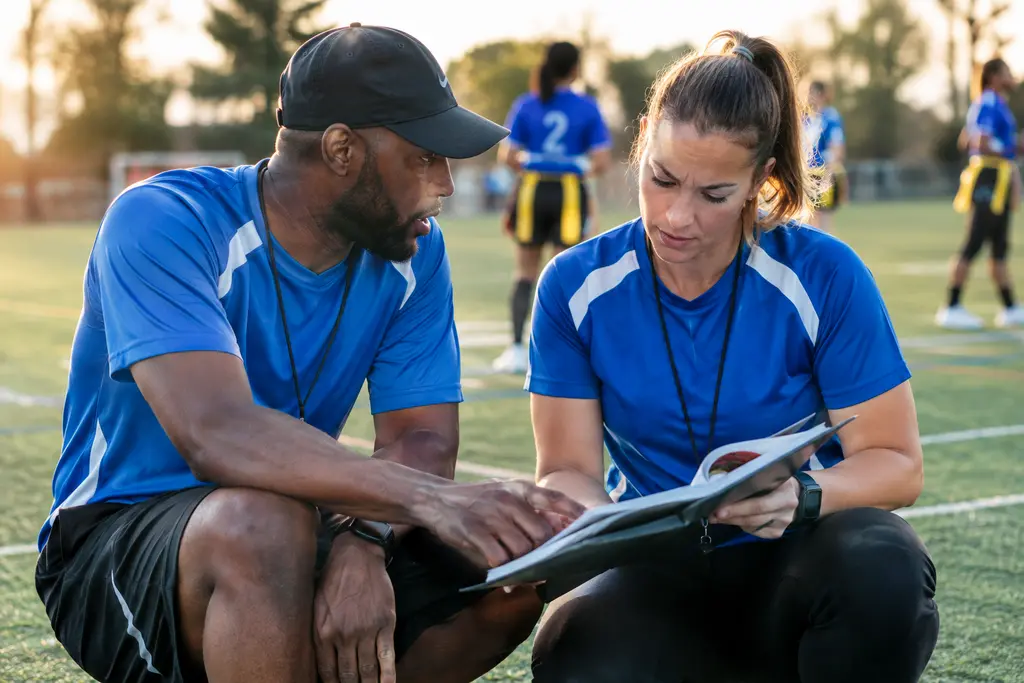
Strong Flag Football Communication can keep a youth tournament moving when fields are busy, games run close together, and families are trying to track athletes, bags, water bottles, and kickoff times. From my side of the sideline as a sports photographer, the best tournament moments happen when young athletes know where to be, parents know what to expect, and coaches can focus on teaching rather than repeating the same update in five different places.
Flag football tournaments move fast. A team may have a short warmup window, a tight break between games, or a last-minute field assignment from the tournament operator. Without a clear communication plan, small issues can grow quickly: one family misses a field change, a coach gets pulled into a sideline debate, or a young athlete hears different instructions from adults. A better plan does not need to be complicated. It needs to be visible, safe, repeatable, and agreed on before the first snap.
Flag Football Communication Before The First Snap
Flag Football Communication Rules For Adults
The first step is choosing who communicates, where messages live, and what belongs in each channel. The U.S. Center for SafeSport says electronic communication with minor athletes should be transparent, with a parent, guardian, or another adult copied or included, and private one-on-one messaging is prohibited except for emergencies or documented consent under its youth sport safety guidance effective January 1, 2025 SafeSport communication guidance. For coaches, that means the team app or group message should be set up so adults can see the same information, not so athletes receive isolated messages.
A team can make this simple by naming one official channel for tournament information. That might be a league-approved app, a parent group text, or a platform already used by the organization. The tool matters less than the agreement around it: schedules, field changes, arrival times, uniform notes, weather delays, and check-in reminders should all go there. Side conversations will still happen, but the official channel should be the place families trust when details matter.
Set Expectations Before Families Arrive
A short parent meeting before tournament day can prevent a long sideline argument later. Coaches should explain arrival time, warmup flow, substitution approach, snack or hydration expectations, and how parents should raise concerns. Parents should know whether the coach wants questions before the first game, after the final game, or during a scheduled check-in. Athletes should hear the same message so they do not feel caught between adults.
This is especially useful for tournament settings because the pace is different from a single weekend game. A coach may have only a few minutes to reset the offense, adjust matchups, or remind defenders about flag-pull angles. A parent who understands that rhythm is less likely to interrupt during a key teaching moment. For families building their own team plan, our related note on coach parent communication channels fits this same issue: clear channels work best when expectations are shared early.
Tournament-Day Channels That Reduce Sideline Noise
Use One Channel For Urgent Updates
On tournament day, the communication channel should be practical enough for a parent walking from one field to another. Long messages can be saved for the night before. During the event, coaches or team managers should keep updates short: field number, report time, jersey color, and whether athletes should bring water or equipment to the next huddle. A clear format helps families scan messages fast.
A 2025 study published on June 8, 2025 surveyed parents and coaches in youth soccer and found that parents reported lower communication frequency than coaches across all communication modes; WhatsApp-style groups were the most used weekly mode, while parent satisfaction with communication was tied to better cooperation parent-coach communication study. That research was not specific to flag football, so it should not be treated as a direct tournament rule. Still, it supports a point many youth teams recognize: coaches may feel they have communicated enough, while parents may feel they missed key details.
A good Flag Football Communication plan closes that gap by repeating the right details at the right time. If the next game is at 11:20 a.m. on Field 3, the message should not be buried inside a paragraph about lunch, standings, and effort. Put the action item first. If nothing has changed, say that too. Silence can make families wonder whether they missed an update.
- Night Before: Send arrival time, location, uniform, parking or check-in notes, and the first known game time.
- Arrival Window: Confirm the meeting spot and who has checked in.
- Between Games: Post only the next field, next report time, and any recovery reminder.
- After Final Game: Share pickup details, lost items, and when photos or team notes may be available.
Handling Playing Time And Feedback Without Heat
Separate Coaching Decisions From Game Emotions
Flag football can create quick emotional swings. One missed flag pull can lead to a touchdown. One late substitution can leave a child upset. Parents are allowed to care deeply, but the sideline is rarely the right place to debate playing time or strategy. Coaches should state their feedback process before the tournament and repeat it calmly when pressure rises.
That does not mean coaches should shut parents out. It means concerns need a safe lane. A team might use a 24-hour pause for non-urgent concerns, then offer a short conversation or written reply. During a tournament, coaches can acknowledge a parent without stopping team flow: “I hear you. Let’s talk after our last game.” That sentence protects the huddle, the athlete, and the parent relationship.
The athlete should remain central. In youth flag football, communication should help players understand effort, positioning, teamwork, and safe play. If a parent question turns into a public critique, the athlete may carry that tension into the next snap. If the coach explains the teaching point in a calm setting, the child has a better chance to learn from the tournament instead of feeling blamed by it.
Photo, Video, And Athlete Privacy Expectations

Plan Media Rules Before The First Game
As a technical specialist in sports photography, I pay close attention to how communication affects media coverage. The best action photos come from real game movement: a quarterback releasing a pass, a receiver turning upfield, a defender reaching for a flag, or teammates reacting after a stop. Those moments are easier to capture responsibly when media rules are clear before families arrive.
Teams should decide who may take sideline photos, where photographers can stand, and how parents will receive images. If a league, venue, or tournament has its own media policy, that policy should lead. Families should also know whether photos will be shared in a private gallery, a team app, or another approved channel. For youth athletes, photo sharing is not just a convenience issue; it connects to trust, safety, and family expectations.
Flag Football Communication should cover names, numbers, and captions too. Some families may be comfortable with game photos but not with public identification. Others may want images for family keepsakes or athlete profiles. Coaches do not need to solve every preference during warmups. They do need a process that gives parents a fair chance to state restrictions and gives photographers clear direction.
That process also protects the tournament story. When families understand when photos will be available, they are less likely to crowd the team area for their own angles. When photographers know the communication plan, they can stay out of coaching lanes and focus on clean, safe images that show the speed and joy of the game.
Why Flag Football Communication Protects Tournament Day
The value of Flag Football Communication is not just fewer texts or calmer parents. It is a better tournament experience for children. A player who knows where to line up, who hears one clear coaching voice, and who is not pulled into adult conflict can compete with more confidence. That is the real win for youth sports communities.
Coaches should treat communication as part of preparation, just like installing plays or teaching flag-pull technique. Parents should treat it as part of support, just like bringing water or cheering good effort. Tournament organizers and team managers can help by keeping official channels consistent and by reminding adults that minor-athlete communication must stay transparent and visible.
For local teams, the details may vary by league, facility, and event operator. The main idea stays the same: confirm the official channel, post short tournament updates, keep youth messages safe, handle concerns away from the sideline, and set photo expectations early. With that structure, youth flag football tournaments give families what they came for: organized competition, community connection, and dynamic moments young athletes will remember.