

The UIL Lone Star Cup is more than a trophy handoff. It is a public moment where Texas high schools show how athletes, academic teams, fine arts groups, sponsors, families, and local supporters helped build a full-school achievement story. As a sports photographer, I see these ceremonies as one of the rare places where the scoreboard, the band, the student section, and the community all fit into one frame.
On October 18, 2026, the 2026 presentation events referenced by UIL had already taken place. That matters for accuracy. The ceremonies in August and September 2026 should be discussed as completed recognitions, not as events still ahead. They also offer a useful communication model for schools that want to honor achievement responsibly while keeping the focus on students.
How UIL Lone Star Cup Presentations Work
UIL Lone Star Cup As A Schoolwide Story
The award is given annually to six Texas high schools, one in each UIL classification from 1A through 6A, based on performance in sanctioned athletic, academic, and music competitions. Winners receive a trophy and a $1,000 scholarship, according to the official program page. The program began in the 1997-98 school year, and that history helps explain why schools treat the presentation as a campus-wide honor rather than a single-team celebration.
For the 2025-26 award cycle, the winners were Gordon in 1A, Shiner in 2A, Wall in 3A, Comal Davenport in 4A, Prosper Walnut Grove in 5A, and Southlake Carroll in 6A. Each name represents a different local sports and school culture, from smaller-town programs where nearly everyone knows the athletes to large suburban campuses with broad activity rosters and packed stadium nights.
Good communication around these awards starts with that broad view. If a school frames the honor only around one sport, it can miss the full meaning of the award. The strongest presentations recognize the football team, basketball programs, marching band, academics, theater, robotics, spirit groups, and other UIL activities that contribute to the point total. That approach gives more students and families a reason to feel included.
Why Timing Shapes The Message
UIL’s 2026 presentation schedule placed trophy events during high-visibility community gatherings. For example, Comal Davenport’s 4A presentation happened on Friday, August 28, 2026, before its football game against New Braunfels Long Creek. Southlake Carroll’s 6A presentation happened on Friday, September 25, 2026, at halftime against Northwest Eaton. Both ceremonies were already completed by October 18, 2026.
That timing was smart from a communication standpoint. A pregame or halftime setting brings together students, parents, alumni, staff, youth players, and local supporters who already understand the rhythm of a school event. The ceremony does not have to fight for attention in a separate venue. It becomes part of the game-night experience, where applause, photos, and shared pride happen naturally.
For schools planning future recognition moments, the lesson is clear: choose the setting where the community is already gathered, then tell the story with care. A trophy presentation needs a visible stage, but it also needs a thoughtful run of show. Announcers should name the range of programs involved, school media teams should prepare accurate captions, and photographers should be placed where they can capture the award, student reactions, and the crowd without blocking the ceremony.
Scoring Rules Keep The Recognition Grounded
What Counts In The Standings
The scoring system is one reason the award carries weight. UIL points come from sanctioned activities such as football, basketball, marching band, robotics programs including FIRST, BEST, and RECF, theater, academics, one-act play, spirit, and other listed competitions. State or national polls are not part of the standings, and UIL’s tie-breaking order starts with most state championships, then most points in the State Academic Meet, then most district championships in team sports, as stated in the official rules and scoring.
That structure gives communications teams a firm base. Schools do not need to rely on vague claims or inflated slogans. They can explain that the award reflects performance across UIL activities with established scoring criteria. That matters for public trust, especially in local sports coverage where families expect accuracy and fairness.
It also changes how photographers and school media teams should cover the moment. The best image set is not only a trophy close-up. It should include the band in formation, student-athletes in uniform, academic representatives, fine arts participants, administrators, coaches, and students in the stands. Those images show why the UIL Lone Star Cup sits at the intersection of competition and school identity.
Using Facts Without Leaving Anyone Out
A clean presentation script can do a lot. It should state the classification, the award cycle, the programs represented, and the scholarship amount. It should avoid unsupported claims about being the “best” school in every area, because the scoring system recognizes achievement within UIL’s defined structure. That kind of wording respects rival schools while still honoring the students who earned the recognition.
Schools can also use a short media plan before the ceremony. A few practical steps help keep the message clear:
- Prepare one approved fact sheet: Include the award year, classification, activities that contributed, and presentation date.
- Coordinate photo positions early: Keep sightlines open for families and avoid crowding students during the trophy handoff.
- Caption every image with context: Identify the school, classification, date, and type of ceremony without overstating results.
- Share the spotlight: Feature athletics, academics, music, theater, spirit, and other UIL contributors where supported by the school’s record.
This kind of planning is especially useful on football nights, where the schedule is tight and emotions run high. Schools that want stronger turnout and clearer messaging can connect these presentation habits with broader UIL football engagement work, including sponsor coordination, youth outreach, and family communication.
Community Photos Turn Recognition Into Memory
Capturing Dynamic Student Moments
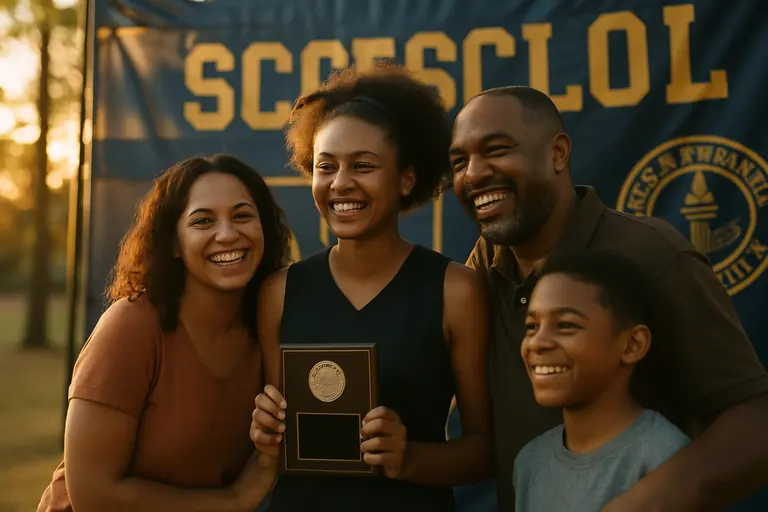
A presentation is brief, but the images last. For the UIL Lone Star Cup, the most meaningful photos often happen just before or just after the official handoff. Students point toward friends in the stands. Coaches step back so their teams can move forward. Band members react from the sideline. Younger athletes watch older students receive public recognition and start to picture themselves in that same space.
From a technical sports photography view, these ceremonies require quick decisions. Stadium lighting can shift between pregame sunlight and halftime shadow. Photographers need a fast enough shutter speed to freeze handshakes, applause, and trophy lifts. A medium telephoto lens helps isolate emotion without stepping into the ceremony space. Wide frames are just as valuable because they show the scale of community support around the award.
Responsible school coverage should also think about youth sports development. When elementary and middle school athletes see their high school recognized across academics, arts, and athletics, the message is bigger than winning one game. It tells younger students that participation matters, that different activities can share the same stage, and that school pride can be built through many paths.
Why The Audience Matters
The audience is part of the story. Parents see years of rides, practices, rehearsals, homework nights, and volunteer hours reflected in one public moment. Local businesses that support booster clubs see the payoff in student opportunity. Teachers and sponsors see their work recognized outside the classroom. The UIL Lone Star Cup gives schools a way to connect those groups without turning the event into a sales pitch.
That is why the strongest presentation images include reaction shots. A trophy photo documents the award. A crowd photo documents belonging. A student section photo shows peer support. A sideline photo can show how a school’s younger athletes connect to varsity leadership. Together, those frames help a community remember not only who won, but who showed up.
UIL Lone Star Cup Messaging For Local Schools
The communication value of the UIL Lone Star Cup comes from accuracy, inclusion, and timing. The award recognizes results across sanctioned UIL activities, but the presentation shows how those results live inside a community. Schools that get the message right avoid narrow framing and give proper credit to the many programs that helped build the point total.
For local sports media teams, the best coverage treats the ceremony like a community sports feature rather than a quick trophy note. Name the date. State the classification. Explain that the 2026 presentations already took place in August and September. Photograph the dynamic moments that show student energy, not only the posed image at midfield. That approach keeps the record clear and gives families photographs they will still value years from now.
Texas high schools are built on shared Friday nights, academic contests, fine arts performances, student leadership, and volunteer support. A well-covered UIL Lone Star Cup presentation brings those pieces together in public view. When the message is honest and the images are strong, the ceremony becomes more than recognition. It becomes a lasting record of how a school community showed up for its students.