
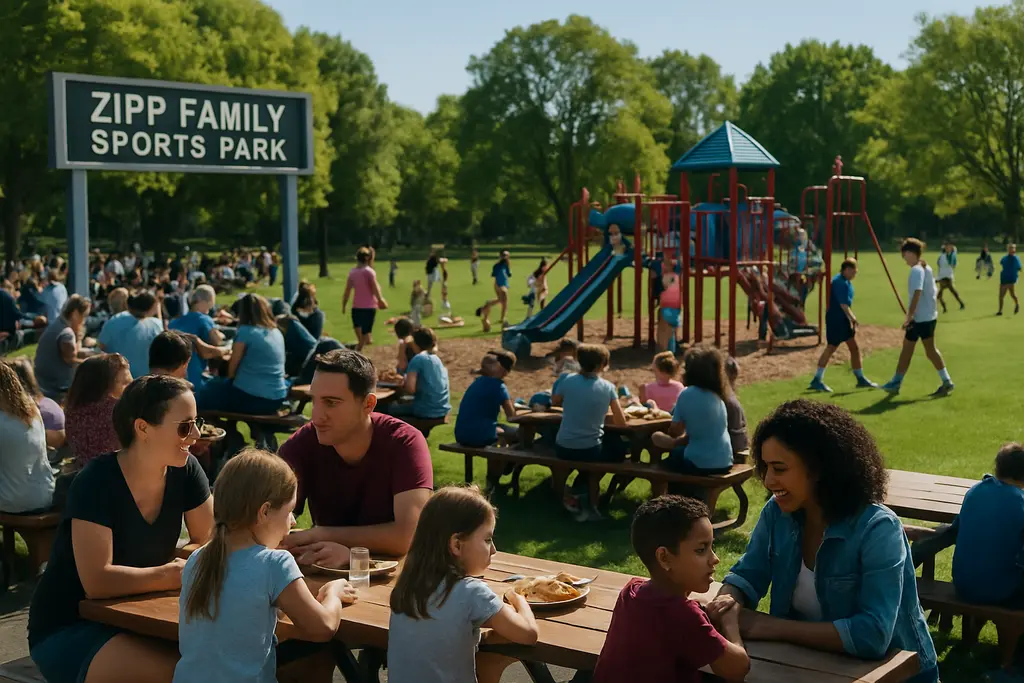
Zipp Family Sports Park is now part of the New Braunfels sports conversation in a very practical way: fields, tournament weekends, maintenance budgets, hotel demand, restaurant traffic, and more places for young athletes to play close to home. The 150-acre project opened to the public on June 20, 2026, so the best way to judge its early local economic impact is not through hype, but through the pieces that can be verified: public investment, facility scale, year-round programming potential, and the day-to-day needs that come with a large youth sports venue.
For families in Comal County and nearby communities, the park matters because sports spending is not limited to registration fees. A tournament day can touch gas stations, quick-service restaurants, hotels, athletic trainers, officials, photographers, team vendors, and local retailers. For city leaders, the park is also a long-term infrastructure bet tied to quality of life and sports tourism. The full return will take years to measure, but the early framework is already visible.
Why Zipp Family Sports Park Matters Locally
Zipp Family Sports Park As A Youth Sports Anchor
The park gives New Braunfels a larger local base for baseball, softball, and soccer activity. Research notes describe 12 full-size competition fields, with four each for baseball, softball, and soccer, plus support infrastructure such as utilities, drainage, paving, concessions, restrooms, shade, and parking. That mix matters because families judge tournament sites by more than the field surface. They care about how long it takes to park, whether younger siblings have shade, how quickly teams can move between games, and whether basic services can handle a long Saturday.
The site size also supports the idea that this is more than a neighborhood field project. Texas accessibility project records list the site area at 6,534,000 square feet, which is about 150 acres, and show construction beginning on October 25, 2023, with an accessibility inspection completed by April 1, 2025 project details. Those dates help families and local teams understand that the facility was planned and built as a major public sports asset, not a small add-on to an existing park.
A Public Investment Built Around Recreation
Local economic impact starts with what the community spent and why. Since 2018, the New Braunfels Economic Development Corporation invested about $19.2 million in the park for land acquisition, construction, and operations, according to the city’s update on construction and maintenance funding city funding update. Research also points to funding support from a 2013 voter-approved bond for land, a 25-acre donation by the Zipp family, a 2019 bond election, and grant support from the Texas Parks and Wildlife Department.
That funding stack shows how local sports infrastructure often comes together: voter-approved public dollars, economic development funds, donated land, and outside recreation support. For parents and coaches, the result is easier to see than the financing chart. More fields can mean more practice slots, more tournament capacity, and less pressure on older facilities during peak months.
Reading The Sports Economy Behind The Fields
Visitor Spending Without Overstating The Numbers
Research notes point to a first-year onsite visitor projection of more than 200,000 visitors, with more than 65% of attendance expected from within a 35-mile radius of Comal County. Because those projections came before a full public year of operation, they should be read as planning estimates rather than final results. Still, they offer a useful way to think about who benefits if weekend traffic is steady.
Local families may spend modestly: fuel, snacks, team meals, replacement gear, and postgame stops. Visiting teams from farther away may add hotel nights and larger restaurant bills. Even if most visitors come from the region, repeated trips across 45 operating weeks can create dependable demand for service businesses near the park and along major travel routes. That kind of impact is less dramatic than a one-time event, but it can matter for staffing, inventory, and weekend scheduling.
Why The Local Share Still Counts
Some economic impact studies place the most attention on overnight visitors, and for good reason: hotel stays bring new money into a city. But youth sports parks also create value for residents who would otherwise drive to San Antonio, Austin suburbs, or other regional complexes for competitive play. If New Braunfels families keep more sports spending close to home, local restaurants and retailers can benefit even when the visitor is not from far away.
There is also a family-time benefit that is harder to place on a balance sheet. Shorter drives can help multi-child households manage overlapping schedules. Coaches can hold events with less travel friction. Younger athletes may get more chances to compete in front of grandparents, classmates, and local supporters. Those are community gains, even if they do not show up as direct tax receipts.
Facility Scale And Game-Day Operations
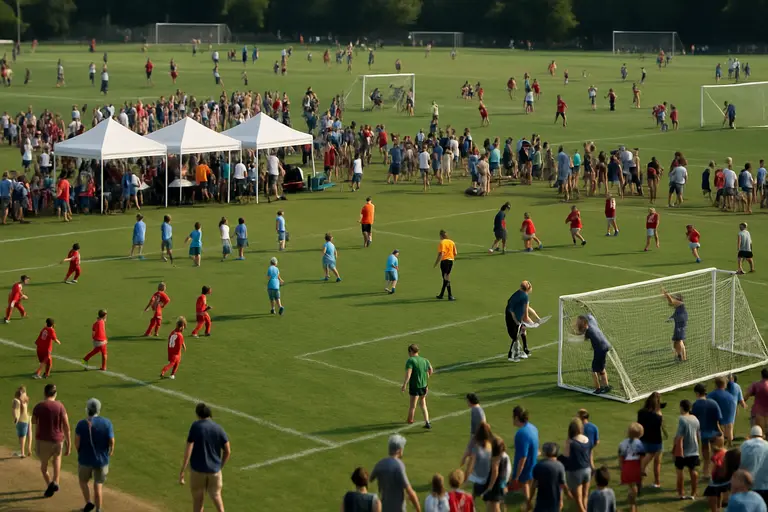
What Large Events Ask From A City
A 150-acre sports site does not run on fields alone. It needs mowing, irrigation, trash service, restroom care, event scheduling, field preparation, lighting checks, parking control, and communication with leagues. Research notes show that the NBEDC agreed to allocate up to $300,000 across three years for operations and maintenance tied to the park. Notes also show that the city adjusted staffing for fiscal year 2026 so three park maintenance positions could be classified as full-time equivalent roles, increasing total FTEs by 0.75 from part-time status.
Those details are easy to overlook, but they shape the athlete experience. A well-kept complex helps reduce delays, keeps tournament directors interested, and gives local teams a more reliable setting for skill development. Poor field care can quickly hurt scheduling and reputation. For a venue with baseball, softball, and soccer activity, the maintenance load is constant because each sport stresses turf, dirt, and shared spaces in different ways.
Planning Tips For Teams And Families
Families and coaches can use the park’s scale to plan smarter tournament days. A larger site can spread out games, but it can also mean longer walks, fuller parking areas, and more coordination between age groups. Before a weekend event, teams should confirm field assignments, warmup space, arrival windows, and postgame meeting spots.
- Build in arrival time: Large youth events often create parking surges before first pitch or kickoff.
- Pack for weather: Shade is part of the facility plan, but Texas heat still affects athletes and spectators.
- Support local stops: Team meals near the complex can keep spending in New Braunfels and reduce travel stress.
- Watch schedule changes: Multi-field events can shift quickly after weather, extra innings, or bracket changes.
For young athletes, the local benefit is simple: more chances to play in a setting built for competition. For parents, the benefit is a clearer home base for weekends that used to require more travel. For businesses, the opportunity is tied to dependable service during tournament windows, not just opening-week attention.
What Zipp Family Sports Park Means For New Braunfels
The city’s biggest economic question is not whether Zipp Family Sports Park attracted attention at its June 20, 2026 opening. It did. The better question is whether the park can keep delivering steady sports activity across many months, while serving local leagues and drawing enough visiting teams to support nearby hotels, restaurants, and shops.
As of October 13, 2026, the safest reading is measured optimism. The public investment is clear. The facility scale is clear. The youth sports use case is clear. What remains uncertain is the exact long-term economic output, including direct spending, indirect business activity, and tax growth tied to future development around the area. Those numbers should be judged through actual booking data, hotel performance, sales activity, maintenance costs, and resident use over several years.
For New Braunfels families, the park’s value begins with access: more fields, more organized play, and a stronger local base for youth baseball, softball, and soccer. For the city, Zipp Family Sports Park is a test of how sports infrastructure can support both community life and local commerce without losing sight of the athletes who use it each week. If the venue stays well maintained and well scheduled, its impact will be felt not just in visitor counts, but in the everyday rhythm of local sports.