
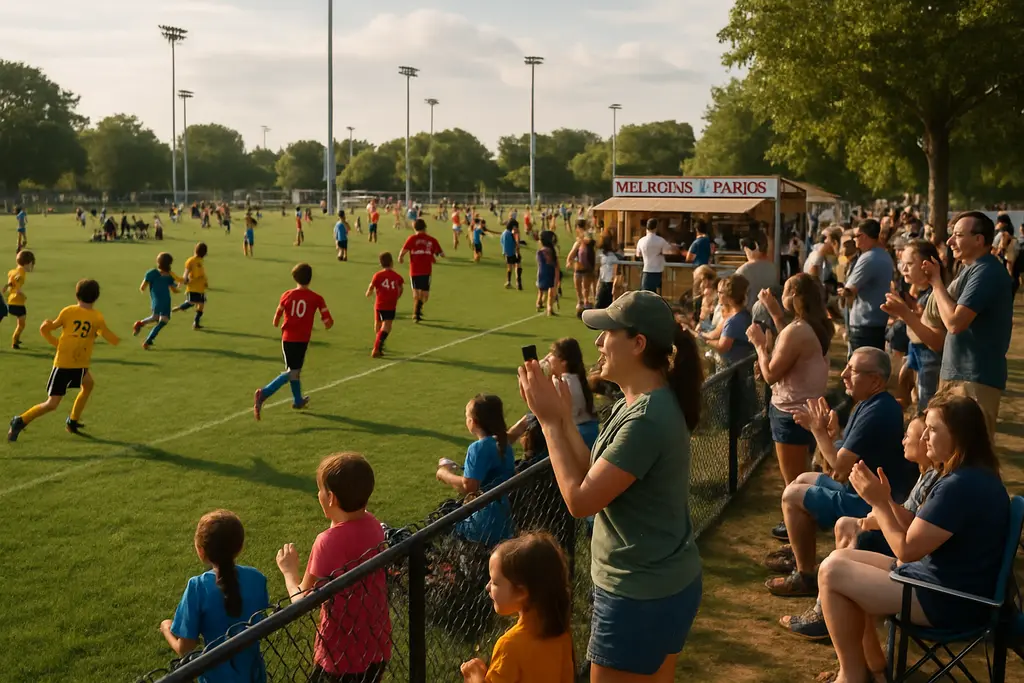
Swanger Tournaments gave Texarkana a clear sports story between February and June 2026: youth and travel baseball events did more than fill brackets. They brought families into town, sent teams across city streets, and gave local leaders new data to explain why sports facilities matter to the community.
According to the City of Texarkana, Texas, Swanger Sports Complex hosted 15 tournaments during that February-to-June window, with an estimated 43,000 visitors and 420 teams from Texas, Arkansas, Louisiana, and Oklahoma. Those events generated about $6.5 million in direct visitor spending for the Texarkana community, according to the city’s economic impact study.
For a local sports audience, the numbers matter because they connect tournament weekends to real planning decisions. Coaches care about field quality and scheduling. Parents care about parking, concessions, restrooms, and travel costs. City leaders and business owners care about whether sports investment reaches hotels, restaurants, retail shops, and service businesses. Good communication should connect those interests without stretching the facts.
Swanger Tournaments And The Local Sports Economy
Swanger Tournaments By The Numbers
The city reported that about 61% of visitors during the February-to-June 2026 tournament period came from outside the Texarkana area. That outside travel is a key detail because it points to new spending entering the local economy rather than only shifting local dollars from one business to another.
Those Swanger Tournaments also reflected a broader shift after the facility renovation. The city reported a 431% increase in visitors traveling 100 or more miles to attend tournaments, along with a 68% increase in dining visits after tournament events. Those figures give sports communicators a stronger base than general excitement or facility pride. They show how a tournament schedule can affect where families eat, where they stay, and how long they move through Texarkana before and after games.
Why Visitor Origin Matters
Visitor origin is one of the most useful details for a communication plan. A local family attending a game is part of the sports culture, but an out-of-area family may also book a hotel room, buy fuel, shop for gear, and eat multiple meals near the complex. When 61% of visitors are from outside the area, the story shifts from a simple recreation topic to a regional sports tourism story.
That does not mean every claim should be framed as a guarantee. Ethical sports communication should avoid suggesting that every tournament dollar reaches every business equally. Some businesses benefit more than others depending on location, hours, staffing, and the tournament schedule. A responsible message would say that tournament activity created documented direct visitor spending and gave local businesses a stronger chance to serve traveling teams and families.
The Renovation Story Behind The Results
From Public Investment To Game-Day Use
The research record shows that the Swanger Sports Complex renovation was a $9.4 million project approved by the Texarkana City Council on March 11, 2024, and funded through the 2023 Bond Fund. Reported upgrades included new baseball fields, bullpens, improved lighting, parking, entryways, restroom work, concession building updates, and other facility improvements. The complex officially opened on May 2, 2025.
Those details should be part of the public story because they help residents see the path from investment to use. A field upgrade is not only a construction item. For athletes, it can mean a better playing surface. For coaches, it can mean more reliable tournament hosting. For families, it can mean a more manageable game-day experience. For the city, it can mean a facility that is better positioned to attract multi-team events across state lines.
Early Projections Compared With 2026 Activity
Before the renovation, projections tied to the facility expected more than 30,000 visitors annually, support for 49 local jobs, about $763,000 in tax revenues, and more than $188,000 in small business income. The February-to-June 2026 city-reported visitor estimate of 43,000 visitors during just that span gives communicators a strong comparison point, though it should be described carefully as a reported tournament-period estimate rather than a full annual audit.
That distinction matters. Public trust grows when local sports leaders explain what a number does and does not prove. The 43,000-visitor figure shows a strong tournament period. It does not, by itself, answer every question about long-term maintenance costs, traffic patterns, or the distribution of revenue across businesses. A clear public message can celebrate the outcome while still leaving room for practical questions from residents.
Communication Strategies For Sports Leaders
Use Data Without Losing The People
The best communication plan around Swanger Tournaments should start with verified numbers, then bring the sports community into the frame. The story is not only $6.5 million in direct visitor spending. It is also the volunteer checking a gate, the coach keeping a team on schedule, the parent planning meals between pool play and bracket games, and the restaurant staff preparing for a tournament rush.
Local media reported that the complex has helped drive hotel occupancy, dining, retail, and service spending tied to tournament weekends, with business activity connected to sports tourism described by local coverage. Those business stories can be useful, but they should be collected with care. Communicators should avoid using one business owner’s strong weekend as proof that every weekend is the same. A better approach is to pair the city’s data with direct, clearly identified experiences from hotels, restaurants, and tournament organizers.
Messages That Fit Texarkana
Texarkana’s location gives the complex a practical sports identity. Teams came from Texas, Arkansas, Louisiana, and Oklahoma during the February-to-June 2026 period, which means the facility is serving a regional baseball audience rather than only a neighborhood schedule. That matters for how the city talks about the complex.
Sports leaders can keep the message clear by focusing on a few repeatable themes:
- Regional reach: Tournament teams are crossing state lines to play in Texarkana.
- Family travel: Youth sports weekends affect hotels, restaurants, fuel stops, and retail visits.
- Facility value: Renovated fields and support spaces help Texarkana compete for tournament dates.
- Community accountability: Public reporting should separate verified spending from hopeful claims.
Those themes are strong because they speak to sports families and taxpayers at the same time. They also help school and club sports communities understand how tournament infrastructure can support the youth pipeline. Young athletes see higher-level competition close to home. Local families see more baseball activity. Businesses see weekend traffic that may not have arrived without tournament scheduling.
Planning For Fall 2026 Tournament Weekends
Preparing Without Overpromising
As of August 25, 2026, the research notes show five fall tournaments scheduled at Swanger Sports Complex and six more at the Grady T. Wallace Complex. Together with league games, those events were expected to bring thousands of extra visitors. Since those fall events were still ahead as of that date, public messaging should focus on preparation rather than claims about results.
That preparation can include practical information for families and businesses: expected tournament windows, parking guidance, restaurant readiness, hotel coordination, field access updates, and weather-related communication. A clear schedule can help families manage long game days. It can also help nearby businesses staff appropriately and welcome out-of-town guests with fewer surprises.
Sports communicators should also be careful with timing language. February-to-June 2026 results should be described in the past tense. Fall 2026 events, as listed on August 25, 2026, should be described as scheduled or expected. That small wording choice protects credibility, especially when public agencies, families, and business owners are all using the same information to make decisions.
What Swanger Tournaments Mean For Texarkana
Swanger Tournaments now give Texarkana a data-backed way to talk about youth baseball, public facilities, and local business activity in one connected story. The strongest message is not hype. It is a grounded account of what happened between February and June 2026, why out-of-area teams matter, and how tournament weekends can support a broader sports economy.
For community leaders, the next communication task is to keep the story honest and useful. Share the verified numbers. Explain the role of the renovation. Give credit to athletes, coaches, parents, parks staff, hotels, restaurants, and volunteers. Leave space for resident questions about traffic, upkeep, and future scheduling. That kind of sports-first storytelling respects both the game and the community around it.
Texarkana does not need exaggerated language to show why Swanger Sports Complex matters. The city’s reported tournament activity already provides a strong case: hundreds of teams, tens of thousands of visitors, and millions in direct visitor spending tied to baseball weekends. Told well, that story can help residents see tournament sports as part of local identity, youth development, and community planning.