
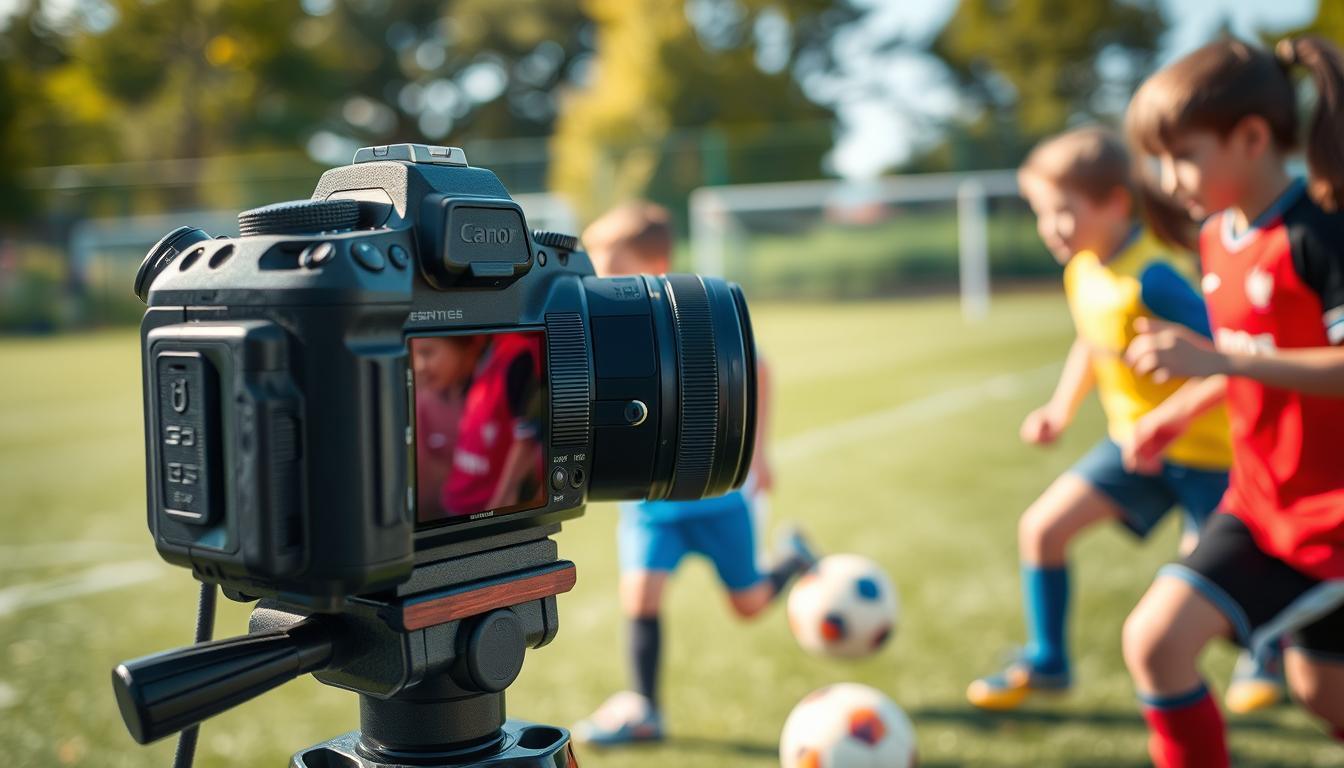
Let’s get real. Showing up to your kid’s big game with the wrong gear is a big mistake. It’s like bringing a philosophy textbook to a food fight—you’re armed with knowledge but woefully unprepared for the messy, glorious chaos.
Youth sports aren’t a gentle stroll. They’re a physics problem set to a soundtrack of screaming parents and squeaking sneakers. Subjects move at light speed. Light shifts from brutal sun to deep shadow in a heartbeat. The perfect moment—that mud-splattered grin, that game-winning dive—lasts less than a blink.
Your camera body is your command center in this beautiful madness. It’s not about gear snobbery. It’s about capturing a story before it evaporates. A slow autofocus system turns a triumphant touchdown into a blurry ghost. Poor low-light performance hides the determination in your player’s eyes as the sun sets.
This is where choosing the right camera bodies for sports becomes critical. It’s the difference between a pixelated disappointment and a frame you’ll cherish for decades. We’re not just freezing time. We’re preserving legacy, one split-second at a time.
Key Specs: FPS, Buffer, AF Points, Subject Tracking
When it comes to capturing the perfect moment, four key terms matter a lot: FPS, buffer, AF, and tracking. These are like your camera’s game plan. They help decide if it can handle the pressure or not.
Frames Per Second (FPS) is your camera’s speed. It should be fast enough to catch every detail. You need at least 10 fps to avoid missing the action.
But speed alone isn’t enough. Your camera’s buffer also plays a big role. It’s like its memory. A small buffer can slow you down, making it hard to keep up with the action.
Autofocus is another critical factor. It’s not just about how many focus points you have. It’s about how well they work together. A good autofocus system can anticipate where your subject will be.
Modern cameras have made a big leap in autofocus. They can track subjects with incredible accuracy. For example, the Nikon Z9 camera review shows how advanced this technology is.
The best autofocus systems don’t just react; they predict. They understand the movement of your subject. This predictive ability makes all the difference in capturing great shots.
When you combine high fps, a deep buffer, and smart autofocus, you get amazing results. This combination allows you to capture the essence of sports in a way that’s both beautiful and meaningful.
Remember, these specs work together. A camera with great autofocus but slower fps might be better than one that’s fast but can’t focus well. It’s all about finding the right balance.
Understanding your camera’s specs helps you set it up for success. For tips on using these specs in real games, check out our guide on sports photography camera settings.
In the end, your camera’s specs are what make or break your shots. They decide if you capture the moment or miss it. Choose wisely, because in sports, there are no second chances.
Low-Light Performance and Sensor Size
Imagine a dimly lit gym at 7 PM on a Friday. It’s like a haunted house. The sun is gone, leaving only old, orange lights that suck the color out of everything. This is where camera specs really matter, and low-light performance is key.
So, what is low-light performance? It’s your camera’s ability to see in the dark without making pictures grainy. It’s like capturing a photo of Bigfoot—a blurry mess where your kid’s big shot might look like a ghost.
The hero in this story is sensor size. A bigger sensor, like Full-Frame, catches more light. It’s like using a bucket instead of a teacup in the rain. This means you can use higher ISOs without your photos becoming a digital sandstorm of noise.
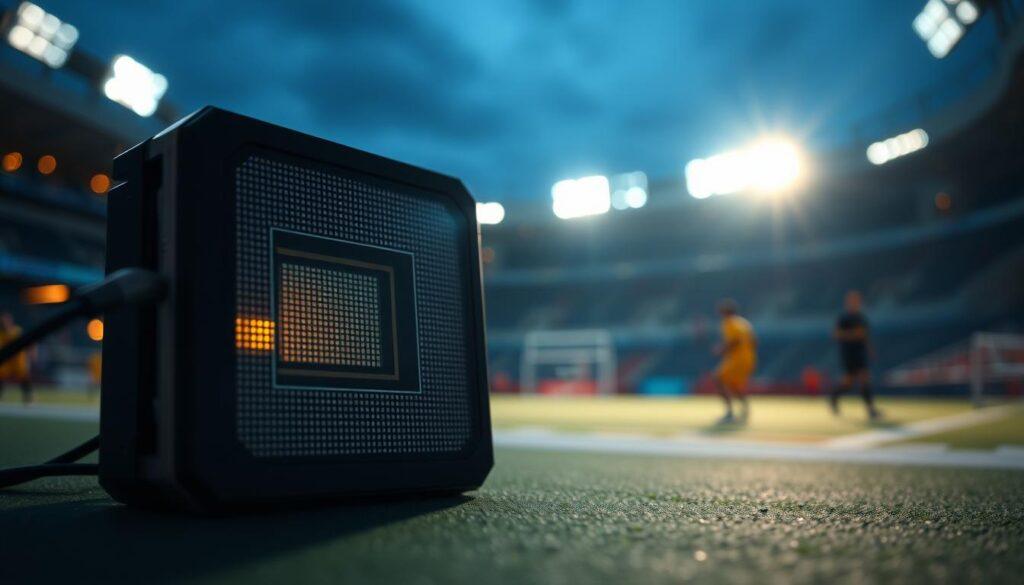
Not all youth sports are the same in terms of light. Daytime games are easy, but night games are tough. Ice hockey in a shiny rink, basketball in a big gym, or any game under old stadium lights are the real challenges.
Artificial light is not as good as natural light. It’s often uneven, changes colors, and isn’t as strong. A camera that does well in sunlight might struggle in these conditions.
Shooting a basketball game in a school gym is a big test. The action is fast, the light is bad, and your photos need to be great. You need a camera that not only survives but performs in the dark.
Good performance means being able to use high ISOs without adding too much noise. It’s what makes a photo clear and sharp instead of blurry. When choosing a camera, ask if it can handle the dark.
Weather Sealing and Battery Life for Weekend Tournaments
Your camera’s weather sealing is not just a feature; it’s essential for weekend youth tournaments. We dream of clear skies, but reality brings rain, dust, and humidity. The magnesium alloy body and rubber gaskets protect your camera.
Without sealing, rain can turn your camera into a pricey paperweight. Weather resistance means capturing moments in the mud or facing a damaged sensor.
Battery life is also key for a weekend tournament. It’s like a marathon, not a sprint. Your camera’s battery should last all day.
Good specs are important here. A slow buffer means slow shooting. A fast buffer but short battery life is like a sprinter who can’t finish.
Think of your buffer as short-term memory and battery as energy. If energy runs out while memory is processing, you lose great shots. That game-winning goal? Gone because your camera fell asleep.
A big buffer and long battery life mean you can shoot all day. Pros always have extra batteries ready.
For tournaments, you need a weather-sealed camera and at least two batteries. Add a third if you’re the only photographer. Your future self will be dry and shooting during the final ceremony.
Budget Tiers with Example Bodies
The camera body is like your ticket to the camera world. There are different prices for different experiences. You wouldn’t buy expensive seats for a small concert, right?
The mirrorless vs DSLR debate is about technology, not loyalty. Mirrorless systems are the future, with better autofocus for sports. DSLRs are the past, with less AI and often heavier.
Your budget should match your needs, not your dreams. Think about if you’ll sell photos or just share them. Do you need to shoot in low light? Your answers guide your choice.
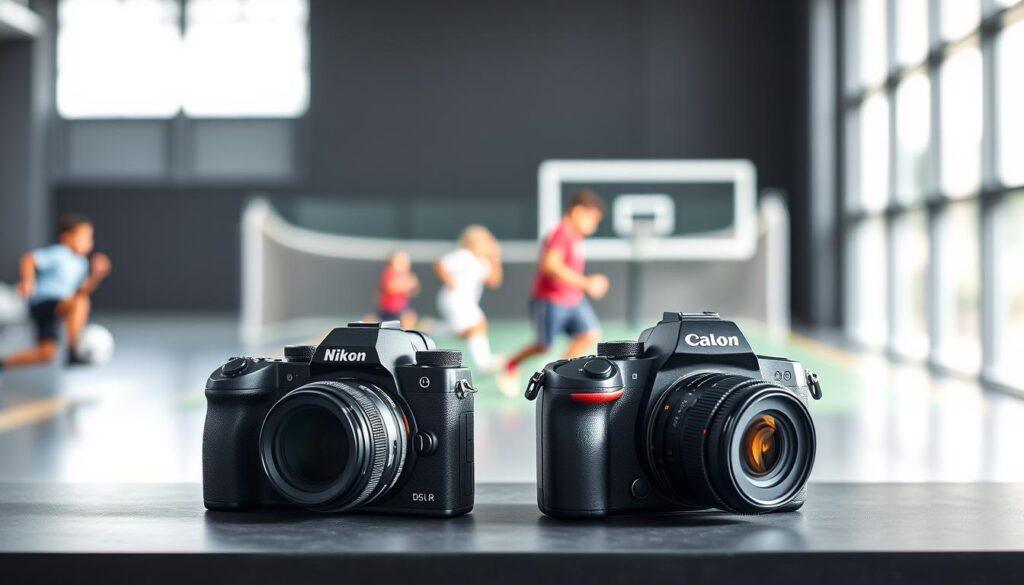
Most parents start here. We’re talking about APS-C sensor cameras. Think Sony a6400 or Canon R10. They’re light, affordable, and great for bright games.
Enthuasiast (The Triple-A Contenders)
Now you’re serious. This tier includes top APS-C or entry-level full-frame models. The Nikon Z6 II or Canon R6 are examples. They handle tough light and fast action well.
Professional (The Show)
The Sony A1, Canon R3, Nikon Z9 are the top choices. They have fast frame rates and strong build. But for most youth sports, they’re too much. They’re like a Lamborghini for grocery shopping.
The body is just the start. The lens is key. A good lens on a mid-tier body beats a pro body with a basic lens. Remember, your total system cost is key. The lens is often the bigger investment.
Be honest about what you need before buying. The mirrorless vs DSLR debate favors mirrorless for sports. Your budget should match your use, not your dreams. Start with what you have, not what you wish for. The best camera is the one that fits your budget and needs.
Recommended Settings to Start
Let’s get down to business. Your camera’s manual is like a novel. You need a quick guide, not a long read. Photography for youth sports is like flying a plane; you need to know the controls before you start.
This is your basic guide. Learn it, then adjust as needed.
First, switch to Shutter Priority (marked ‘S’ or ‘Tv’). This is your main setting. You choose the shutter speed, and the camera sets the aperture. It’s like delegating tasks.
For capturing kids in action, start with 1/500th of a second. For fast movements like a bat swing or soccer kick, use 1/1000th or faster. This freezes the moment, not your dreams.
Autofocus is key. Set it to Continuous Autofocus (AF-C or AI Servo). This keeps your subject in focus as it moves. Use the most advanced tracking for people, like Eye Autofocus. This locks onto the athlete’s eye, ensuring a great shot.
Next, find the Drive Mode setting. Choose High-Speed Continuous. This allows you to take many shots in quick succession. You’ll catch the perfect moment, like when the ball meets the glove.
Lastly, ISO. Set it to Auto, but limit it. For most cameras, ISO 6400 is a good cap. This keeps your photos clear even when the light fades.
These are the basic steps. Now, it’s time to adapt. If the light changes, adjust your ISO. For predictable actions, try back-button focus for more control. It’s a dance, and these settings are your first steps.
| Setting | Your Starting Play | The Why |
|---|---|---|
| Exposure Mode | Shutter Priority (S/Tv) | You control motion blur; camera handles light. |
| Shutter Speed | 1/500s (running) / 1/1000s+ (swings/kicks) | Freezes fast action completely. |
| Autofocus Mode | Continuous (AF-C/AI Servo) + Eye AF | Locks and tracks the moving subject. |
| Drive Mode | High-Speed Continuous | Captures the decisive moment in a sequence. |
| ISO | Auto, capped (e.g., ISO 6400) | Balances exposure in changing light without excess noise. |
Take this table to the field. It’s your pre-game plan. The rest is practice, observation, and learning to lead the dance between light, motion, and moment.
Local League Use Cases and Booking a Pro
Your Canon R6 or Nikon Z6 is ready. Your settings are perfect. Now, what story do you want to tell in your local league?
Are you the team historian, capturing every muddy practice and championship smile for the yearbook? Your camera becomes a never-ending archivist. Schools and groups use these photos for their websites and promotional materials, making them look professional.
Or maybe you’re just a parent wanting to capture your kid’s moment of glory? Then your Sony A7 IV should be an extension of your eye. It should be fast, intuitive, and blend into the moment.
Here’s some advice: sometimes the best upgrade is a phone call. Booking a local pro photographer for the big game is smart, not a defeat. They bring the extra gear and the instinct you can’t buy online.
Your role changes from frantic photographer to calm director. You guide them to the key moments—like your defender’s determination or the goalie’s leap. You make sure the story is told, even if you’re not behind the camera.
Youth sports photography is about time travel. It’s capturing the chaotic, glorious game into a lasting image. Whether you’re the creator or editor of that visual story, the goal is always to preserve it.