
Think of your camera as having an eyelid. That’s what shutter speed is—the time it stays open. It goes from 1/8000th of a second to “Bulb” mode, where you hold it open as long as you want.
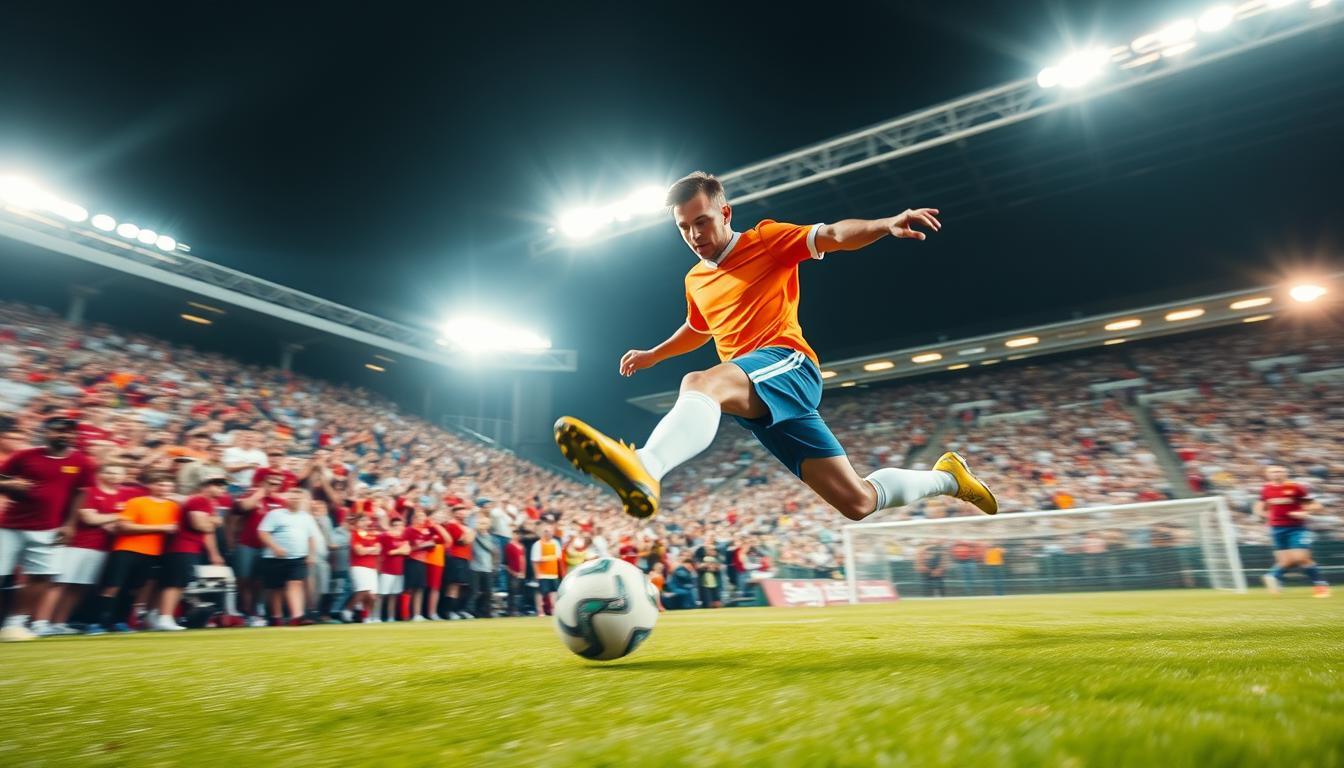
This isn’t just a dial on your camera. It’s your first choice as a visual editor. Do you want to document reality or interpret it? A fast blink freezes a hummingbird’s wings or a baseball at the moment of impact, showing details our eyes can’t see.
Slow down the blink, and the world starts to flow. Waterfalls become silken veils. Car headlights paint the night with elegant streaks. This is the magic of intentional motion blur.
The control you have over time is what makes photos special. As we’ll see when discussing shooting in full manual mode, mastering this setting unlocks true creative freedom. You’re not just capturing light anymore. You’re deciding how time appears in your frame.
Recommended Speeds by Sport and Age Group
Choosing the right shutter speed is not a guess. It’s like solving a puzzle for photographers. You’re not just capturing light; you’re capturing physics. A toddler’s sprint and an MLB fastball are in different worlds of speed. Your camera settings help you travel between them.
Let’s get specific. Using 1/4000th for everything is like using a firehose on a bonsai tree. Here’s a more precise approach:
- Youth Sports (Soccer, Basketball): Start at 1/500th sec. This will freeze most action, but a leaping header or a sudden pivot might demand 1/800th.
- Adult Amateur Cycling/Running: 1/500th is your baseline. For that crisp freeze, jump to 1/1000th or 1/2000th.
- High-Speed Pro Sports (F1, MotoGP): You’re now in the stratosphere. 1/2000th sec is your starting point. For true perfection, where every carbon fiber weave is sharp, you flirt with 1/4000th.
- Flowing Water (Creative): This is the beautiful opposite. To turn a creek into silky mist, you need slow speeds—2 to 10 seconds. For just a hint of motion, 1/100th sec can work.
The goal of a perfect action freeze is to make the impossible look static. I once shot cyclists at 1/500th. The bodies were sharp, but the wheels were a vague, spinning haze. At 1/2000th, the illusion broke. Every spoke, every decal on the rim—frozen in time. It was less a photo and more an evidence file.
But sometimes, evidence is boring. You want drama. That’s when you introduce strategic blur. A panned shot at 1/125th, where the runner is sharp but the background streaks, doesn’t just show speed. It makes you feel the wind.
Now, before you even think about subject speed, master this: the Reciprocal Rule. This is your handheld holy grail. Your minimum shutter speed should be 1 over your focal length. Using a 200mm lens? Don’t shoot slower than 1/200th sec. On a crop sensor, that 200mm acts like a 300mm—so use 1/300th sec.
Ignore this, and your photo will look like it was taken during a minor earthquake. The Reciprocal Rule keeps you from being the blur. It’s the foundation. Everything else—freezing a pitch or blurring a waterfall—is advanced architecture built on solid ground.
Panning for Dynamic Shots
Panning is like abstract art in photography. It’s not just about capturing a moment. It’s about feeling its energy. You move your camera with the subject to create a sharp image against a blurred background.
This technique shows speed and chaos in a unique way. Imagine a cyclist in Hanoi’s busy streets, sharp against a blurred background. That’s the beauty of panning.
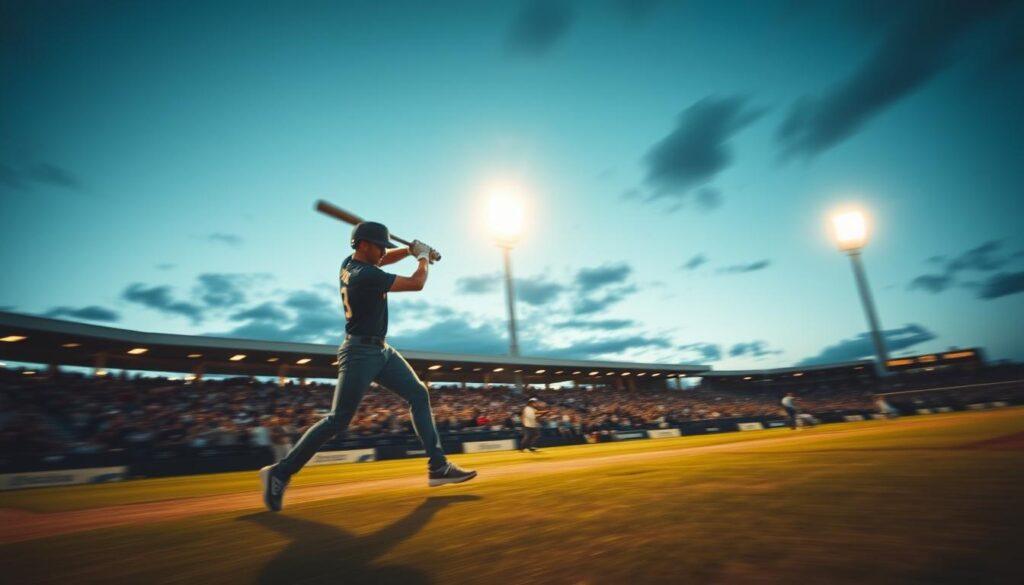
I learned panning in Hanoi’s streets. My settings were 1/30th of a second at f/5.6, ISO 400. Your shutter speed is key. Too fast, and everything freezes. Too slow, and your subject becomes a ghost.
The best speed for dynamic scenes is between 1/30th and 1/60th of a second. It’s a balance between skill and technology.
Here’s how to start:
- Set Your Speed: Choose a slow shutter speed (start at 1/60s).
- Pre-Focus & Track: Focus on your subject early and track it smoothly before taking the photo.
- Press and Sweep: Press the button and keep panning through the exposure.
- Embrace the Blur: The blurred background is what makes it special.
You’ll fail a lot. But when you succeed, it feels alive. For more tips, check out mastering panning photography tutorials.
This isn’t about fancy gear. It’s about patience, rhythm, and feeling the motion. It turns a photo into a feeling.
Balancing ISO/Aperture Tradeoffs
Shutter speed is like a negotiator in a deal where light is the main item. It works with aperture and ISO, the Exposure Triangle, to get the right shot. This balance is key in photography.
Want to capture a soccer ball in mid-air? You need a quick shutter speed. But this means less light, so your camera must adjust. It can open the aperture wider or increase the ISO.
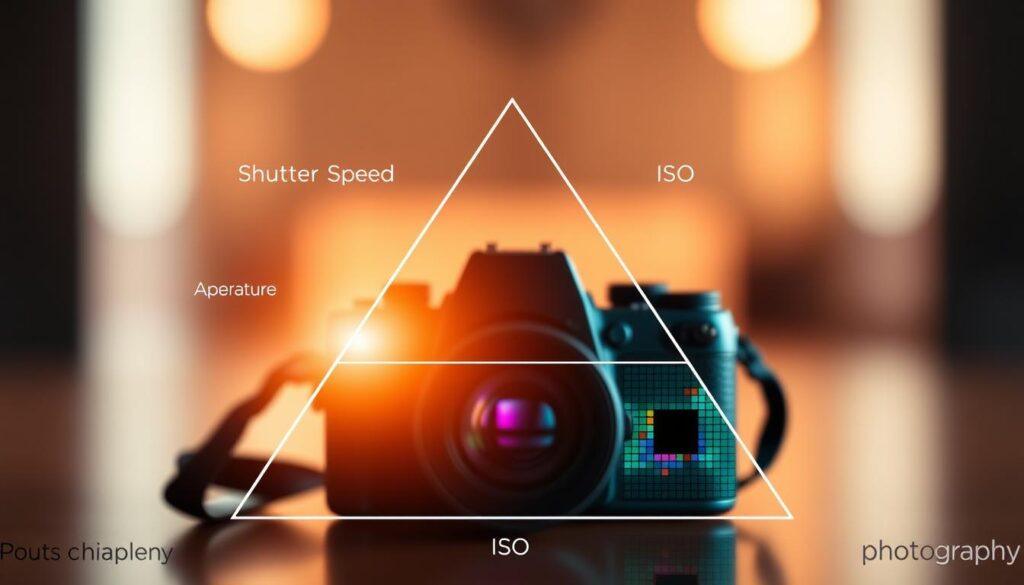
Opening the aperture too wide makes the background blurry. This is because only your subject is in focus. Raising the ISO too high adds digital grain to your photos.
For a smooth, blurred waterfall, you need a slow shutter speed. To avoid overexposure, close the aperture or lower the ISO.
I learned this while chasing cyclists on a cloudy day. My camera set to Aperture Priority had a slow shutter speed. I fixed it by raising the ISO from 200 to 800. This made the shutter speed faster, and my shots were clear again.
Photography is all about making deals with light. Knowing these trade-offs is what makes a good photographer. Here’s a quick guide:
- You need MORE light (for faster shutter): Open aperture (lower f-number) or Raise ISO.
- You need LESS light (for slower shutter): Close aperture (higher f-number) or Lower ISO.
But what if you can’t get the right light? Use a neutral density (ND) filter. It blocks light without changing colors, letting you use slow shutter speeds in bright conditions.
In dim light, you might reach the limit of your aperture and ISO. A lens with a wider maximum aperture (like f/1.8) gives you more light. This lets you adjust your shutter speed more easily.
Remember, these settings work together. You need to balance them to get the right exposure. Your goal is to decide which setting to adjust based on what you want to capture.
This balance is what makes photography creative. It’s not just about the settings; it’s about making choices that create lasting images.
Real-World Examples and Troubleshooting
Your camera manual talks theory. But the soccer field shows the truth. That blurry kid? Your shutter speed was slow. Raise that ISO like you’re turning up the volume.
Face soft but the cleats sharp? Your autofocus needs a wake-up call. Switch to single-point AF and focus on the eye. For practice, try the home shutter speed exercise with a fan and lamp.
A crowded monument can turn into a ghost town with a two-minute exposure. Tourists fade away. Light becomes a paintbrush in the dark. Here, shutter speed is more than a setting; it’s a language.
Your real test is in the chaos of live play. The sports photography settings guide is your playbook. It helps you freeze action with the right ISO and aperture.
Shoot the dog running. Shoot the car passing. Try 1/1000th, then 1/30th. Review your shots. See what the light says. This craft is built in the edit, one failed frame, one perfect moment at a time. Now go make some new mistakes.